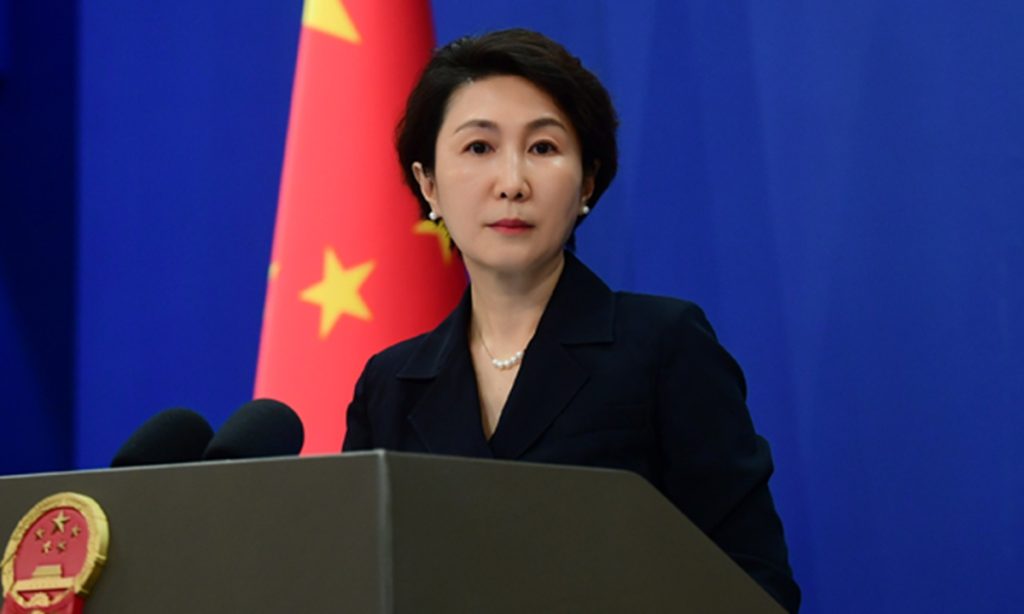
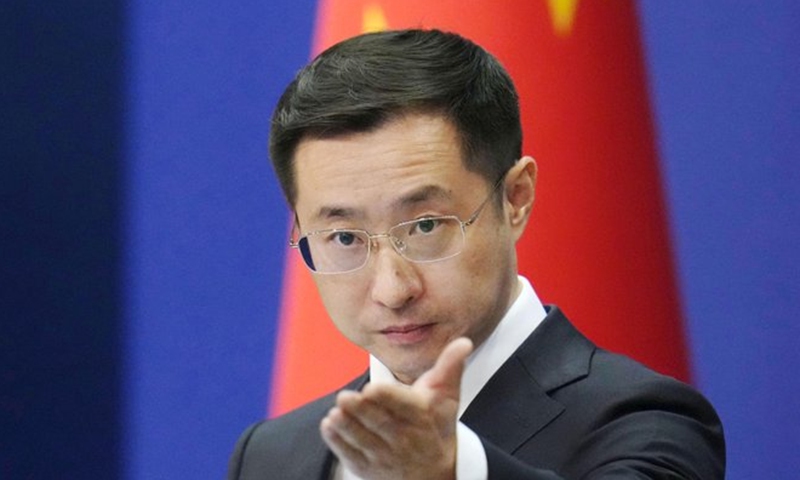
In response to a question on the claim by the US Federal Communications Commission (FCC) that it will vote this month on a proposal to bar all Chinese labs from testing electronic devices for use in the US, Mao Ning, a spokesperson for China's Foreign Ministry, said at a regular press conference on Thursday that "China firmly opposes the US practice of overstretching the concept of national security."
Such approach severely disrupts normal economic and trade exchanges between Chinese and US enterprises and does not serve the interests of any party, including US companies and consumers. China will continue to firmly safeguard its legitimate rights and interests, said Mao.
Underscoring demand-driven development, reform breakthroughs, technology empowerment as well as opening up and cooperation, Chinese President Xi Jinping called for carrying out capacity-expanding and quality-upgrading initiatives in the service sector. Xi, also general secretary of the Communist Party of China (CPC) Central Committee and chairman of the Central Military Commission, has also called for striving to break new ground in the high-quality development of China's service sector.
President Xi recently issued important instructions on the development of the service sector, thoroughly explaining the major significance, key principles and priority tasks for promoting its high-quality and efficient development. The instructions clarify the guiding principles for advancing the development of the sector and further deepen the Communist Party of China (CPC)'s understanding of the underlying laws governing the building of a modern industrial system, providing a scientific guide for promoting the high-quality and efficient development of the service sector.
Strategic significance
Making solid efforts to open up new prospects for the high-quality development of the service sector is crucial to current economic and social development, the overall advancement of Chinese modernization, and has major strategic significance.
As economic and social development advances and residents' incomes rise, the service sector is playing an increasingly important role in the country's overall development.
The service sector has become the nation's main driver of economic growth.
During the 14th Five-Year Plan period (2021-25), the value added of China's service sector crossed three successive 10-trillion-yuan ($1.46 trillion) thresholds, surpassing 80 trillion yuan in 2025. In 2015, the sector's share of GDP exceeded 50 percent for the first time and has continued to edge up steadily since then, reaching 57.7 percent in 2025. It now contributes more than 60 percent of the country's economic growth.
The service sector serves as a catalyst for technological innovation and a multiplier of manufacturing value. Producer services have played an indispensable role in helping China's manufacturing sector retain the world's largest overall scale for 16 consecutive years.
In addition, the service sector serves as a source of employment and a stabilizing force. With its wide range of segments, broad scope, flexible formats and strong capacity to absorb labor, the sector plays a significant role in job creation. New occupations such as on-demand delivery workers and business data analysts continue to emerge, creating fresh employment opportunities.
By the end of 2024, employment in the service sector had reached 360 million, accounting for 48.8 percent of the national total.
As global economic uncertainty rises and China's economy enters a critical stage of transformation and upgrading, promoting the high-quality and efficient development of the service sector is both significant and timely.
Promoting the high-quality and efficient development of the services sector will strongly support China's manufacturing upgrade from scale to strength and help it move up both ends of the value chain, in line with the "smile curve."
Meanwhile, whether by advancing the high-end, intelligent and green development of manufacturing, or by adapting to consumer trends toward higher quality, greater personalization and more premium offerings, promoting the high-quality and efficient development of the service sector will continue to create new drivers of economic growth.
Promoting the high-quality and efficient development of the service sector will not only better meet people's daily needs, but also create more high-quality jobs, thereby better fulfilling people's aspirations for a better life and providing strong momentum for advancing Chinese modernization.
High-quality development
Expanding capacity and improving quality is the key path to promoting the high-quality and efficient development of the service sector.
"Expanding capacity" means addressing supply-demand gaps across different service sectors by increasing supply, continuously fostering new growth drivers for the services industry and new space for trade in services, and enhancing the sector's overall development level.
"Improving quality" means being guided by demand, deepening reform, leveraging technology, and expanding opening-up and cooperation, while strengthening standardization to raise the service sector's level of digitalization, integration and internationalization, and accelerate its move toward the high end of the industrial and value chains.
To better promote the high-quality and efficient development of the service sector, it is essential to stay guided by demand, advance producer services toward the high end in line with the needs of the real economy, and steer consumer services toward new forms and upgrades based on people's daily needs.
In recent years, reforms in China's service sector have deepened across the board, with hidden restrictions in areas such as factor access, resource allocation and government procurement steadily easing. However, institutional and structural obstacles remain, including inconsistent standards and local protectionism.
To better promote the high-quality and efficient development of the service sector, efforts should focus on key areas and critical links, accelerate the building of a unified national market, strike a balance between market vitality and effective regulation, facilitate the free flow of service-related factors, and improve resource allocation efficiency in the service sector.
Technology empowerment
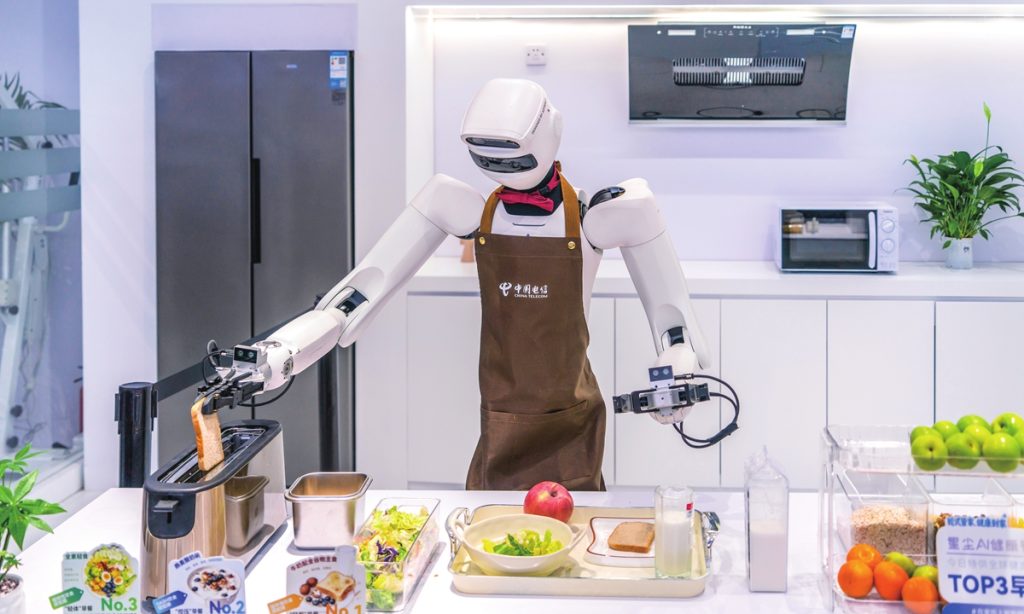
At present, a new generation of information technologies represented by artificial intelligence, big data and the industrial internet is advancing rapidly in both breakthroughs and applications, empowering a wide range of industries and reaching households across the country.
To better promote the high-quality and efficient development of the services sector, it is essential to take technological innovation as a key driver, use it to drive industrial innovation, advance the deep integration and coordinated innovation of manufacturing, service and digital technologies, and foster both qualitative improvement and reasonable quantitative growth in the service sector.
To open up new prospects for the high-quality development of the service sector, we must remain focused, work steadily, stay committed to expanding capacity and improving quality, and steadily advance the key tasks for service sector development.
As digitalization, green development and intelligent transformation continue to deepen, producer services are entering a period of strategic opportunity marked by both scale expansion and structural upgrading.
With a focus on sectors such as technology services, digital and intelligent services, business services, modern logistics and financial services, China should systematically improve the quality and efficiency of producer service supply and build a modern industrial system with greater resilience and competitiveness.
In addition, consumer services are geared toward meeting people's needs throughout the life cycle and represent an important link for improving livelihoods, expanding domestic demand and stabilizing growth.
Meanwhile, China also needs to foster more "China services" brands. This is driven by both practical demand and growing technological and industrial strength.
As China's service sector advances technologically and the domestic market for service consumption continues to expand, the country should keep improving the sector's digitalization, standardization, integration and internationalization, and gradually build globally recognized "China services" brands.
As China moves through the 15th Five-Year Plan period (2026-30), by fostering a sound approach to development and deeply implementing the initiative to expand capacity and improve quality in the services sector, the high-quality development of the service industry will open up promising new horizons.
This was compiled from an article originally published on the front page of the People's Daily on April 10, 2026.
Chinese Foreign Minister Wang Yi said on Thursday that China stands ready to work with the Democratic People's Republic of Korea (DPRK) to continue consolidating the positive momentum in the development of China-DPRK relations.
Wang, also a member of the Political Bureau of the Communist Party of China Central Committee, made the remarks in talks with DPRK Foreign Minister Choe Son Hui.
Wang said that in early September last year, Xi Jinping, general secretary of the Communist Party of China Central Committee, and Kim Jong Un, general secretary of the Workers' Party of Korea (WPK), held a historic meeting in Beijing, reaching important consensus on the overall, strategic and directional issues concerning bilateral ties.
The meeting provides important strategic guidance for further developing China-DPRK relations, pushes bilateral ties into a new stage and opens a new chapter in friendly exchanges between the two countries, which is of great and far-reaching significance, Wang added.
Wang said China stands ready to work with the DPRK to take the important consensus reached by the top leaders of the two parties and countries as fundamental guidance, strengthen strategic communication, enhance exchanges and cooperation, create more benefits for the two peoples, and jointly promote regional peace and development.
The past year has witnessed a series of highlights in China-DPRK exchanges, which strongly demonstrated that the two countries' traditional friendship forged in blood remains everlasting and unbreakable, Wang said, noting that this year marks the 65th anniversary of the signing of the China-DPRK Treaty of Friendship, Cooperation and Mutual Assistance.
Over the past 65 years, Wang said, no matter how the international and regional situations have changed, China and the DPRK, as good neighbors, good friends and good comrades, have always trusted and supported each other, making unremitting efforts to maintain regional and world peace and stability and promote their respective development.
Wang said China is willing to work with the DPRK side to hold commemorative events for the 65th anniversary of the signing of the treaty, strengthen high-level exchanges, enhance dialogue and practical cooperation at all levels and in various fields, deepen people-to-people exchanges and mutual understanding, and contribute to respective economic and social development.
For her part, Choe said that the DPRK-China friendship is based on the common socialist system and traditional friendship, describing bilateral relations as deep-rooted, solid and sustainable. It is the unwavering position of the WPK and the nation to advance DPRK-China friendship and cooperation following the trend of the times and the will of the two peoples.
Choe noted that the historic and successful meeting between the top leaders of the two parties and countries in September last year has significantly enhanced friendship and mutual trust between the two parties and two countries, pointed out a clear direction for and injecting strong impetus into the development of bilateral ties.
The DPRK, Choe said, fully supports the one-China principle, firmly opposes any interference in China's internal affairs, and resolutely supports China's position on safeguarding sovereignty and territorial integrity concerning Taiwan, Xizang, Xinjiang, and other issues of China's core interests.
Choe said that the DPRK side fully endorses the vision of building a community with a shared future for humanity and the four global initiatives proposed by Xi, and highly values China's just position on and important role in international and regional affairs.
Choe said that the DPRK stands ready to work with China to implement the important consensus reached by the top leaders of the two parties and countries, hold commemorative events marking the 65th anniversary of the signing of the DPRK-China Treaty of Friendship, Cooperation and Mutual Assistance, expand exchanges and practical cooperation across various fields, enhance coordination between diplomatic departments, strengthen multilateral communication and collaboration, and continue to make efforts to lift DPRK-China relations to higher levels and open up new prospects.
The two sides also had an in-depth exchange of views on current international and regional issues.
Q: Can you offer some background information on the tenth Lancang-Mekong Cooperation Foreign Ministers’ Meeting? What does China, the host country, expect from this meeting? What is China’s consideration for holding the Informal Discussion Between the Foreign Ministers of China, Lao PDR, Myanmar and Thailand?
A: The LMC is an innovative type of regional cooperation mechanism among China, Cambodia, Lao PDR, Myanmar, Thailand and Viet Nam featuring collaboration, consultation and shared benefit. Under the strategic guidance of the leaders of the six countries, the Mekong countries have successively announced with China the building of a community with a shared future, which means that countries in the region have all been committed to building a community with a shared future both bilaterally and multilaterally under the LMC mechanism. Connectivity across land, sea, air and the cyberspace has been enhanced, cross-border trade, investment, and industrial and supply chain cooperation continued to deepen, and cultural and people-to-people exchanges have flourished, fostering ever-closer bonds among our peoples. The six countries have cultivated the Lancang-Mekong spirit of development first, equal consultation, practicality and high efficiency, and openness and inclusiveness, and worked together to build a Lancang-Mekong home that shares weal and woe in solidarity.
This year marks the 10th anniversary of the Lancang-Mekong Cooperation mechanism. All Lancang-Mekong countries are now at a crucial stage of accelerated development. Facing a volatile international landscape and the rise of unilateralism, hegemony and protectionism, the Lancang-Mekong countries need to strengthen unity, enhance cooperation, and promote common development. China hopes to work with the Mekong countries at the LMC Foreign Ministers’ Meeting to review the outcomes of cooperation, take stock of success experience, and plan for future development of the mechanism, so as to build a more resilient Lancang-Mekong Economic Development Belt and an even closer Lancang-Mekong community with a shared future, providing greater stability and new driving forces for improving the well-being of people and promoting sustainable development in the region.
On the sidelines of the LMC meeting, as proposed by Thailand, the co-chair of the LMC, the Informal Discussion Between the Foreign Ministers of China, Lao PDR, Myanmar and Thailand will be held for an in-depth exchange of views on the regional situation, jointly combating cross-border crimes and other issues of mutual interest and concern.
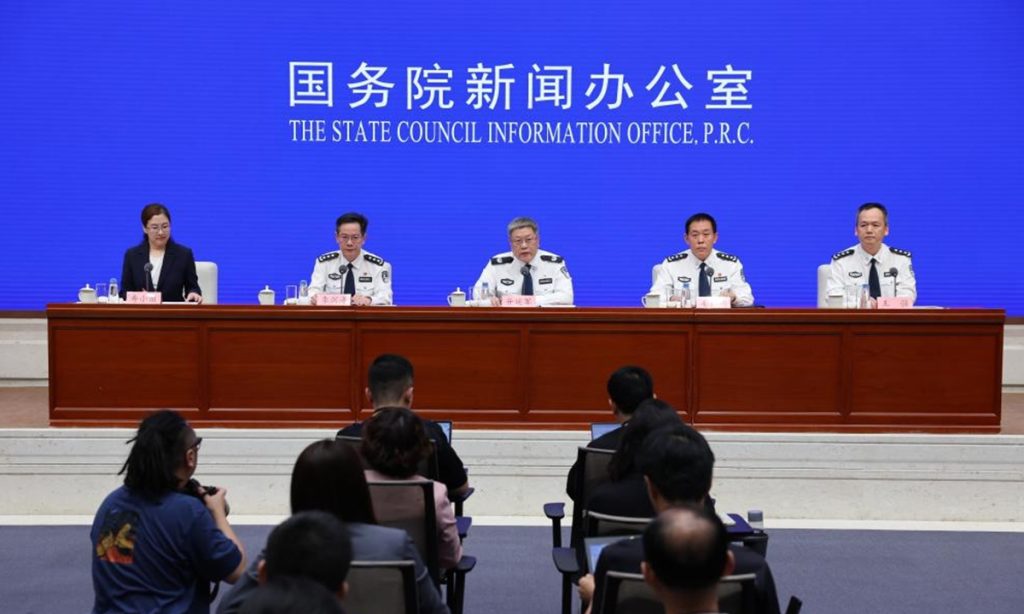
China, which has maintained one of the lowest incidences of fatal criminal cases, the lowest rates of criminal offenses, and the fewest cases involving firearms and explosives, is widely recognized as one of the safest countries in the world, a senior Chinese public security official said at a press conference on Wednesday.
Qi Yanjun, vice minister of public security, made the remarks at the conference. He said that public security organs have helped facilitate China's high-quality development by resolutely safeguarding public safety, according to the Xinhua News Agency.
Also, Chinese police handled 1.739 million telecom fraud cases and arrested 366,000 suspects, including 3,442 major financiers and core members of the crime groups, during the 14th Five-Year Plan period (2021-25), senior police officer Jiang Guoli said at the press conference, Xinhua reported.
Public security organs have arrested 366,000 suspects, including 3,442 key figures in fraud syndicates, through special operations. These campaigns targeted criminal networks providing illegal services - such as online traffic promotion, money laundering, tech support, and human smuggling - for overseas fraud groups, a report by CCTV News said.
China has also continuously deepened international law enforcement cooperation and has sent specialized teams to countries such as Thailand, Cambodia, and the Philippines to carry out police cooperation, according to the conference, CCTV reported.
Joint actions have led to the dismantling of more than 2,000 overseas fraud dens and the arrest of over 80,000 criminal suspects. These efforts have significantly deterred transnational criminal fraud networks and effectively curbed the high incidence of cross-border telecom and cyber fraud crimes.
According to data released by China's Ministry of Public Security, during the 14th Five-Year Plan period, Chinese police smashed over 590 organized crime groups and more than 8,900 violent criminal organizations, and solved around 105,000 related criminal cases, Xinhua reported.
The South African government has issued a Government Gazette officially withdrawing its diplomatic recognition of Taiwan's representative office in Pretoria. It has also called on the Taiwan authorities to relocate the institution to Johannesburg and rename the "Taipei Liaison Office" in Cape Town as the "Taipei Commercial Office."
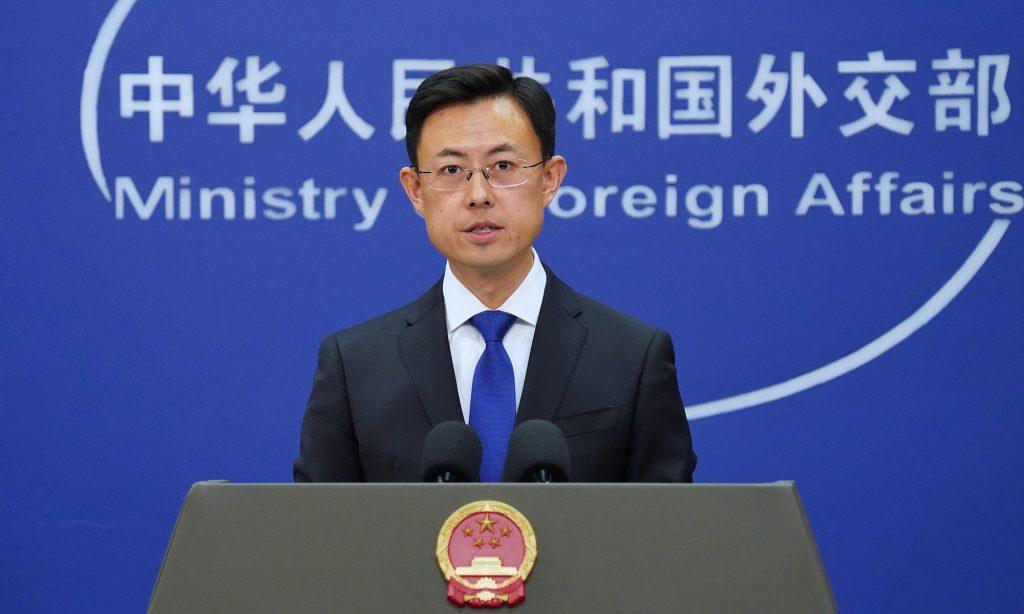
When asked to comment on the issue, the spokesperson for China's Foreign Ministry Guo Jiakun said on Thursday that the one-China principle is the political foundation for China to establish and develop diplomatic relations with countries around the world. It is also a fundamental norm in international relations and a widely held consensus within the international community.
The measures taken by the South African government are positive steps in upholding the one-China principle. They align with the spirit of UN General Assembly Resolution 2758 and form an integral part of the China-South Africa comprehensive strategic cooperative partnership in the new era. China appreciates these actions and is willing to continue providing firm mutual support to South Africa on issues involving each other's core interests, Guo said.
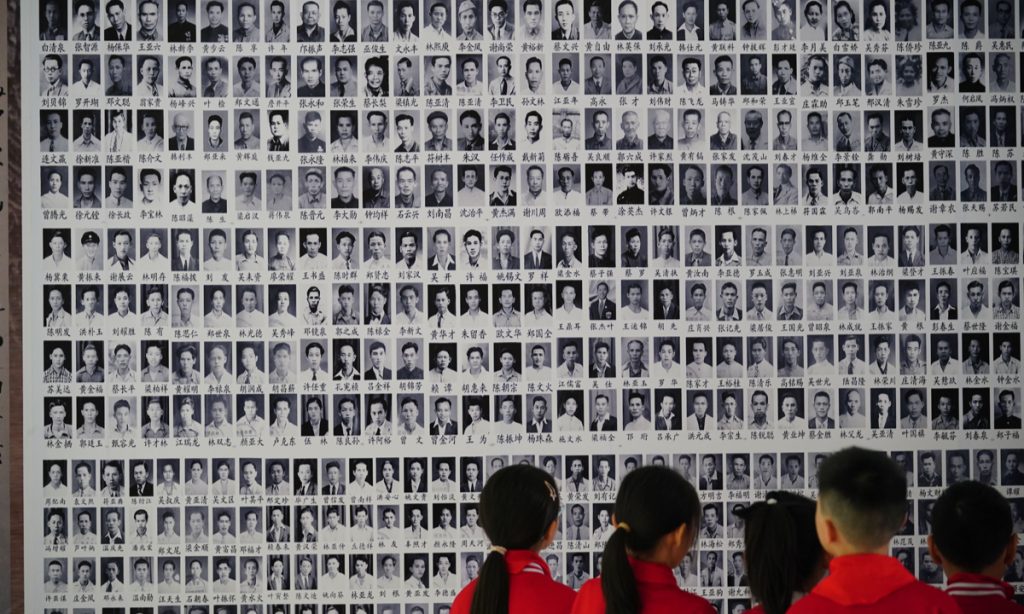
When Bong Boon Min, nephew of a Nanyang transport volunteer, left Sarawak, Malaysia in the 1970s to do contracting work, he had no idea of his family’s link to the Nanyang Volunteer Drivers and Mechanics. It wasn’t until years later, through a chance conversation with his uncle, that he discovered the untold story of his relative’s involvement in this wartime effort. Since then, Bong has dedicated himself to uncovering and preserving this forgotten chapter. Although 73 years old now, he remains committed to the task.
The “Nanyang Volunteer Drivers and Mechanics” refers to over 3,200 overseas Chinese drivers and technicians who returned from Southeast Asia to support Chinese People’s War of Resistance against Japanese Aggression (1931-45), according to the Xinhua News Agency.
After the war broke out, the Burma Road, completed in 1938, became China’s pivotal international supply route in the southwest. However, China lacked experienced drivers and mechanics for heavy-duty transport vehicles. Upon learning this, Tan Kah Kee, chairman of the Southeast China Relief Fund Union, called for volunteers to return and serve.
Between 1939 and 1942, they transported over 500,000 tons of military supplies and more than 15,000 vehicles into China, along with countless civilian goods. Over 1,000 volunteers sacrificed their lives in the process, Xinhua said. Although none of the volunteers remain alive today, their heroic stories continue to resonate across China and Southeast Asia.
On the 80th anniversary of the victory in the Chinese People's War of Resistance against Japanese Aggression and the World Anti-Fascist War, the Global Times interviewed descendants of the volunteers in Malaysia and Singapore. They shared memories of their elders and described efforts to preserve and pass on this history.
Patriotism unspoken
Bong’s voice trembled with emotion as he recalled the past. “Every time I think about it, I can’t help but feel overwhelmed,” he told the Global Times.
Bong’s uncle, Kho Hai Seng, never spoke of his wartime experience – even to his family. This silence is common among many descendants of the mechanics, whose elders never spoke of their sacrifices.
“In the 1970s, I came across a book about the Nanyang volunteers and was shocked to learn how closely my hometown was tied to this nearly forgotten chapter of history,” Bong said. During a trip back in the 1990s, a conversation with Kho finally awakened this long-buried memory. That marked the beginning of Bong’s journey to gather records and track down other descendants.
Bong carefully documented his uncle’s story: Kho was born into a wealthy Chinese merchant family in Sarawak. He was well-educated, could drive, and had worked in a machine shop – living a life of comfort. Yet in August 1939, he gave it all up to join the volunteer corps and return to war-torn China.
Kho’s unit transported supplies from northern Burma into China. Just six months into 1939, 10 drivers perished in crashes. Their bodies were often buried in situ, facing south toward their homeland. Malaria and Japanese air raids posed constant threats. When a vehicle broke down and the driver failed to escape, the volunteers became sitting targets. After the road was bombed in 1942, Kho’s unit disbanded. He later lost his right arm in combat and left to the battlefield.
In another case, 77-year-old Singaporean Thong Kwee Chin, daughter of a volunteer, told the Global Times that her father never spoke of the past.
After years of searching, Thong’s older sister, Tang Yebi, gradually pieced together a clearer picture of her father, Tang Renwen: his own father had run a tailor shop in Malaya. When the War of Resistance broke out, he willingly gave up his comfortable life to join the fight. He stood out among more than 3,200 volunteer mechanics, delivering wartime supplies along the treacherous Burma Road.
Many other descendants have followed in their elders’ footsteps – resurrecting stories of courage and sacrifice long buried in history.
“The Nanyang volunteers were a symbol of the overseas Chinese community’s collective support for the motherland. These were some of the best and brightest youths of their time, whose return showed deep emotional ties and strong identification with China. They were defenders of peace and remain a vital part of our shared history,” said Xia Yuqing, professor and deputy director of the overseas Chinese research institute at the Yunnan Chinese Language and Culture College, Yunnan Normal University.
Keeping the flame alive
“I’ve been tirelessly trying to find descendants and promote this history – publishing articles and notices in newspapers to get the word out,” Bong said.
In 2010, Bong managed to contact a historical research institute in Southwest China's Yunnan Province. They were surprised to learn that three volunteers from Sarawak were still alive. With support from local Chinese institutions, Bong’s efforts to raise awareness gained momentum.
Surviving volunteers were often moved to tears that someone still cared enough to record their stories. Yet Bong’s journey wasn’t always smooth – some descendants, unaware of their parents’ past, mistook him for a scammer or treated him with suspicion.
Fortunately, his persistence paid off. More people began to trust him. “There’s no payment for this work,” Bong said, “but helping preserve this history is reward enough.”
Bong proudly displayed the commemorative medal granted to his uncle Kho by the Chinese government at the commemoration of the 70th anniversary of the victory of the Chinese People's War of Resistance against Japanese Aggression and the World Anti-Fascist War held on September 3, 2015. The medal was conferred to veterans, military commanders and representatives of international friends or their surviving family members who supported China’s resistance efforts, said Xinhua. This medal embodies a deep reverence for the heroes in the war, the aspiration to carry forward the great spirit of the war, as well as the Chinese people's firm resolve to cherish peace and forge ahead into the future, per Xinhua.
In 2016, Bong organized a campaign to retrace the Burma Road. Many descendants from Southeast Asia joined the journey. “It was a long, hard road, but we all finished it.”
“Afterward, I told the surviving volunteers, ‘I went there. I saw it, I walked it,’” Bong said.
Meanwhile, efforts to commemorate this history have led to the construction of memorials. For example, on May 14, 2025, a pavilion was completed in Malaysia-China Friendship Park, Sarawak, to permanently honor the Nanyang volunteers, according to Yunnan Daily.
“Learning and preserving the memory of the Nanyang volunteers helps overseas Chinese understand the past, reflect on the present and look to the future,” Thong said. “Places like the National Museum of Singapore and the War Memorial Park still bear traces of their history.”
“China’s current prosperity came through unimaginable hardship. Our generation knows this deeply, and we tell the younger generation. They come to understand it too,” Bong said.
“I have five children. Every one of them knows the story of the Nanyang volunteers,” he added.
As Xia emphasized, the volunteers’ legacy is a shared memory of Chinese people everywhere – and a powerful educational resource. “Their patriotic spirit still resonates, helping unite overseas Chinese and fostering deeper cultural identity. We must honor this history, especially among the youth.”
“This spirit is a lasting source of strength. These ordinary, kind-hearted people helped change the course of history. Their collective force made a real contribution to the global fight against fascism,” Xia said.
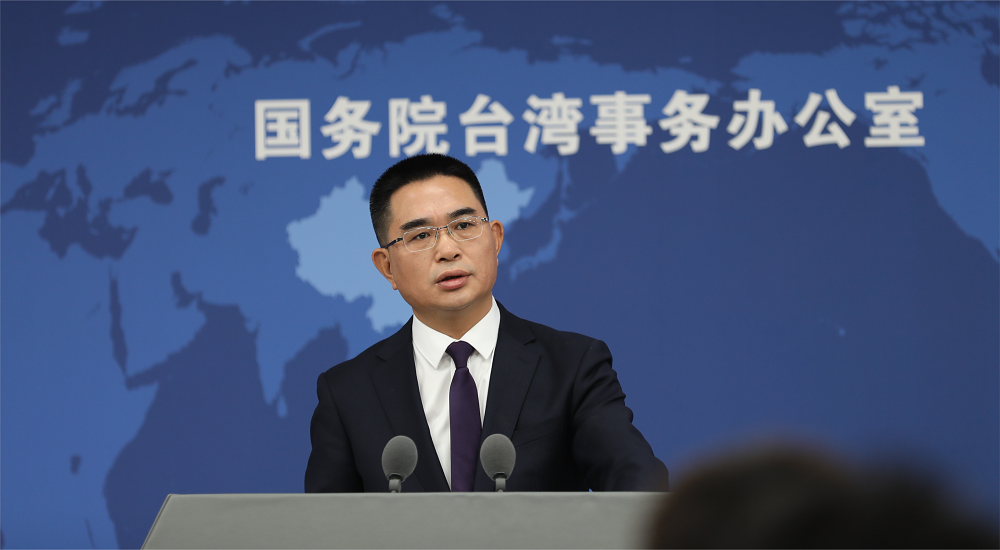
A Chinese mainland spokesperson on Sunday said that the failure of a recall vote targeting opposition lawmakers in Taiwan's local legislature shows that the Democratic Progressive Party (DPP)'s political manipulation runs against the will of the people.
During the vote on Saturday, the Kuomintang party scored a sweeping victory, retaining all 24 seats.
Responding to the outcome, Chen Binhua, a spokesperson for the State Council Taiwan Affairs Office, said the DPP, driven by its pursuit of "Taiwan independence" and avarice for one-party monopoly, repeatedly stirred up political strife at the expense of Taiwan people's well-being.
The DPP has resorted to every means to suppress political dissent, create "green terror" and deepen social division, fully revealing its hypocritical nature of "fake democracy, real authoritarianism," Chen said.
When asked to comment on US Secretary of State Marco Rubio's announcement on sanction imposition on Cuban President Miguel Diaz-Canel, Armed Forces Minister General Alvaro Lopez Miera and Interior Minister Lazaro Alberto Alvarez Casas, citing human rights violations as the reason, Chinese Foreign Ministry spokesperson Lin Jian said on Tuesday that China firmly opposes the US using the so-called human rights pretext to impose unilateral sanctions and interfere in Cuba's internal affairs.
The US announced its first sanctions on Friday against Cuban President Miguel Diaz-Canel for his role "in the Cuban regime's brutality toward the Cuban people," AFP reported.
The US has maintained a comprehensive blockade and illegal sanctions against Cuba for over 60 years, causing severe suffering to the Cuban people. Sanctions should be lifted immediately, rather than intensified, Lin said.
Lin said that China firmly supports Cuba in pursuing a development path that suits its national conditions and in safeguarding its sovereignty and dignity.
Lin urged the US to immediately lift the blockade and sanctions against Cuba and to remove Cuba from the list of state sponsors of terrorism. "I would like to emphasize that if the US truly cares about human rights, it should reflect on its own human rights violations in Guantanamo and around the world over the years," Lin said.
In response to media inquiries regarding Taiwan regional leader Lai Ching-te's reported "visit" to Paraguay, Guatemala, and Belize, with planned "transit" stops in New York and Dallas, Chen Binhua, spokesperson for the Taiwan Affairs Office of the State Council, stated on Wednesday, "We firmly oppose any form of official interaction between the US and China's Taiwan region, and resolutely oppose Lai's 'transit' stops in the US under any pretext or in any form."
Chen urged the US side to strictly abide by the one-China principle and the provisions of the three China-US joint communiqués, and to handle Taiwan-related issues with prudence so as to avoid sending any wrong signals to "Taiwan independence" separatist forces. "We sternly warn the Lai authorities: seeking 'independence' by relying on the US is futile and doomed to fail," Chen said.
The one-China principle is a consensus of the international community and a basic norm in international relations, upheld by the vast majority of countries around the world. It is where justice lies, reflects the people's aspiration, and aligns with the trend of the times, Chen added. He expressed hope that the relevant Latin American and Caribbean countries will recognize the overarching trend, handle Taiwan-related matters with caution, and join the big family of China-Latin America friendship and cooperation.