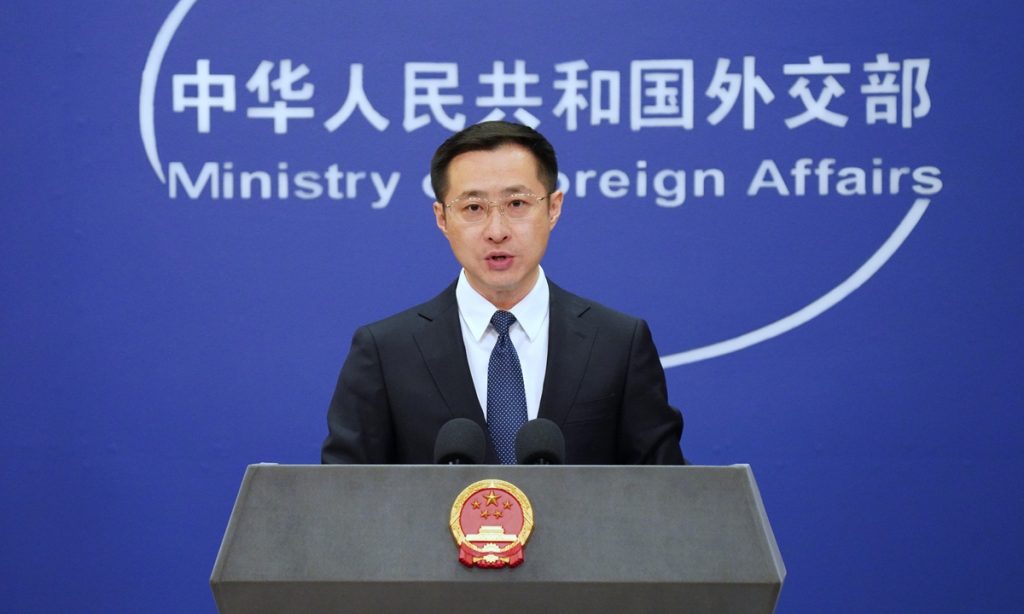
South Korean relevant departments have conveyed Seoul's position to the US through various channels after US Forces Korea (USFK) Commander Xavier Brunson described South Korea as a "dagger in the heart of Asia" regarding Seoul's geostrategic value, and the South Korean government is believed to have expressed regret and concern over the remarks while asking Washington to exercise restraint, Yonhap News Agency reported on Sunday, citing South Korea's presidential office.
According to Yonhap, South Korea's National Security Adviser Wi Sung-lac and officials from the defense ministry, foreign ministry and other departments delivered Seoul's message to Washington through diplomatic and security channels.
The Blue House said that it was unable to disclose the specific details of the discussions held through diplomatic and security channels between South Korea and the US, but noted that it was aware of Brunson's recent series of public remarks and that Seoul and Washington have been maintaining communication at various levels regarding all relevant issues, Yonhap reported.
"When they (the Chinese) look out from the east coast of China, what they see is there's Korea, the dagger in the heart of Asia," Brunson said in a recent podcast interview, according to a transcript posted on the website of the Strategic Studies Institute at the Army War College.
"(Then) there's Japan again, sort of that shield that's sort of a backstop, if you will, for them trying and their ambitions beyond that into the South China Sea and then down to their southeast is the Philippines," he added.
Brunson's remarks exposed a mindset of treating allies such as South Korea as subordinates and as tools to contain China, Lü Chao, a research fellow at the Liaoning Academy of Social Sciences, told the Global Times on Sunday. He noted that the remarks were full of arrogance toward South Korea and provocation against China, ignoring the fact that South Korea is a sovereign country.
Brunson's rhetoric has also drawn attention from South Korean media. The Korea Herald said that although a Cheong Wa Dae official declined to elaborate on the government's position regarding Brunson's remarks, security watchers say the message was likely that of regret.
South Korea's local media outlet News1 said the presidential office complained to the US over the remarks, while broadcaster JTBC reported that such concerns had been raised 10 times previously.
According to JTBC, the South Korean government told Brunson that the commander of US Forces Korea should act in accordance with agreements reached by the leaders of South Korea and the US, and should not make remarks that could cause misunderstanding or undermine regional peace.
The report said Brunson's latest remarks not only provoked China but also made South Korea, a US ally, uncomfortable. Despite Seoul repeatedly conveying its concerns, Brunson has continued to make unexpected remarks, and the government attaches great importance to this situation, JTBC reported.
Brunson's latest rhetoric was not the first of its kind. According to a Chosun Daily report in May 2025, the US commander had described South Korea as a "fixed aircraft carrier" in the region.
In response to Brunson's recent remarks, a spokesperson for the Chinese Embassy in South Korea questioned on Thursday whether Brunson's hostile and aggressive anti-China comments were authorized or he intended to challenge the consensus reached during the meeting between Chinese and US heads of state in Beijing. The spokesperson asked whether referring to the host country as military weapons such as an "aircraft carrier" or a "dagger" reflects his belligerence or an attempt to use other countries as pawns.
The responsibilities of USFK are clear, and China's position toward US Forces Korea is also clear, the spokesperson said, adding that China hopes the commander of US Forces Korea will respect countries in the region and do more to promote regional peace and stability.
"We have noticed that some South Korean media outlets published commentaries cautioning Mr Brunson that 'you crossed the line.' We would also like to tell the US Forces Korea commander that 'your rhetoric has indeed crossed the line,'" the spokesperson said.
Chinese analysts said Brunson's remarks also reflect South Korea's awkward position within the US-South Korea alliance, suggesting that Washington and Seoul may face deeper contradictions in their regional strategic goals, which appears to be not fully aligned.
In addition to media coverage and criticisms, some South Korean netizens also expressed strong dissatisfaction over Brunson's remarks.
On social media platform X, a South Korean netizen wrote that the remarks laid bare Washington's view of South Korea as little more than a military base or colony, noting that a defeatist mentality within South Korea that the country cannot defend itself without the US had also contributed to Washington's misperception.
Another netizen said the South Korean government had reportedly warned Brunson 10 times to be careful with his words, but he ignored all of them, exposing how the US treats South Korea as a Pacific outpost and calling the episode a "diplomatic disaster."
A netizen said in Korean on Gasengi.com that in the long run, US forces in South Korea should be further reduced and eventually leave, and that South Korea should safeguard its own security with its own hands.
Discussions within South Korea over Brunson's remarks indicate that regional countries are now paying more attention to strategic autonomy and are increasingly unwilling to simply follow the strategic arrangements of major powers. Instead, they are placing greater emphasis on making decisions based on their own national interests, Lü said.
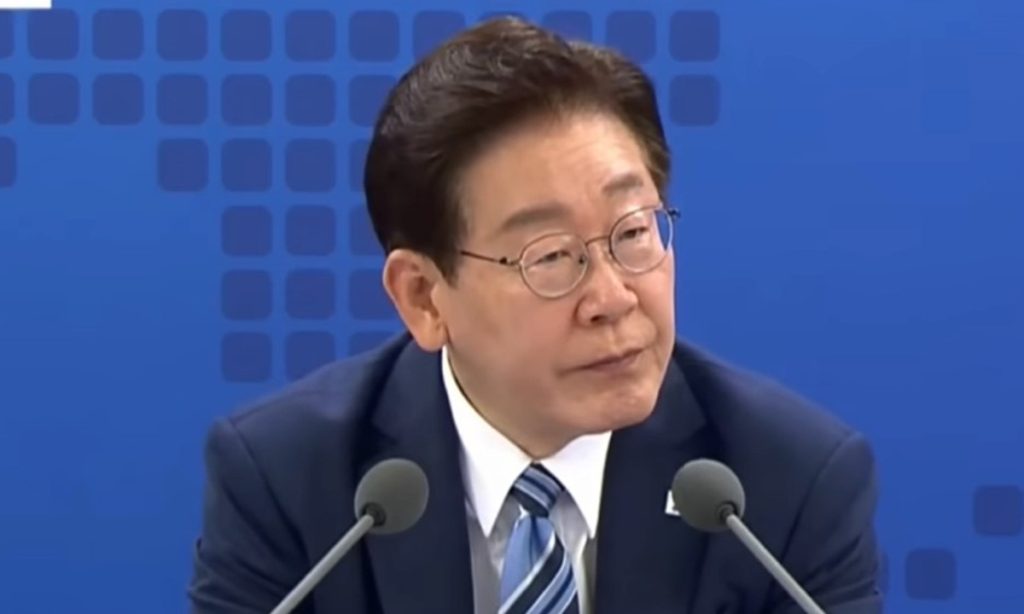
With two months to go before Busan hosts the UNESCO World Heritage Committee session, South Korean President Lee Jae-myung inspected preparations and urged the city to address controversy over alleged accommodation price gouging. Lee noted that many Chinese tourists have been visiting Busan. He also mentioned that unfriendliness, overcharging and racial discrimination are among the biggest threats to the city's tourism industry, saying such practices could seriously damage Busan's image, according to South Korean media.
At a briefing on preparations for the 48th Session of the UNESCO World Heritage Committee held in Haeundae District, Busan, Lee raised the issue while discussing large-scale international events and efforts to attract tourists, according to South Korean media the Financial News.
Lee said "If talk of lodging price gouging comes up again when we host large-scale events in the future, it will badly damage Busan's image," and urged officials to "prepare and respond well." In particular, he addressed reports that some lodging businesses had raised prices and canceled reservations ahead of the BTS concert, according to the report.
With BTS concerts scheduled in Busan on the 12th and 13th of next month, reports on online communities of one-night rates in the Busan area reaching up to several million won have sparked controversy, per Kyunghyang Shinmun.
According to a video of the briefing released by JTV News, an official said during the meeting that cruises from China were increasing rapidly and that Busan would strengthen its tourism reception system to attract more visitors. Lee then noted that when he visited Jagalchi Market, merchants told him that many Chinese tourists had been coming and that Chinese visitors, in particular, had strong consumption demand for food.
Lee then said that it shows Busan is a region with enormous potential, especially in tourism. But the biggest obstacles to tourism are unfriendliness, overcharging and, in particular, forms of racial discrimination, which can do great damage. These are things they need to be careful about, according to JTV News.
The Ministry of Water Resources activated a Level-IV flood-control emergency response on Sunday for Anhui, Henan, Chongqing and Shaanxi, while maintaining the same level of response for Jiangxi, Hubei and Hunan.
From Sunday to Wednesday, heavy rainfall is expected to sweep across eastern and northern parts of southwest China, eastern parts of northwest China, areas between the Yellow River and the Huaihe River, areas between the Yangtze River and the Huaihe River, as well as the northern and western parts of areas south of the Yangtze River. Some small and medium-sized rivers in high-risk areas could exceed warning levels.
The ministry has urged local authorities to strengthen real-time monitoring of rainfall and water-level conditions and issue early warning information in a timely manner.
Special emphasis should be placed on ensuring the safe operation of reservoirs during the flood season and stepping up flood prevention efforts for smaller rivers and mountain torrents, according to the ministry.
"Building an ecological civilization concerns the well-being of the people and the future of the nation."
Chinese President Xi Jinping, also general secretary of the Communist Party of China (CPC) Central Committee and chairman of the Central Military Commission, pointed out: "Respecting, adapting to, and protecting nature is essential for building China into a modern socialist country in all respects."
As outlined in the 15th Five-Year Plan (2026-2030) for national economic and social development, securing major breakthroughs in strategic tasks of overall importance to Chinese modernization and making major new progress in the Beautiful China Initiative are set as key objectives.
The Global Times is launching a series of articles titled "BeautifulChinaING." From the perspectives of the beauty of nature, the beauty of system and the beauty of lifestyle, the series uses both Chinese and international cases as entry points. Through field reporting and video storytelling, it explores how green development has become a defining feature of Chinese modernization while showcasing China's role as a responsible major country providing global public goods.
In this installment, as May 22 marks the International Day for Biological Diversity, we turn our focus to the Chinese merganser in the Changbai Mountains, where decades of conservation, scientific innovation and community participation are helping revive one of the world's rarest birds while showcasing China's broader ecological restoration efforts.
In May, the Changbai Mountains in Northeast China's Jilin Province awaken with new life. Wildlife activity grows increasingly frequent as spring spreads across the forests and rivers.
Inside the nursery room of a wildlife rescue station five kilometers from Erdaobaihe Town, veterinarian Cui Xiucheng bends over to observe two tiny, fluffy creatures. The Chinese merganser ducklings flap their fragile wings excitedly as they splash around in a small basin of water.
The pair had recently become separated from their flock before being discovered by tourists and brought to the rescue station. Now, in a temperature-controlled environment and under careful feeding plans, they are growing steadily.
Behind this seemingly ordinary scene lies a conservation effort that has lasted for more than a decade.
Researchers at the Changbai Mountain Academy of Science told the Global Times that the Chinese merganser - a relic species dating back some 70 million years - is often referred to as the "giant pandas of birds." Highly sensitive to water quality and ecological conditions, the species is widely regarded as an indicator of ecosystem health. In recent years, sustained conservation efforts have driven a rapid recovery in its population.
May 22 marks the International Day for Biological Diversity. Against this backdrop, the story of the Chinese merganser in the Changbai Mountains has become a vivid example of China's broader ecological conservation achievements.
Guardians in the forest
According to Cui, rescuing Chinese mergansers requires highly specialized work.
In late May to early June each year, mother ducks leave the nest with most of their ducklings soon after hatching. Yet one or two eggs are left behind, having failed to hatch due to temperature fluctuations or insufficient incubation time, Cui told the Global Times.
"At that point, I bring the eggs back to the rescue station and place them in artificial incubators that replicate the temperature and humidity conditions of the wild," Cui said. Rescue operations are not limited to eggs. Injured or stranded ducklings also frequently require intervention.
In one rescue case in 2025, rescue workers found a weak duckling that had failed to jump out of an artificial nest box and was in critical condition. They rushed it back to the station for emergency care.
To help the duckling survive, Cui and other staff members prepared live cold-water fish every day, feeding it seven to eight times daily while carefully adjusting portions according to its growth stage. As the bird grew, its appetite became astonishing, consuming more than 100 small fish per day.
"They only eat tiny live fish from Changbai's cold-water streams, and the water quality has to remain extremely clean," Cui explained.
Alongside feeding, workers gradually introduced the duckling to simulated wild environments and trained it to forage independently.
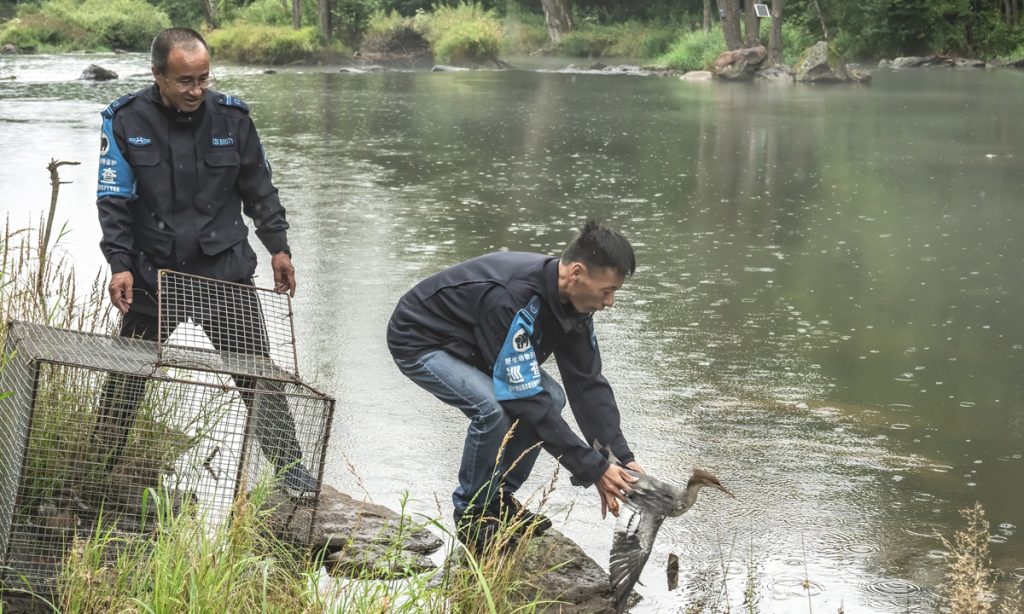
After more than a month of intensive care, during the peak feeding period for wild merganser flocks, the bird was released into the river. Only after watching it quickly blend back into the wild group did the rescue team finally breathe a sigh of relief.
"Since joining the rescue station in 2018, I start work at 7 am almost every day, and emergency rescues sometimes happen in the middle of the night," Cui said. "But seeing these endangered birds gradually recover makes every effort worthwhile."
The Global Times learned from the Changbai Mountain Academy of Science that surveys conducted in 2013 found only three natural nests remaining in the Toudao Baihe river basin, with fewer than 10 Chinese mergansers left in the area.
The turning point came through systematic policy support.
Facing severe population decline, local authorities launched key scientific research and conservation projects aimed at comprehensive species recovery. In 2018, Jilin initiated a long-term Chinese merganser conservation program covering the Changbai Mountains through 2030, according to China's National Forestry and Grassland Administration.
Today, after years of effort, the population of Chinese mergansers in the region has multiplied significantly.
Between 2022 and 2025 alone, this rescue station successfully treated and rescued more than 130 wild animals, including nationally protected species such as Chinese mergansers, sika deer, leopard cats, black bears, roe deer, goshawks and kestrels. Technological evolution in artificial nests
Behind the population rebound lies an evolving system of conservation technology.
Wang Zhuocong, associate researcher at the institute of zoology under the Changbai Mountain Academy of Science, described the gradual evolution of artificial nesting boxes.
"We first began experimenting with artificial nests in 2012. The earliest versions were very simple wooden boxes," Wang told the Global Times.
After years of refinement, the reserve's artificial nests have now reached their fourth generation. Internal climbing nets help Chinese mergansers safely jump out of nests, bark-like outer coverings provide a more natural appearance for nesting females, and environmentally friendly anti-corrosion coatings protect the structures from freeze-thaw cracking, Wang said.
The results have been striking. Wang said that in 2020, six artificial nests in the Toudao Baihe basin successfully produced 42 Chinese mergansers. By 2023, as many as 17 artificial nests were used, producing 116 hatchlings.
Snakes and weasel-like predators are among the merganser's main natural enemies. Snakes consume eggs, while yellow-throated martens not only prey on eggs but also attack incubating females.
To address the problem without disrupting ecological balance, conservation teams adopted cautious solutions. Snake repellents containing substances such as realgar and garlic extract were deployed around nests, while anti-marten barriers made from blunt plastic mesh were installed to deter predators without harming them.
"We cannot protect one endangered species by destroying others," Wang stressed.
Today, local authorities have also installed real-time monitoring cameras, carefully placing them during brief periods when female ducks temporarily leave the nests after laying eggs. The system allows researchers to observe breeding behavior while quickly identifying emergencies that require rescue intervention, Wang said.
Yet Wang emphasized that there is much work to be done before the Chinese merganser can be removed from the endangered species list.
As she pointed out, key priorities include restoring habitat connectivity by removing or modifying river barriers that obstruct migration routes, and expanding the large-scale installation of predator-resistant artificial nests with temperature and humidity controls.
Even so, the Chinese merganser's return already reflects the broader ecological recovery underway in the Changbai region.
"The fact that Chinese mergansers are returning to use artificial nests shows that forest resources across the Changbai Mountains are recovering," Wang said. "And if they can survive here and raise offspring successfully, it means the rivers contain abundant food and biodiversity, and the water quality is excellent."
Shi Guoqiang, head of the protection division at the Changbai Mountain Nature Conservation and Management Center, told the Global Times that conservation achievements during China's 14th Five-Year Plan period (2021-2025) have been especially significant. Chinese merganser populations have steadily increased across the reserve. Meanwhile, in recent years, the Siberian tiger, a flagship species of the northeastern forest ecosystem, has also left increasing traces and has been captured on hidden cameras.
"The return of flagship species demonstrates that the Changbai Mountains ecosystem is becoming more complete, while habitat connectivity and ecological integrity continue to improve," Shi said. Living alongside Nature
The 2026-2030 period marks a critical stage for China in its quest to basically achieve socialist modernization by 2035, with harmony between humanity and nature standing as a distinctive feature of Chinese modernization, reported Xinhua on March 9, 2026.
For the Changbai Mountain National Nature Reserve, coexistence between humans and nature also forms a central part of its long-term vision.
Shi told the Global Times that the reserve has actively encouraged nearby residents to participate in conservation work. Local residents are recruited as ecological forest rangers and patrol personnel, with experienced workers able to advance into leadership positions.
Cui has witnessed the change firsthand.
"Public awareness of wildlife protection has improved significantly in recent years," he said. "Now, usually, whenever someone comes across an injured animal, they take it to the rescue station."
Not long ago, a lost wild boar piglet even ran underneath a patrol vehicle seeking shelter and help, Cui recalled with a smile, describing the animal as "surprisingly intelligent."
Environmental education has also become increasingly immersive and localized. During events such as bird-loving week, students and community groups are invited to research and science education bases where they learn to build bird nests, participate in habitat restoration and experience wildlife patrol work firsthand.
Biodiversity conservation efforts across other parts of China have also yielded notable results. On Wednesday, the People's Daily Online reported that more than 500 milu deer, an endemic Chinese species, were born this year at a national nature reserve in Central China's Hubei Province, marking a breeding peak for the population.
Meanwhile, China National Radio reported on Wednesday that through continuous habitat restoration, population monitoring and ecological corridor construction, numbers of the Hainan gibbon in Changjiang County, South China's Hainan Province, have steadily increased, making the area a national model for the protection of rare and endangered species.
As the sun sets, the rescued Chinese merganser duckling released from the nursery has now adapted to life in the wild, foraging alongside its flock in shallow waters. Back at the rescue station, Cui remains busy caring for newly injured animals.
"As long as the forests stay green and the streams stay clear, these birds will always have a home," Cui said. "And that home belongs not only to the birds, but to everyone living on this land."
A video showing a post-1999-born man from Zhoukou, Central China's Henan Province, reportedly earning around 30,000 yuan ($4,100) a month by breeding cockroaches has gone viral online, local media reported.
The man, surnamed Xing, said he entered the industry after noticing the growing popularity of exotic pets among young people, per the report.
"Young people like reptile pets and I saw a market opportunity, so I gradually started learning and gaining experience," Xing said.
He explained that he initially fed the cockroaches carrots before switching to a mix of fruits, vegetables, wheat bran and flour-based feed, all prepared by himself.
Footage from the interview showed Xing building his own breeding facility, where egg carton trays were neatly stacked on shelves to serve as habitats for the cockroaches. Crushed food was spread across the racks, and the insects would crawl out on their own to feed.
Xing told the reporter that he can manage the breeding farm by himself and that the operating costs are relatively low. According to Xing, young cockroaches can sell for about 300 yuan per jin (500 grams), while even lower-grade stock can fetch between 60 and 70 yuan per jin.
The video quickly drew attention online, with some netizens expressing curiosity about the uses of cockroaches beyond being used as feed or food. Others joked that they were inspired to "switch careers" and start breeding cockroaches themselves.
Chinese President Xi Jinping and Russian President Vladimir Putin agreed on Wednesday to further extend the China-Russia Treaty of Good-Neighborliness and Friendly Cooperation.
Xi held talks with Putin at the Great Hall of the People in Beijing.
Xi noted that China and Russia signed the treaty 25 years ago, establishing by law the institutional foundation of long-term good-neighborliness, friendship and comprehensive strategic coordination.
Since then, the bilateral relationship has achieved leapfrog development, Xi added.
Today, the international landscape is undergoing momentous changes, and the world risks returning to the law of the jungle, Xi said, adding that against this backdrop, the China-Russia treaty of good-neighborliness and friendly cooperation has further proven to be advanced, scientific and relevant.
China supports the further extension of the treaty, said Xi, adding that China will work with Russia to jointly honor the spirit of the treaty and firmly advance China-Russia back-to-back strategic coordination.
"Building an ecological civilization concerns the well-being of the people and the future of the nation."
Chinese President Xi Jinping, also general secretary of the Communist Party of China (CPC) Central Committee and chairman of the Central Military Commission, pointed out: "Respecting, adapting to, and protecting nature is essential for building China into a modern socialist country in all respects."
As outlined in the 15th Five-Year Plan (2026-2030) for national economic and social development, securing major breakthroughs in strategic tasks of overall importance to Chinese modernization and making major new progress in the Beautiful China Initiative are set as key objectives.
The Global Times is launching a series of articles titled "BeautifulChinaING." From the perspectives of the beauty of nature, the beauty of system and the beauty of lifestyle, the series uses both Chinese and international cases as entry points. Through field reporting and video storytelling, it explores how green development has become a defining feature of Chinese modernization while showcasing China's role as a responsible major country providing global public goods.
In this installment, we turn our focus to China's broader fight against desertification and the growing public participation behind it. Through the stories of young volunteers planting trees in Minqin County, Northwest China's Gansu Province, and similar efforts across the country, this story examines how grassroots action, youth engagement and long-term ecological restoration are becoming part of the wider practice of building a Beautiful China.
This spring, many young Chinese people have chosen not to spend their holidays at popular tourist attractions, but on the edge of the desert in Minqin County, Northwest China's Gansu Province.
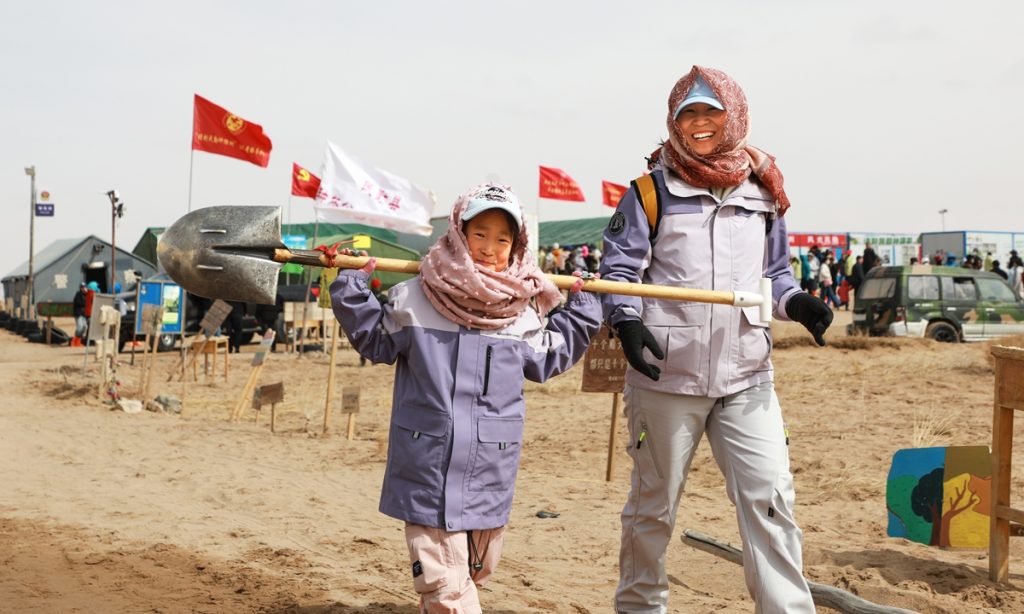
On social media, "Come to Minqin and plant a tree" has become a trending topic. Young people from across the country have paid their own way to travel there, carrying shovels and saplings on their backs, planting native sand-fixing plants amid wind and sand. In doing so, they have turned "going to the desert to plant trees" into a new public welfare trend.
As of May 5, the 2026 "Come to Minqin and plant a tree" volunteer campaign had received more than 50,000 online registrations and attracted 46,000 volunteer visits in total. At its peak, more than 4,000 volunteers booked slots in a single day via the online platform to come to Minqin to plant trees, the People's Daily reported.
This trend also stands as a vivid testament to the country's broader green development efforts.
According to the Xinhua News Agency, China completed afforestation of 36.6 million hectares over the past five years, restored 289,600 mu (19,307 hectares) of wetlands, and treated 10.13 million mu of desertified land. The country has continued to see reductions in both desertified and sandy land areas, becoming the first in the world to achieve "zero growth" in land degradation.
Zhao Yu, who works in the internet industry in Beijing, is one of the volunteers coming to Minqin. She first came across stories about Minqin's desertification control efforts on short video platforms and was moved by the persistence of Zhong Lin, a young man born in 1998 who returned to his hometown, and local residents who have spent years guarding the oasis.
In March, she arrived in Minqin. She had originally thought planting trees was simply about "digging a hole and putting a sapling in it." But after truly stepping into the desert, she found that preventing and controlling desertification was far more arduous than she had imagined - and far more concrete.
"I used to think ecological civilization and green development were somewhat distant from ordinary people," Zhao told the Global Times. But in Minqin, she said, she felt for the first time that ecological civilization could be a tree planted by ordinary people with their own hands. It could also be the genuine efforts of a group of young people bending over in the wind and sand to bring more green to the desert.
From screen to sand
The first thing Zhao felt after arriving in Minqin was a strong sense of contrast.
Before setting off, Minqin had been, to her, simply a destination many young people were heading to under related topics on social media platforms like Douyin and RedNote. Only after arriving did she realize that the wind and sand pressure borne by this land was far more direct and heavier than what she had seen on screen.
On the way to Minqin, the scenery outside the car window gradually turned vast and desolate. Along the way, she heard local residents explain that Minqin lies between the Tengger Desert and the Badain Jaran Desert like "a sandwich," and has long faced the pressure of being hemmed in by the two deserts.
Planting trees in the desert was not as easy as she had imagined. This year, the base adopted a new planting method, putting sand-tolerant plants into nutrient cups for mixed planting, in order to improve the survival rate and enrich biodiversity.
Saxaul trees, also known by their scientific name Haloxylon ammodendron, are highly drought-resistant plants that help stabilize sand dunes and form shelter belts. A single saxaul tree can help stabilize about 10 square meters of desertified soil.
Volunteers were divided into different groups. Some distributed saplings, some filled soil, some dug holes, and others watered and backfilled them. Since the nutrient cups were relatively tall, the holes had to be dug deep - sometimes above knee level. The loose sand would quickly slide back into the hole soon after being shoveled aside, so one hole often required several people to work together.
Zhao's group had eight or nine people, and over several days, they planted nearly 100 saplings.
The physical hardship soon became tangible. When the wind and sand were strong, sand would get into their hats, masks, shoe covers and the seams of clothing. Under the noon sun beating down on the sand, those working would soon be drenched in sweat.
But what impressed Zhao most was not the hardship, but the tacit understanding that formed among the young people on site. She saw that many volunteers were around 20 years old, and quite a few had never participated in environmental protection activities before or even held a shovel. Yet after arriving, they all carefully learned how to distribute saplings, dig holes and backfill them, worried that the saplings they planted might not survive.
One detail particularly touched her. A teenage girl in her group said while planting trees, "I must make sure the tree I plant survives."
Zhao said the remark helped her immediately understand the state of mind of many young people after arriving in Minqin: "They were not there for an easy visit and a selfie. They truly hoped that the trees they planted with their own hands would take root, sprout and grow."
She also noticed that local residents were especially warm toward volunteers from other places, whether in terms of accommodation, meals, transportation or other services.
The thought deeply touched her. "Planting trees here carries not only the enthusiasm of young people from outside, but also Minqin people's cherishing of and expectations for their homeland," Zhao told the Global Times.
After returning to Beijing, Zhao posted her experience online, and the response surprised her. She said the questions she received most often from netizens were how to sign up, how to get to Minqin and whether they could make donations. Many people also sent her long private messages expressing a keen interest to take part.
After receiving all these messages, and seeing how enthusiastic people were, she made a separate guide video, compiling information on registration methods, travel routes and precautions. Growing groves
In Minqin, the arrival of young people did not begin only this year.
According to the People's Daily, as early as 2006, Ma Junhe, a local resident of Minqin, and his friends jointly launched a volunteer association. In 2007, they organized volunteers online for the first time to come to Minqin to plant trees and fight desertification. In the first year, only around 20 people answered the call and came to the desert to plant trees.
More than a decade later, the internet has continued to play a role, but in a different way. Short videos, variety shows and social media platforms have brought Minqin onto the phone screens of more young people.
The Global Times learned from the Minqin county publicity department that in February 2024, the production team of an online variety show filmed a program in the county, where the guests and Zhong Lin, a young entrepreneur who returned to his hometown in Minqin, jointly planted 180,000 saxaul trees on the edge of the Tengger Desert.
After watching the program, many young people made the journey to the county, and took part in tree-planting activities.
In February 2025, the county issued a recruitment notice for the "Come to Minqin and plant a tree" public welfare tree-planting campaign. Soon afterwards, more volunteers from across the country began arriving in Minqin to take part in voluntary tree planting.
The Global Times learned from the Minqin county publicity department that since the campaign was launched, it has attracted more than 92,000 volunteer visits from across the country.
Zhong said he experienced failure when he first began working on nonprofit desertification control.
When he first tried to plant 500 saxaul trees, most of them failed to survive due to his lack of experience. He later studied materials on desertification control, sought advice from local villagers, summarized the lessons learned and planted another 53 hectares of saxaul trees. He also moved his home to the edge of the desert to guard the saplings as they grew. The survival rate of that batch of saxaul trees reached 80 percent.
"Planting trees in the desert is something Minqin people have been doing for generations," Zhong told the Global Times. Now, through the "Come to Minqin and plant a tree" initiative, more and more young people from across the country have joined in, and many parents have brought their children here to plant trees, Zhong said. "This is the meaning of what I am doing." Grassroots synergy
The continuous influx of volunteers has also brought new tests to this northwest China county, which has a relatively small permanent population.
The Global Times learned from the Minqin county publicity department that, since 2025, in order to ensure the smooth and orderly operation of the "Come to Minqin and plant a tree" volunteer campaign, Minqin has refined services and support around the full process of volunteers' needs, covering meals, accommodation, transportation and tree planting. Local authorities have also set up police, medical and emergency service points.
Such efforts are emerging in more places. In the Hunshandake Sandy Land in North China's Inner Mongolia Autonomous Region, spring tree planting has also attracted many volunteers.
During this year's May Day holidays, a public welfare spring planting campaign was launched in the Hunshandake Sandy Land in Inner Mongolia. On the first day, more than 300 volunteers from different places planted drought-resistant and sand-fixing species such as yellow willow and caragana on 6.7 hectares of mobile sandy land, with professional technicians providing on-site guidance, reported the Inner Mongolia TV.
From Minqin to Hunshandake, and from offline volunteer tree planting to internet-based public welfare platforms, the ways in which the public participates in desertification prevention and control are becoming more diverse.
Behind this public participation is China's long-term process of advancing large-scale land greening and desertification prevention and control. According to a report released by the National Greening Commission, by 2025, various regions across China had built 3,071 "internet + voluntary tree planting" bases, launched 62,000 responsibility-fulfilling activities throughout the year and received more than 33 million visits.
For Zhao, these grand figures eventually came back to a small detail in everyday life.
One day, her niece, who is still in kindergarten, suddenly said to her, "Auntie, I want to plant a tree." Zhao asked what kind of tree she wanted to plant. The child replied, "A saxaul tree."
The answer surprised Zhao. She said she had not told the child in detail about the tree-planting process in Minqin, yet the name "saxaul tree" had already taken root and begun to sprout in the child's heart.
A DNA forensic analyst from the Xiangyang Public Security Bureau, Central China's Hubei Province, identified a suspect using DNA extracted from a single drop of blood from a mosquito, ultimately helping police arrest the fugitive after he had fled to another region, Hubei Daily reported.
The analyst, named Zhang Mengting, has worked in forensic DNA analysis for six years, during which she has examined more than 16,400 biological samples with zero errors, according to the report.
For instance, in a criminal case that occurred in Gucheng county, Xiangyang, in August 2020, the crime scene was chaotic, making it difficult for investigators to obtain useful leads.
Tracking the direction in which the suspect had fled, police discovered a makeshift shelter where the suspect was believed to have spent the night, Hubei Daily reported.
Zhang then returned to the scene for a second inspection. After repeated meticulous searches, she discovered a two millimeter square bloodstain on a worn mat, believed to have come from a mosquito crushed by the suspect.
By cross referencing DNA extracted from the mosquito blood, police pinpointed the suspect's identity and apprehended the fugitive after he fled to another area, the report said.
"A single strand of hair, a drop of sweat, or a piece of dander at a crime scene can become the key to uncovering the truth," Zhang said, adding, "But real physical evidence never reveals itself voluntarily; only through patient and meticulous examination can investigators identify crucial clues from complex traces."
In addition to assisting in criminal investigations, Zhang has also used DNA comparison technology to help parents find their missing children. Over her six-year career, Zhang has employed DNA technology to identify suspects in more than 320 difficult cases, developed various technical methods that helped locate 35 trafficked individuals, and helped reunite 42 families, Hubei Daily reported.
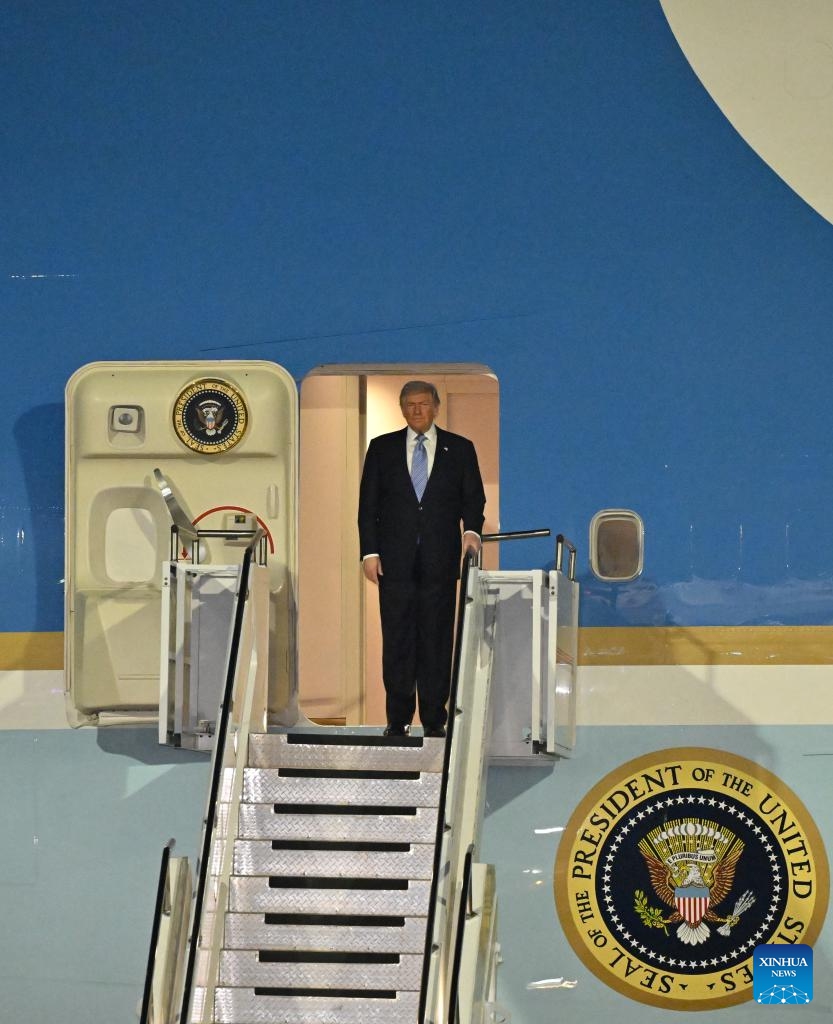
US President Donald Trump arrived in Beijing on Wednesday evening for a state visit to China, the first US presidential visit to China in almost nine years and Trump's second since November 2017, the Xinhua News Agency reported on Wednesday.
At the invitation of Chinese President Xi Jinping, Trump is visiting China from May 13 to 15, Xinhua reported.
Trump was welcomed by Chinese Vice President Han Zheng at the airport, according to Xinhua.
Before Trump departed the US, he told reporters "good things are gonna happen" in China, according to video clips released by China News Agency, which cited the Associated Press.
Heads-of-state diplomacy plays an irreplaceable role in providing strategic guidance for China-US relations. We welcome President Trump's state visit to China, Chinese Foreign Ministry spokesperson Guo Jiakun said on Wednesday.
During the visit, the two heads of state will have an in-depth exchange of views on major issues concerning China-US relations and world peace and development, Guo said, adding that China stands ready to work with the US to expand cooperation and manage differences in the spirit of equality, respect and mutual benefit, and provide more stability and certainty for a transforming and volatile world.
Chinese observers expect the leaders' summit to chart the course for the development of China-US relations in the period ahead, hoping the two major powers can expand the list of dialogue and cooperation, advance positive agendas, scale down the list of negative issues, and properly manage differences. This will not only set the tone for bilateral relationship to develop in a stable and sustainable manner, but also explore a correct way of future engagement, they noted.
Delicate and consequential
As CEOs from big American conglomerates, including Tesla's Elon Musk, Apple's Tim Cook, BlackRock's Larry Fink, Boeing's Kelly Ortberg and Blackstone's Stephen Schwarzman joined Trump's delegation to China, a dramatic moment came when Nvidia CEO Jensen Huang boarded the Air Force One unexpectedly in Alaska during a refueling stop, according to media reports. A report by The New York Times was headlined "Nvidia CEO hitches ride with Trump to China after last-minute invite." Earlier, media reported that Huang would not join the delegation.
There is broad scope and enormous potential for pragmatic cooperation between China and the US. We look forward to deeper exchanges and cooperation between the Chinese and US business communities under the strategic guidance of the two heads of state, making new contributions to the stable, sound and sustainable development of China‑US relations, a spokesperson for China Council for the Promotion of International Trade said on Wednesday when commenting on the accompanying delegation of US business representatives.
As Air Force One was heading toward Beijing, Chinese and US delegations held candid, in-depth and constructive exchanges in South Korea on Wednesday on economic and trade issues of mutual concern, as well as on further expanding practical cooperation.
According to Xinhua, Chinese Vice Premier He Lifeng, also China's lead person for China-US economic and trade affairs, and US lead person Treasury Secretary Scott Bessent conducted the consultations.
Guided by the important consensus reached by the two heads of state, the two sides upheld the principle of mutual respect, peaceful coexistence and win-win cooperation.
Economic and trade issues are expected to remain one of the major topics among all the issues on the table for the high-stakes heads-of-state summit, Da Wei, director of the Center for International Security and Strategy at Tsinghua University, told the Global Times on Wednesday.
The inclusion of more high-tech and financial firms in the US delegation compared with Trump's 2017 visit to China sends a clear signal of the importance both sides attach to cooperation in these areas, He Weiwen, a senior fellow at the Center for China and Globalization, told the Global Times.
According to a report released by the American Chamber of Commerce in China (AmCham China) on April 23, half of the surveyed US companies still rank China among their top three global investment destinations, while 79 percent of respondents hold a positive or neutral outlook on the future of China-US relations in 2026, up 30 percentage points from last year.
Analysts noted that despite of differences and conflicts, an "equal and constructive" approach is essential to achieving practical outcomes, rather than relying on unilateral pressure. Many US economic and trade restrictions targeting China will ultimately hurt the US' own economic interests.
Farhan Haq, deputy spokesperson for the UN Secretary-General noted that China and the US are two of the main economic powerhouses of the world and any way they can deal with any of their differences in economic policies would be beneficial for the world as a whole, according to the UN website.
According to a CNBC earlier report, China and the US are supposed to "seal outcomes on potentially a huge range of issues."
Among a wide range of issues, the Taiwan question remains the most sensitive as it concerns the political foundation of China-US relations, analysts said.
The Taiwan question is at the core of China's core interests, and concerns peace and stability across the Taiwan Straits and in the region, and naturally also bears on China-US relations, Wu Xinbo, Dean of the Institute of International Studies of Fudan University, told the Global Times on Wednesday.
Bilateral to global
Compared to President Trump's previous China visit in 2017, there have been major changes in both countries as well as the international landscape. Da describes 2017 as being a time at the tail end of neoliberal globalization, while in 2026, China and the US represent two major powers in a multipolar world that is polarizing and fragmenting.
Guo Jiping, an international commentary column of the People's Daily, published an article on Wednesday titled "China-US relationship cannot go back to the old days, but it can embrace a brighter future."
As this future takes shape under close global watch, international media outlets are paying high attention to Trump's visit and the upcoming meeting between the two leaders.
The Diplomat wrote that the summit's primary function is one of signal stabilization - providing a political assurance that competition, however intense, remains bounded within controllable limits.
Viewed from a broader perspective on history, the importance of China-US cooperation in the global landscape is growing ever greater, read an article published by the People's Daily on Tuesday.
To understand the global significance of bilateral relations, Wu noted that on one hand, China's communication with the US on many topics, including tariff issues, actually represents not only China, but also the interests of the majority in the international community, particularly developing countries.
On the other hand, China-US consultations are needed to address a slew of global challenges, ranging from regional hotspot issues and energy security to global recovery and global public goods, Wu said.
For China and the US, competition cannot replace coexistence, nor can differences overshadow cooperation. Rational engagement and pragmatic coordination represent the most rational and sustainable choice for both sides, according to Wang Dong, executive director of the Institute for Global Cooperation and Understanding at Peking University.
Through rational communication and cooperation, China and the US can not only stabilize the fundamentals of bilateral ties, but also inject certainty into global governance, resist the resurgence of bloc confrontation, and contribute to global development, regional peace and the steady transformation of the international order. This is also the global responsibility that both countries ought to shoulder, Wang told the Global Times.
As President Trump expects "good things" before his departure, Da Wei noted that despite issues and challenges, both China and the US share the will to maintain stability and are taking actions, which is in itself a positive news.
In response to media inquiries regarding reports claiming that a Chinese-owned oil products tanker was attacked near the Strait of Hormuz on Monday, Chinese Foreign Ministry spokesperson Lin Jian said at a press briefing on Friday that according to information available so far, the attacked tanker is flagged by the Marshall Islands and carries Chinese crew members. So far, no casualties among the crew have been reported by the tanker.
According to reports from Reuters and other media outlets on the Thursday, a Chinese-owned oil products tanker was attacked near the Strait of Hormuz on Monday. At Friday's press briefing, a foreign media reporter asked Lin what information China could provide on the reported incident and what measures China would take to ensure the safety of Chinese ships and crew members in the region.
Lin said that the Strait of Hormuz is a strait used for international navigation. China is deeply concerned that a large number of vessels and crew members have been affected by the conflict and stranded in the strait.
The Chinese side believes that restoring smooth passage through the strait as soon as possible and safeguarding the safety of civilian vessels and crew serves the common interests of countries in the region and the international community, the spokesperson said.
"China calls on all parties to take practical measures to prevent the situation in the strait from worsening. China is willing to work with the international community to continue making efforts to promote ceasefire and peace talk and to de-escalate the situation in the strait," Lin noted.