China's cyberspace regulator has intensified a campaign to clean up misconduct in group livestreaming entertainment, targeting issues such as excessive tipping incentives, vulgar content, and violations of minors' rights. It has taken action against more than 1,840 violating accounts, according to the Cyberspace Administration of China (CAC) on Monday.
Several group livestreaming accounts were found to feature sexually suggestive performances, such as provocative gestures and movements, or to deliberately create an ambiguous and eroticized atmosphere through lighting and staging, the CAC said. The accounts have been subject to measures including comment restrictions and temporary suspension of livestreaming privileges.
One group livestreaming account was shut down after minors were found participating in broadcasts, while the associated MCN agency was removed from the platform. Other accounts were penalized for using childlike speech, school uniforms, and similar tactics to encourage viewers to send virtual gifts, resulting in temporary livestreaming bans.
Some accounts were found to use coded phrases such as "unlock benefits" and scripted prompts to encourage users to transfer money or send gifts, or to lure fans into offline meetings. They have received penalties ranging from comment restrictions to permanent suspension of livestreaming privileges.
The administration also listed accounts that were penalized for staging vulgar or degrading PK punishments involving personal humiliation, or repeatedly using phrases such as "help me complete the set" and "just one more step" to drive gift-giving through PK sessions with no substantive content. Measures taken include temporary livestreaming bans and traffic restrictions, according to the CAC.
In accordance with the arrangements for the 2026 "Qinglang" special campaigns, the CAC announced in July that it had launched a two-month nationwide special campaign targeting irregularities in entertainment group livestreaming.
The campaign focuses on rectifying prominent problems concerning account registration, rule design, live-broadcast scene setup, behavioral codes for streamers, and the protection of minors online in group livestreaming.
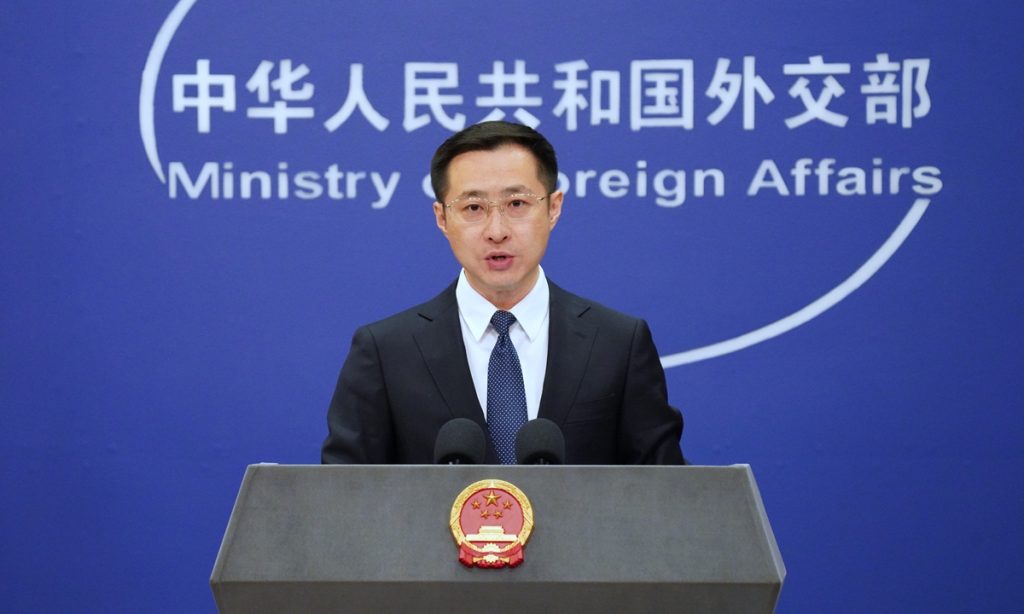
Due to scheduling reasons, Chinese Foreign Minister Wang Yi was unable to participate in the East Asia cooperation series of foreign ministers' meetings in their entirety. A senior Chinese official would represent China at the ASEAN Plus Three Foreign Ministers' meeting, East Asia Summit Foreign Ministers' Meeting, and the ASEAN Regional Forum Foreign Ministers' Meeting, Chinese FM spokesperson Lin Jian said on Thursday in response to a question about why Foreign Minister Wang Yi was absent from the ASEAN Plus Three Foreign Ministers' Meeting on Thursday.
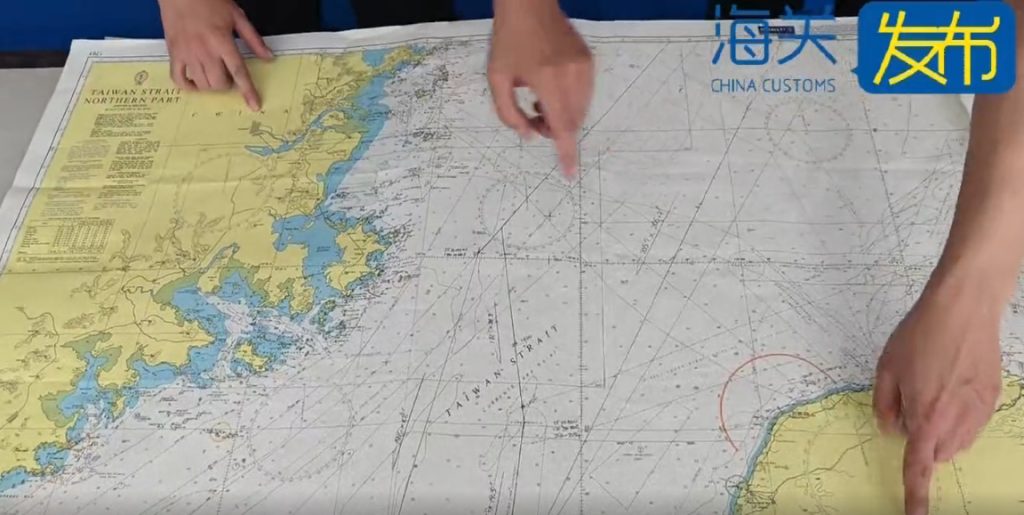
Customs officers from Caofeidian Customs in North China's Hebei Province, which is under Shijiazhuang Customs, seized 14 "problematic maps" on Tuesday while inspecting the luggage of outbound personnel aboard a vessel for international route, according to the customs authorities on Thursday.
The maps were found to have mislabeled China's Taiwan region as a country and incorrectly depicted or omitted China's South China Sea dotted line, among other issues, violating the one-China principle.
According to the Regulations of the PRC Measures for Overseeing the Import and Export of Printed Materials and Audio-Visual Materials Through Customs, printed materials and audiovisual products that endanger national unity, sovereignty and territorial integrity are prohibited from entering or exiting the border.
The customs authorities have since taken legal measures to detain the seized "problematic maps."
A series of breakthroughs in fundamental science and cutting-edge technologies have recently put China's younger generation of scientists and innovators under the global spotlight.
At the 2026 International Congress of Mathematicians in Philadelphia on Thursday local time, Peking University alumni Wang Hong and Deng Yu were awarded the Fields Medal, marking a historic breakthrough for Chinese mathematicians.
Meanwhile, Kimi K3, a 2.8 trillion-parameter open-source large language model developed by Moonshot AI, a startup co-founded by Tsinghua University alumnus and post-1990s entrepreneur Yang Zhilin, drew global attention in the artificial intelligence (AI) sector.
Also, discussions surrounding DeepSeek founder Liang Wenfeng's views on the development path of artificial general intelligence (AGI), AI ecosystems and domestic technological innovation have sparked widespread interest.
From breakthroughs in mathematical theory and advances in AI to university researchers and technology entrepreneurs, these young innovators represent a broader trend: China's new generation of science and technology talent is moving closer to the global innovation frontier and playing an increasingly important role in international academia, technological competition and industrial transformation, according to Chinese observers.
Unlike the earlier stage of development characterized largely by learning and catching up, today's young scientists and entrepreneurs are pursuing original breakthroughs in more fields, reflecting China's transition from leveraging scale advantages to strengthening its innovation capabilities, they noted.
From followers to frontiers
At the opening ceremony of the congress, held at the Pennsylvania Convention Center, the International Mathematical Union announced that Deng won the medal for his work in partial differential equations (PDEs), while Wang won the medal for her work in harmonic analysis and geometric measure theory, Xinhua said.
The Fields Medal is a top international mathematics prize awarded every four years to two to four young researchers under the age of 40 in recognition of their outstanding mathematical achievements in existing work and their promise of future achievement, Xinhua said.
Wang earned her bachelor's degree in mathematics from Peking University in 2011 before pursuing advanced studies in France, where she obtained a master's degree in mathematics and applications from Université Paris-Saclay in 2014 after studying at École polytechnique, according to the website of the Institut des Hautes Études Scientifiques (IHES).
She received her PhD from the Massachusetts Institute of Technology (MIT) in 2019 and later conducted postdoctoral research at the Institute for Advanced Study in Princeton. Wang joined UCLA as an assistant professor in 2021, became an associate professor at New York University (NYU)'s Courant Institute in 2023, and has served as a permanent professor at IHES and a professor at NYU since September 2025.
Deng, born in 1989, has often been described as a "math prodigy." His mother is a doctor and his father works in the computer-related field, according to media reports. Feng Yuefeng, Deng's math competition coach at Shenzhen High School, said that Deng had demonstrated exceptional mathematical talent since middle school and gradually advanced to the higher levels of mathematical research, according to the reports.
Deng is also known as a scholar with a wide range of interests beyond mathematics. According to media reports, his passion for anime has lasted for more than a decade; after going abroad for further studies and finding himself away from family and friends, he began spending more time watching anime and reading novels, covering genres ranging from romance to science fiction, and even tried his hand at writing poetry. Chess is another long-standing hobby that he has maintained for many years.
"Although their landmark achievements were made overseas, both Wang and Deng received their foundational education and undergraduate training in China, which laid a solid academic foundation for their later success," Tian Gang, an academician of the Chinese Academy of Sciences and director of the Beijing International Center for Mathematical Research, was quoted as saying in media reports on Friday.
Their achievements also demonstrate the effectiveness of China's early-stage cultivation of mathematical talent, Tian said.
Beyond individuals
Besides the prestigious breakthroughs made by young Chinese mathematicians, the recent launch of Kimi K3, the latest open-weight AI model from Chinese startup Moonshot AI, has drawn attention in Silicon Valley, with its 34-year-old CEO and co-founder Yang Zhilin becoming a focus due to his international academic background and decision to return to China to pursue AI innovation.
Born in 1992 in Guangdong, Yang graduated from Tsinghua University before earning a PhD at Carnegie Mellon University under renowned AI researchers Ruslan Salakhutdinov and William Cohen, and later worked at leading US AI companies before co-founding Moonshot AI with fellow Tsinghua alumni, according to open records.
Taken together, the stories of Yang Zhilin, Wang Hong, Deng Yu and Liang Wenfeng offer a glimpse into a broader transformation in China's science and technology landscape, Ming Jinwei, a former journalist and media commentator, told the Global Times on Friday.
In AI, Yang's Kimi K3 highlights the growing capabilities of Chinese developers in building advanced open-source models; in fundamental science, Wang and Deng's achievements demonstrate the rise of Chinese-trained researchers on the global academic stage; and in the technology industry, Liang's strategic vision reflects a new generation of entrepreneurs seeking long-term breakthroughs, Ming noted.
"Their achievements across different fields point to a broader trend: China's young scientists and innovators are becoming increasingly active participants in shaping the future of global technology and research," he said.
The rise of young Chinese scientists and entrepreneurs is not merely a story of individual achievement, but also reflects the evolution of a broader innovation ecosystem, according to Chinese observers. Behind the breakthroughs of those figures lies a long-term effort to strengthen talent cultivation, expand high-level universities, and support research in fundamental sciences and emerging technologies, they noted.
China's innovation capacity today is built on a comprehensive system, including strong infrastructure, industrial chains and a mature innovation ecosystem, Xiang Ligang, director-general of the Zhongguancun Modern Information Consumer Application Industry Technology Alliance, told the Global Times on Friday.
"These advantages are not confined to one field but provide broad support for breakthroughs across emerging technologies and new areas of development," he said.
Thai entertainment company GMMTV on Sunday released official statements in Chinese, Thai and English on various platforms amid call for apologies over a reported incident at a fan-gathering event the company hosted in a mall in Bangkok on Saturday where several security personnel used tough actions, including body slam, to drive away a Chinese fan from the venue, according to online videos and media reports.
In the statement regarding the incident at the International Novel Festival 2026, the company said that after conducting an initial investigation, their findings indicated that the staff member involved "used excessive force" beyond necessity and claimed it does not support violence in any form under any circumstance, expressing "regret" over the incident and impacts on "people related."
GMMTV said the individual (using force) is an outsourced staff member hired for the event rather than a direct employee. Acknowledging its responsibility to properly supervise all event personnel, the company said the staff member has been suspended from duties until the conclusion of an ongoing investigation.
It also claimed that GMMTV firmly upholds a policy of non-discrimination and does not condone any form of discrimination based on race or nationality.
Video clips online show that several GMMTV staff members forcibly drove the woman from the fan-meeting event of two Thai entertainers. While the Chinese fan holding her phone to record, a female staff member in black grabbed the Chinese woman by the shoulder and neck while attempting to snatch her cellphone. When the Chinese fights back, the same staff member grabbed her by the neck and threw her to the ground with multiple staff surrounding them.
According to media reports, citing footage of the scene and the fan's descriptions, the woman's camisole was pulled loose and her bracelet was broken during the incident. The Chinese fan said she gave a statement at a local police station and planned to seek assistance from the Chinese Embassy in Thailand.
A screenshot, reportedly from the entertainers' agent, hinted that the fan was violating rules and creating troubles. According to a report from the overseasidol.com, a website focusing on entertainment news, the fan also posted online that she had queued since early morning and possessed evidence supporting her place in line. However, after her queue marker was reportedly moved, a misunderstanding over the queue order allegedly occurred. The disagreement later escalated into a physical confrontation while staff attempted to manage the situation.
The incident on Saturday quickly went viral after related posts and videos spread across social media and related topic has ranked top on Sina Weibo's top search list until Sunday. Some netizens argued that event staff has no right to law enforcement as such and should have limited themselves to verbal warnings or asking her to leave the venue. Methods staff used at the scene were obviously beyond reasonable.
The company finally issued a statement on Sunday evening, yet it failed to appease the situation. "Do you even believe your own claim that the company has no policy or practice of discrimination based on race or nationality?" "Whenever something goes wrong, it's suddenly outsourced," a Weibo user posted.
Many Chinese netizens argued that GMMTV should issue a formal apology rather than such a statement. "It is clearly a blameshifting," one netizen wrote. "Deeply felt GMM's arrogance and disregard for the personal safety and dignity of fans," another netizen wrote.
GMMTV organizes multiple offline fan events in Bangkok each year, often setting up dedicated booths at Thailand's major public book fairs where fans can purchase drama-related novels and official merchandise while taking part in interactive activities, according to posts on its Facebook and Instagram accounts.
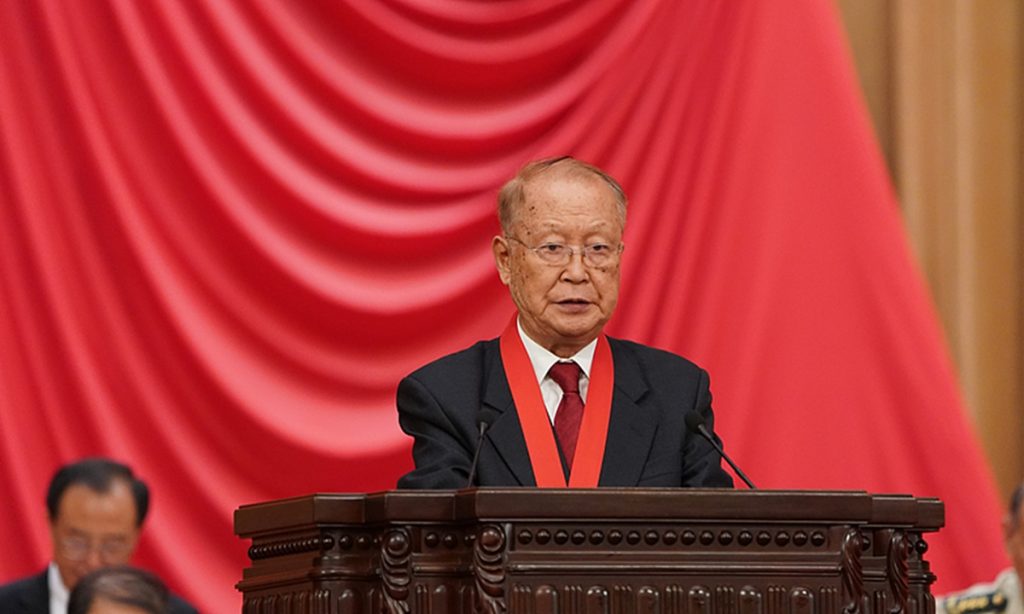
Ben De, a pioneering radar scientist who laid the foundation for China's airborne pulse-Doppler radar technology and helped pioneer phased-array radar technology with spearheaded research into space-based surveillance radar, has been awarded the State Preeminent Science and Technology Award, China's highest scientific honor.
China on Wednesday announced the recipients of the awards, honoring 258 projects and 11 scientists. Ben shared the country's highest science award with Chen Liquan, a pioneer in China's lithium battery industry, the Xinhua News Agency reported on Wednesday.
Known as the founding figure of China's airborne pulse Doppler radar technology, Ben has been widely credited with giving Chinese military aircraft the "eyes" needed for beyond-visual-range combat. Over a career spanning decades, he participated in the development of a series of major national defense projects and established the technological foundation for the independent development of China's airborne pulse Doppler radar systems.
In the 1960s and 1970s, amid a tense international environment, China urgently needed to develop its own long-range phased-array early warning radar to defend against ballistic missile threats. In 1965, Ben joined the country's phased-array radar research program. Starting from scratch, with no reference materials or prior experience to rely on, he taught himself English from the ground up so he could read technical literature. After just two months of intensive self-study, he was able to read English-language research papers, gmw.cn reported.
The Global Times has learned that the phased-array radar, code-named 7010, was a massive system comprising thousands of transmit-receive modules, more than 1,000 kilometers of control cables and thousands of equipment cabinets. To complete the project, Ben and fellow Chinese Academy of Engineering academician Zhang Guangyi made seven extended trips deep into the mountains, with each mission lasting more than half a year.
After more than a decade of work, China's first large-scale long-range phased-array early warning radar the 7010 was successfully developed, making China the third country in the world to master advanced phased-array radar technology.
The 1970s saw a fundamental shift in aerial warfare. A key requirement for next-generation fighter jets was the ability to detect and engage targets both above and below the aircraft at beyond-visual-range distances. The critical technology enabling this capability was the airborne pulse Doppler radar.
Although weighing only a few hundred kilograms, the airborne pulse Doppler fire-control radar became a decisive factor in air combat and air superiority, carrying major strategic significance. In the 1980s, only a handful of developed countries possessed the capability to produce advanced airborne fire-control radar systems. Developing such technology was essential for safeguarding China's airspace.
In 1979, Ben began tackling the challenge of enabling Chinese-made fighter jets to detect targets below the aircraft. Leading a team that launched more than 100 research projects, he proposed a development path tailored to China's national conditions and overcame nearly 100 key technological bottlenecks. To ensure the accuracy of flight-test data, he insisted on boarding every test flight himself. During the trials, he twice narrowly escaped disaster after an engine failure and a landing gear malfunction. "I never thought about being afraid. Once I was on board, all I cared about were the test parameters," Ben recalled to the reporter, according to Science and Technology Daily.
In 1989, China's first domestically developed airborne pulse Doppler radar with independent intellectual property rights passed official evaluation, filling a major technological gap and making China one of the few countries to master the technology. The achievement equipped Chinese fighter jets with sharp "eagle eyes" and marking a historic leap from zero to indigenous airborne pulse-Doppler fire-control radar capability.
Entering the 21st century, Ben continued to push the boundaries of innovation. He was elected an academician of the Chinese Academy of Engineering in 2001. In recent years, he has turned his attention to the broader field of space-based surveillance, publishing a book which laid the theoretical foundation for China's research in the field. He has also continued to track advances in global early-warning and detection technologies while guiding research in frontier fields such as microwave photonics, helping sustain China's leadership in radar technology.
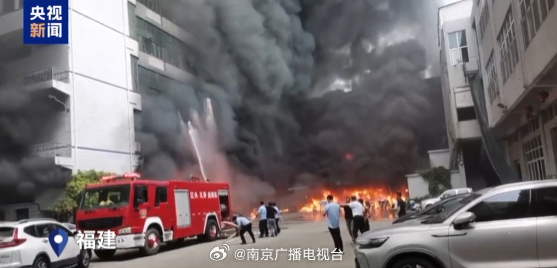
Death toll from the shoe factory fire in East China's Fujian has risen to 28, Xinhua reported. The blaze broke out around noon on Thursday, causing major casualties.
A total of 183 firefighters and 35 fire engines were sent to the scene. As of now, the open flames have now been extinguished, and the exact cause is still under investigation. Firefighters said that a large amount of clutter had been piled up in the factory building's stairwells, severely hampering firefighting efforts and hindering rescue operations, according to China Central Television (CCTV) News in its latest coverage of the development.
Earlier, firefighters rushed to the factory of the Huiteng Shoe Industry Co., Ltd in Chendai town shortly after the fire, but as of 3:20 pm on Thursday, rescuers were still unable to enter the burning building as operations to extinguish the blaze and locate missing individuals continued, Xinhua reported.
According to a report from CCTV News, the fire has resulted in casualties. And following the incident, China's Ministry of Emergency Management has demanded that all resources be mobilized to extinguish the fire, immediately verify the casualty situation, and make effort to rescue those still trapped while providing urgent medical treatment to the injured.
Jinjiang is one of China's leading footwear manufacturing hubs and the world's production base for sports shoes. According to official records, Jinjiang's footwear and apparel industry generated an annual output value exceeding 250 billion yuan ($36.74 billion) in 2024, with annual sports shoe production surpassing 1.2 billion pairs — accounting for 20 percent of global output.
The city is home to more than 7,000 footwear manufacturers and upstream and downstream supporting enterprises, forming a complete industrial chain and production ecosystem.
Laojun Mountain scenic spot in Luoyang, Central China's Henan Province, is recruiting a sea-of-clouds spotter with a monthly salary of 60,000 yuan ($8,813). Candidates are required to live at the mountain summit for 30 days, track daily everyday changes of the clouds, and post at least one short video each day, the notice said.
Laojun Mountain scenic spot released the recruitment via its official WeChat account on Wednesday. The notice said that the scenic spot is accepting applications for sea-of-clouds spotter position nationwide as July and August each year bring the most frequent and spectacular sea-of-clouds views. The spot seeks to better document changes in sea of clouds and share its spectacular views with online audiences.
The application window lasts one week. Applicants are required to post original short videos on Chinese social media platform Douyin with designated hashtags related to the Laojun Mountain sea-of-clouds spotter recruitment.
Scenic spot staff will use the number of video likes as the primary judging criterion, alongside comprehensive assessment of video content quality, communication reach, and account compliance status, read the notice.
The selected candidate will reside at the summit of Laojun Mountain for one month with free accommodation, tasked with daily monitoring of cloud-sea variations and producing and posting at least one short video of the cloud formations each day.
The recruitment has sparked widespread buzz among netizens, with many expressing their eagerness to apply. A netizen named Linshenjianlu commented that the recruitment not only allows photography enthusiasts nationwide to join in and earn a salary, but also helps boost the scenic spot's popularity, calling it "a win-win deal."
This year marks the 105th anniversary of the founding of the Communist Party of China (CPC). Over the past century, the Party has led China through profound transformations: from national peril to national rejuvenation, from bare subsistence to moderate prosperity, from technological catch-up to independent innovation, and from isolation and underdevelopment to greater educational equity. Generation after generation of CPC members, through their unwavering commitment, have written an epic of uplifting the destiny of the Chinese nation, the well-being of its people, and the course of national development.
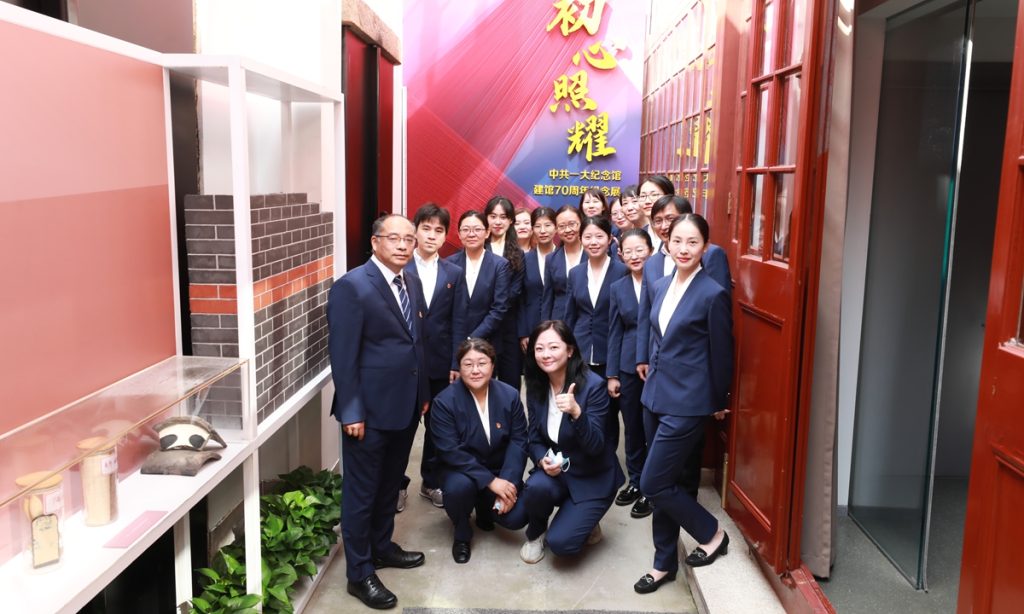
July 1 marks the CPC's founding anniversary. On this occasion, the Global Times is launching a special series, "105 Years of Uplift," to explore the deeper answer to the question of why the CPC has succeeded. The first installment focuses on how the Party has uplifted the destiny of the Chinese nation, turning the attention to the Memorial Hall of the First National Congress of the CPC - the birthplace of the Party - where a grassroots Party history researcher, through her work, looks back on how the Party pioneers a century ago lit the flame of faith and led the nation from crisis and hardship toward the great rejuvenation.
White light falls across rows of iron-clad bookshelves, where the air hangs thick with the mingled scent of ink and passing years. Zhang Yuhan runs her fingertips along the spines of books chronicling the history and development of the Communist Party of China (CPC), pulls one out, and slowly turns its pages. Between the lines, a century of arduous struggle and historic breakthroughs unfurls in quiet majesty.
This is the working area of the Memorial Hall of the First National Congress of the CPC in Shanghai. Outside the window, the trees along the city downtown's Xingye Road sway in the wind, their shadows strewn across the red-brick walls of the traditional shikumen-style buildings. On a summer day, 105 years ago in 1921, 13 young people, with an average age of 28, gathered secretly in a room on this very road. Their meeting, later interrupted by a raid and moved onto a boat on Nanhu Lake in nearby city Jiaxing, would set in motion a historic turning point: the birth of the CPC.
More than a century later, the Party, which at its founding had just over 50 members, has grown into the world's largest ruling party with more than 100 million members. It has led the Chinese nation out of danger and hardship, step by step, onto the broad road of national rejuvenation and the rise of a great power.
To Zhang, director of the coordination office and a research curator at the memorial, this dramatic transformation is an epic "uplift": generation after generation of CPC members, through faith, sacrifice and hard work, have steadily lifted the fate of the nation and the well-being of its people to unprecedented heights.
"The generations of the Party members," she told the Global Times at the memorial, "are the weightiest backbone of the Party's century-long endeavor of uplifting a nation."
Admirable choices
In 2002, Zhang began working at the memorial after graduating. One of her first major assignments was to sort through all domestic and international scholarship since 1949 on the history of the CPC's founding. Through numerous historical materials, Zhang gradually understands more deeply the weight of the choice made by a group of young people a century ago - the choice to give up personal stability and go forward to save the nation.
One of Zhang's most vivid memories in those years was the 2004 preparations for a symposium on Wang Jinmei.
Wang, a delegate to the first national congress of the CPC from East China's Shandong Province, had once been admitted to a teachers' college on the strength of excellent academic performance. For him, a stable life as a schoolteacher, earning a modest living and supporting a family, would have been an easy and ordinary path. But witnessing a China beset by internal turmoil and foreign aggression, with the people struggling in hunger and cold, Wang embraced Marxism and resolutely set aside his private life, traveling across several cities to mobilize workers' movements.
After years on the road, Wang developed a lung disease and died in Qingdao at just 27. On his deathbed, he left behind a testament: All comrades must work hard, and struggle to the very end for the liberation of the proletariat and all humanity, and for the complete realization of communism!
Decades later, Zhang traveled to Shandong to visit a number of revolutionary sites once associated with Wang. Standing on the ground where that generation had once marched and labored, she was deeply moved. "Growing up in poverty, Wang could have chosen a stable life and easily supported his family, but instead he devoted everything to finding a way forward for the nation," Zhang said. "Against the backdrop of that era, such a choice was extraordinarily rare."
Wang Jinmei was not alone. In those difficult years, countless pioneers like him carried the fate of a nation in peril on their shoulders.
Zhang also shared with the Global Times a family letter written by Chen Tanqiu, another representative to the first national congress of the CPC. At the time, underground Party work was extremely dangerous. Chen and his wife, Xu Quanzhi, who was pregnant at the time, were unable to raise their child, so they made the heartbreaking decision to entrust the baby to relatives in their hometown.
"I have always been a wanderer, with no fixed place to stay," Chen wrote in a letter to his brother, asking him to take in and raise his child. Soon after their child was born, in early 1934, Xu was arrested and later killed, as was Chen in 1943 by reactionary forces.
"These Party members were also parents and children. They loved their own children and families, but in order to secure a better future for more families, they chose to sacrifice their own," Zhang told the Global Times. "That kind of choice made them truly brave and selfless." Exhibits witness
In 2021, the new venue of the memorial opened to the public to mark the 100th anniversary of the founding of the CPC. Today, visitors continue to arrive in an unbroken stream, lingering in this shikumen-style building as they try to get closer to that momentous chapter of history.
The memorial houses a collection of nearly 130,000 relics and artifacts. Among the many exhibits, the first complete Chinese language translation of the Communist Manifesto, along with the first Party program and the first Resolution on the Present Task, stand as iconic witnesses to the Party's early years, Zhang said.
"The Communist Manifesto represented the Party's choice of Marxism," Zhang told the Global Times. She said that in that era, many progressive intellectuals repeatedly compared different ideas, before finally concluding that Marxism was the truth that could save the nation and the people.
If the Communist Manifesto was a "navigation chart," then the program and the resolution adopted at the First CPC National Congress were the "blueprint for construction," said Zhang. "Faith alone was not enough; a rigorous organization was also necessary. With such a party in place, people could think as one and work toward the same goal, helping to lay the foundation for uplifting a new China," she said.
For a century, the CPC's path of uplifting the destiny of the Chinese nation has been soaked in the blood of sacrifice. In 2025, the memorial held a special exhibition on archaeological findings related to martyrs of the Chinese People's War of Resistance Against Japanese Aggression (1931-1945). Among the exhibits were the remains of some martyrs, on whose bones rusted nails and traces of bullet holes were still clearly visible. These silent marks seemed to speak of the hail of bullets and shells they had endured while resisting invasion.
In the memorial hall's permanent exhibition, the tools used by martyr Li Ba to repair radio equipment and the radio once used by martyr Qin Hongjun rest quietly in display cases. On May 7, 1949, just some 20 days before the liberation of Shanghai and less than five months before the founding of New China, the two CPC members, who had worked in secret radio operations, were secretly killed by enemy agents.
"Whether faced with domestic turmoil or foreign aggression, CPC members have never given up their mission to carry the nation forward," Zhang told the Global Times. "Some fell on the front lines of battle, and some died in the shadows of the underground struggle, but the Party kept moving forward through setbacks."
A glorious path forward
Over the past two decades, Zhang has not only devoted her life to researching historical archives and designing exhibitions. She has also taken the stories of the Party's history into universities and out to the general public, spoken with ordinary visitors, foreign dignitaries and young students, and forged deep friendships with many descendants of the Party's revolutionary pioneers.
Zhang recalled one occasion when a descendant of Lin Boqu, one of the Party's early members, spoke of Lin's final all-night farewell with his old friend He Shuheng, a delegate of the first national congress of the CPC, before the Long March of the Red Army led by the CPC (1934-36). That night, He took off the sweater he was wearing and gave it to Lin. The sweater, made by He's daughter, later helped shield Lin from the bitter cold along the Long March.
He Shuheng later died after leaping from a cliff during a breakout attempt, and the sweater became a final testament to their parting. Decades later, when Lin's descendant spoke of that sweater, tears welled in her eyes.
Now on display at the memorial, the sweater carries not only the memory of a priceless wartime comradeship, but also the resolve of CPC members in those days: an unshakable conviction and dauntless devotion to sacrifice their lives at any moment, Zhang said.
Zhang believes that today the great founding spirit of the Party still resides in the ordinary yet steadfast choices people make, and the original aspiration of CPC members has never changed. "Just as the pioneers a hundred years ago set aside their own families to pursue a greater cause, Party members today continue to stand firm at their posts, day after day, turning the people's hopes into reality, continue to uplift the nation inch by inch."
In Zhang's view, "uplift" is never an abstract or grandiose word. It is something tangible, rooted in the everyday comforts of ordinary people's lives. "A warm meal on the stove, a home that shelters one from wind and rain, a school where children can study in safety, convenient transportation, security in old age… these are the most concrete expressions of how the Party and the country have uplifted this nation," she told the Global Times.
At the final section of the memorial's permanent exhibition, the scene is warm and bright: men, women and children gather before the camera, their faces lit with genuine smiles that fill an entire wall of display panels. The images stand in striking contrast to the sorrowful old photographs of ordinary people in earlier sections of this exhibition, creating a vivid visual span across a century.
Zhang paused there, gazing at those smiles, her eyes full of tenderness. "These radiant smiles are what all CPC revolutionaries devoted their lives to pursuing," she said. "The sacrifices made by countless people in those years were for one purpose: to ensure that the Chinese people would no longer struggle in misery, but could laugh freely from the heart."
"A century ago, the Party's pioneers uplifted the nation out of peril and survival crises; today, the Party continues to lead us in uplifting the people toward a better life," she said. "This glorious path has carried on, unbroken and unwavering."
Xi Jinping, general secretary of the Communist Party of China (CPC) Central Committee, on Tuesday chaired a meeting of the Political Bureau of the CPC Central Committee to study and arrange work related to flood control and drought relief.
China is expected to see more extreme weather and climate events than usual in its main flood season this year, with droughts and floods occurring at the same time, according to the meeting. It urged all regions and relevant departments to take solid measures to ensure effective flood control, drought relief, emergency response and disaster mitigation.
Stressing that protecting people's lives remains the top priority, the meeting called for measures to strengthen flood control on major rivers and lakes, and highlighted the need to attach great importance to the risk of drought-flood abrupt alternation, and strengthen the unified management and dispatching of water sources.
It also underscored the need to ensure the safety of key infrastructure and ongoing construction projects during the flood season, and to step up protection of agricultural infrastructure.
Emergency rescue and disaster relief must be swift and efficient, and preparations of emergency response forces, equipment and supplies must be stepped up, the meeting noted, calling for efforts to strengthen grassroots capacity for flood prevention, mitigation and relief.
Officials at all levels must firmly establish and practice a correct understanding of what it means to perform well, according to the meeting. Grassroots Party organizations, Party members and officials must strive to effectively protect people's lives and property and uphold overall social stability, it said.