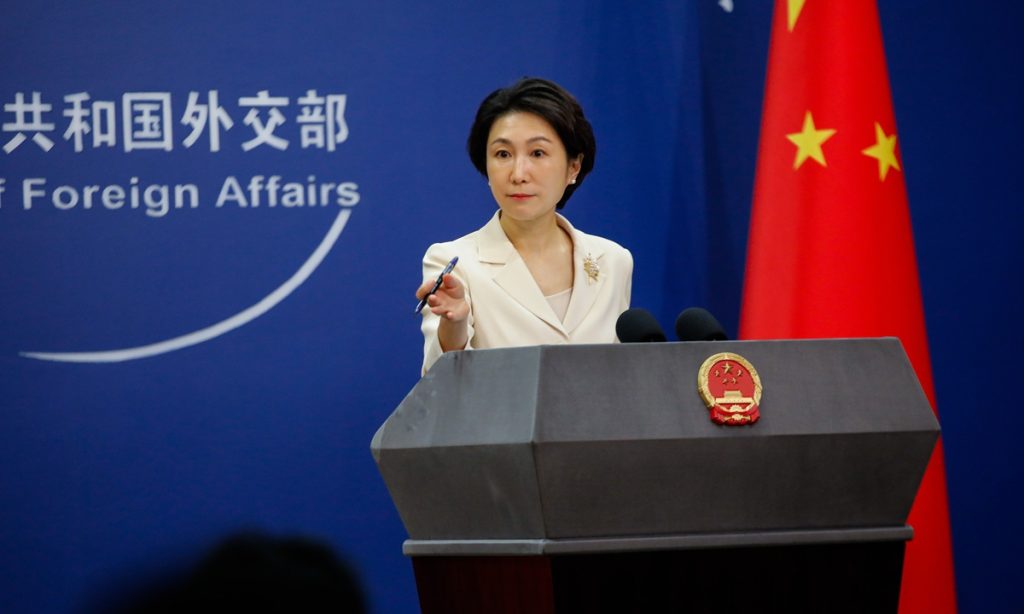
In response to a media inquiry regarding reports that the city of Nagasaki plans to complete updates to exhibition panels at the Nagasaki Atomic Bomb Museum during fiscal year 2026, including replacing the term "Nanjing Massacre" with "Nanjing Incident" on a display panel, Chinese Foreign Ministry spokesperson Mao Ning said on Friday that the Nanjing Massacre was a brutal crime committed by Japanese militarism, with overwhelming and irrefutable evidence, and that history must not be distorted.
She said the Tokyo Trial explicitly determined that the atrocities committed by Japanese forces in Nanjing constituted a "massacre," not an "incident." Mao said the judgment of the International Military Tribunal for the Far East devoted a special section to the atrocities in Nanjing and, based on extensive survivor testimonies, records by third-party foreign witnesses, and Japanese military archives, established through an international judicial ruling the grave crimes committed by the invading Japanese army during the Nanjing Massacre.
Mao said that General Iwane Matsui, held responsible for the Nanjing Massacre, was sentenced to death by hanging as a Class-A war criminal and stressed that history must not be overturned. She added that many Japanese atomic bomb survivors, civic groups in Nagasaki, and other people of insight have called for a correct and complete account of the crimes and history of Japanese militarism as an aggressor.
Japan should deeply reflect on its wartime crimes and responsibilities and make a clean break with militarism, Mao said.
At the invitation of Zhao Leji, chairman of China's National People's Congress Standing Committee, Seah Kian Peng, speaker of the Parliament of Singapore, will lead a delegation to visit China from June 8 to 13.
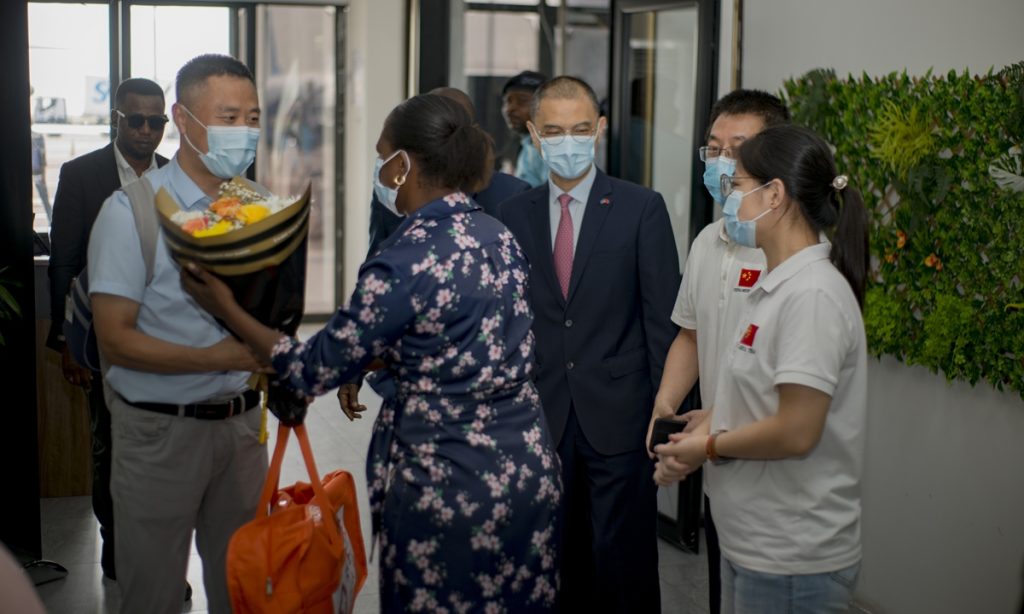
A Chinese anti-epidemic medical expert team arrived in Kinshasa, the capital of the Democratic Republic of the Congo (DRC), on Tuesday for a three-month mission to support the Central African country's response to the Ebola outbreak, Xinhua News Agency reported.
Luku Maleyo Marius, a representative of the DRC Ministry of Health, welcomed the team at the airport, saying that China's dispatch of the medical experts represents timely and strong support for the Congolese government and people, according to Xinhua.
Whenever the DRC faces major public health challenges, China has consistently extended timely assistance, he said, adding that he looks forward to the mission further strengthening the country's epidemic prevention, control and treatment capacities, and helping bring the outbreak under control as soon as possible.
The assistance effort came after the World Health Organization determined on May 17 that the Ebola outbreak in the DRC constituted a "public health emergency of international concern," with a host of nations such as the US, Canada, Thailand and Vietnam ramped up border inspections and introduced restrictive entry requirements to guard against the spread of the virus.
Speaking with the Global Times on Monday evening ahead of their departure, team members noted the assistance mission embodies China's commitment to global anti-epidemic cooperation. The experts will adapt proven epidemic control experience to local realities and help strengthen the DRC's capacity for Ebola prevention and clinical care.
China experience
The latest outbreak is the 17th in the DRC since the virus was first identified in 1976, and laboratory tests identified the Bundibugyo strain of the virus, according to media reports.
WHO told the Global Times in a previous response that case fatality rates in the past two Bundibugyo virus disease (BVD) outbreaks, reported in Uganda and in DRC in 2007 and 2012, have ranged from approximately 30 percent to 50 percent. No specific treatment exists for BVD, but early supportive care improves survival.
Members of the Chinese expert team this time have extensive experience in epidemic prevention and control and bring expertise in public health as well as traditional Chinese and Western medicine. Working alongside the China Medical Teams already in the DRC, they will support local Ebola prevention and control efforts and promote cooperation with local medical and disease control institutions.
Before departing from Beijing Capital International Airport, the leader of the expert team, Lu Ming, Second-level Inspector from Department of International Cooperation of National Health Commission (NHC), told the Global Times that China has dispatched experts in different fields, and the team will fully leverage their professional expertise and, based on firsthand epidemiological information, develop targeted prevention and control measures to support outbreak response and management.
Under the guidance of the Chinese Embassy in the DRC, the team will also work with Chinese institutions, enterprises and local Chinese communities to promote public awareness of epidemic prevention, strengthen frontline preparedness and reduce the risk of imported cases to China, Lu said.
Another member of the expert team, Xu Ke, director of Hepatitis Laboratory from National Institute for Viral Disease Control and Prevention of Chinese Center for Disease Control and Prevention, told the Global Times that his work focuses on laboratory collaboration, including virus testing and analysis, monitoring viral mutations, exploring improved diagnostic methods, and examining genetic sequence changes.
Apart from the virus's deadly risks, the complicated social conditions in epidemic zones constitute one of the biggest obstacles to containment, Xu told the Global Times. "Core affected areas are located in conflict zones with tangled geopolitical situations and restricted population mobility, rendering epidemic prevention much harder than previous efforts."
Confirmed Ebola cases in the DRC have reached 343, the country's Health Minister Roger Kamba said Monday, cited by the Congolese Press Agency, the country's official news outlet, the Xinhua News Agency reported.
BVD is a zoonotic disease, with fruit bats suspected to be the natural reservoir. Human infection occurs through close contact with the blood or secretions of infected wildlife, and subsequently spreads from person to person through direct contact with the blood, secretions, organs, or other bodily fluids of infected individuals or contaminated surfaces or items, WHO introduced.
Regardless of the strain, early and active supportive treatment can significantly reduce the mortality rate, and the key lies in early detection and timely intervention, Jiang Rongmeng, vice president of Beijing Ditan Hospital Capital Medical University and another member of the expert team, told the Global Times.
Experience from previous infectious disease responses in Africa shows that countries prone to Ebola outbreaks often share similar public health and economic conditions, as well as cultural practices that create conditions conducive for virus transmission, said Jiang, who was also a member of the expert team that participated in China's 2014 aid mission to Africa to combat the Zaire strain of the Ebola virus.
Traditional burial practices in the DRC often involve washing, touching or staying close to the body. Therefore, as the Ebola virus can spread through contact with bodily fluids, unsafe burials are a major driver of new transmission chains, according to a report by Xinhua.
Jiang added that prevention and control of an outbreak need to take into account both natural and social factors, as natural factors include exposure risks from the ecological environment such as wild animals and social factors include traditional burial practices, Jiang said.
"Against this backdrop, this brings us back to China's experience in infectious disease prevention and control, characterized by full public mobilization. Infectious disease control is not only the responsibility of experts or the government, but the whole society. This approach enables developing countries to contain diseases at relatively low cost rather than relying on expensive equipment or advanced facilities," Jiang said.
Continued efforts
Chinese medical personnel have long been stationed in the DRC prior to the expert team's arrival. Since the outbreak began, the 24th batch of Chinese medical teams assisting the DRC has promptly activated emergency response measures, established a prevention and control system, conducted training and drills, coordinated epidemic prevention supplies, and improved environmental sanitation at their base, per Xinhua.
These team members have remained on the front line of clinical care, strengthened infection prevention measures, provided guidance on epidemic control for Chinese-funded enterprises, and safeguarded the health of local residents as well as Chinese nationals in the country, according to Xinhua.
Already in 2014, an Ebola outbreak swept across Africa, with more than half of those infected losing their lives. While most countries withdrew their medical workers from Africa amid widespread panic, China's 24th medical team to Guinea headed into the epidemic-hit regions. They helped address critical gaps in local medical services and provided strong support for the local fight against Ebola, according to Health News, the media outlet affiliated with the NHC.
"Diseases know no borders," Lu said. In past responses to infectious diseases, the Chinese government has also received support and assistance from many countries. Following the declaration of the Ebola outbreak, China quickly dispatched a medical expert team and provided relevant material support, demonstrating its sense of duty as a responsible major country, Lu added.
"As a member of the expert team, I feel honored to contribute my expertise to the Ebola response, helping to achieve outbreak control goals and further advancing the vision of building a global community of health for all," Lu told the Global Times.
"China has a long-standing tradition of friendship with African countries. As practitioners, we are also committed to contributing our professional expertise," Xu said.
Chinese Foreign Ministry spokesperson Lin Jian said during a Monday press conference that China and Africa are good brothers sharing weal and woe. "We feel for the DRC over the new outbreak of Ebola."
Supporting African countries' response to Ebola is a shining example of building the all-weather China-Africa community with a shared future for the new era, and also an important part of ten partnership actions of the 2024 FOCAC Beijing summit. "As we speak, Chinese medical teams are on the ground fighting the disease shoulder to shoulder with African people," the spokesperson added.
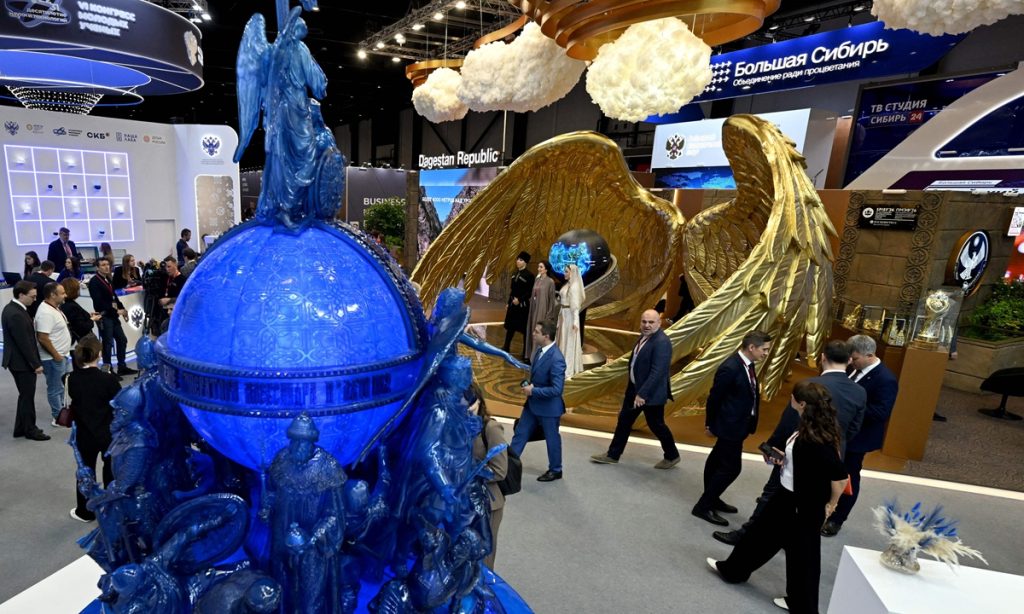
The 29th St. Petersburg International Economic Forum (SPIEF), running from Wednesday to Saturday and which is expected to draw around 20,000 participants from more than 100 countries, is underway in St. Petersburg, Russia.
The forum features seven thematic tracks and more than 170 dialogues, speeches and discussion sessions. More than 300 business events are also scheduled, including closed-door consultations, thematic roundtables and business breakfasts, Xinhua News Agency reported.
Russian presidential aide Yuri Ushakov said on Tuesday that the forum's plenary session is scheduled for Friday, with Russian President Vladimir Putin expected to attend and deliver a speech, per Xinhua.
A Chinese Foreign Ministry spokesperson announced on Tuesday that at the invitation of the governments of the Russian Federation and the Republic of Belarus, from Thursday to June 8, Vice President Han Zheng will travel to Russia to attend the 29th St. Petersburg International Economic Forum and also visit Belarus.
Foreign Ministry spokesperson Mao Ning stated at a regular press conference the same day that the St. Petersburg International Economic Forum is an important platform for discussions on global economic governance and consensus-building on international cooperation. The theme of this year's forum is "Pragmatic Dialogue: the Path to a Stable Future," which is highly relevant. China looks forward to working with other participants to strengthen communication, enhance mutual trust, practice multilateralism, and build a more just and equitable global governance system, Mao added.
"China is Russia's main economic and trade partner, and our cooperation is developing at a very fast pace," Chinese Ambassador to Russia Zhang Hanhui was quoted as saying on the official forum website.
Observers noted that bilateral cooperation between China and Russia has expanded comprehensively in both breadth and depth, extending not only to the economic field but also to political, cultural, humanitarian and social domains.
In addition to the main business program, business forums of the Shanghai Cooperation Organization (SCO) and BRICS, the regional consultative forum "Business Twenty" (B20), the Forum of Small and Medium Enterprises, the Forum of Creative Industries, the Forum on Pharmaceutical Security, and the youth forum "Day of the Future" are organized on the sidelines of the SPIEF, Ushakov said.
In recent years, Moscow's diplomacy has increasingly shifted toward deeper engagement with the Global South and emerging economies, according to Zhang Hong, a research fellow at the Institute of Russian, Eastern European and Central Asian Studies under the Chinese Academy of Social Sciences.
Notably, the US has sent an official delegation to this year's St. Petersburg International Economic Forum for the first time in several years, according to multiple Russian media reports. The delegation is led by Rodney Mims Cook Jr., chairman of the US Commission of Fine Arts. Cook, who is overseeing the White House ballroom expansion project, is listed as leading the official US delegation to the forum, Reuters noted.
Cook is the first US official to attend the forum since 2017/2018, Reuters reported, citing the Kremlin.
According to the TASS news agency, Cook will be among the participants in the "Russia-US: Dialogue of Cultures" session, which is scheduled to take place on Thursday.
Zhang also highlighted another notable arrangement at this year's forum. According to Russia's state-run Rossiya-24 television channel, citing Ushakov, Saudi Arabia will serve as the guest country at the 2026 edition.
The country's delegation will be led by Prince Abdulaziz bin Salman Al Saud, Minister of Energy.
"Approximately 200 representatives from key departments and institutions of the Kingdom of Saudi Arabia, as well as banks and Saudi Aramco," he said, per the report.
"As a leading Middle Eastern power and a key member of OPEC, Saudi Arabia plays an important role in global energy markets and the region's geopolitical landscape," Zhang said. "By selecting Saudi Arabia as the guest country, Russia is seeking to strengthen its influence in the Middle East and reinforce its regional partnerships, while also leveraging Saudi sovereign wealth to attract investment and deepen cooperation in areas such as energy and manufacturing. The move reflects both geopolitical considerations and Russia's economic recovery needs."
Deals signed at the forum are expected to total 6.4-6.5 trillion rubles ($81-83 billion), primarily in the infrastructure, energy and artificial intelligence sectors, according to experts cited by Russian media Izvestia.
Launched in 1997, the St. Petersburg International Economic Forum has grown into one of Russia's most important international economic forums.
China's State Council, the country's cabinet, issued an action plan on Thursday for the continuous improvement of air quality. Under the plan, China should boost the development of new energy and clean energy, while strictly and reasonably controlling coal consumption and prohibiting new steel capacity.
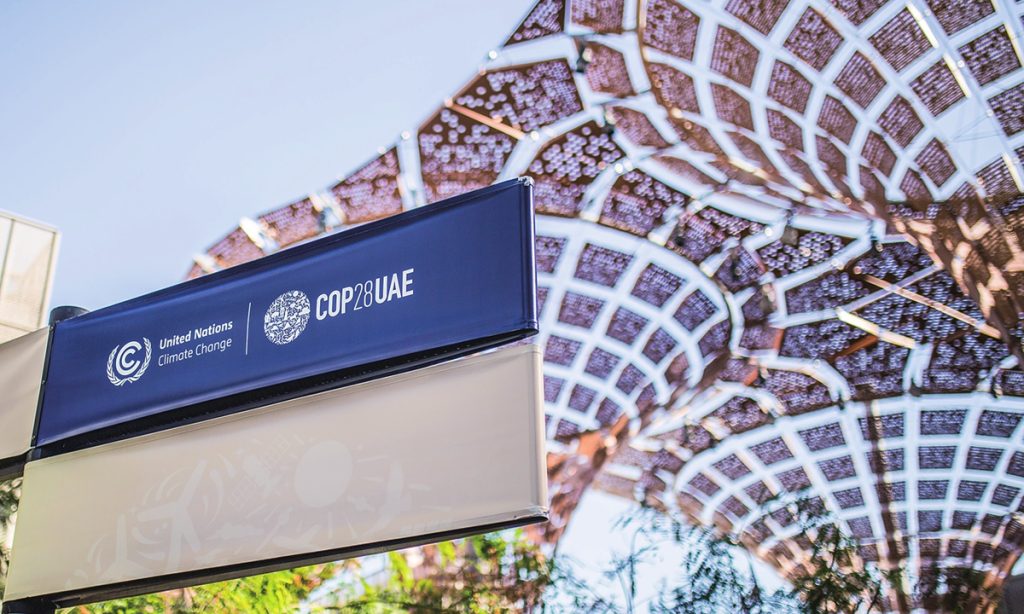
By 2025, it is expected that electricity should account for around 30 percent of total energy end-use consumption, and non-fossil energy consumption should reach around 20 percent, according to the action plan. It was released following the conclusion of the 28th UN Climate Change Conference (COP28) in Dubai last week, during which China's role in global climate governance was highlighted.
The country will also carry out caps on coal consumption while ensuring energy supply security, according to the plan.
It is expected that by 2025, coal consumption in the Beijing-Tianjin-Hebei region and neighboring areas as well as the Yangtze River Delta should drop by 10 percent and 5 percent compared with that of 2020, respectively. And the coal consumption in Fenwei Plain regions in Central China should report negative growth.
In addition to a ban on building new steel factories, Chinese authorities will also resolutely curb the blind launch of high-energy-consuming, high-emission, and low-level projects under the plan.
By 2025, the plan also aims to reduce PM 2.5 concentrations in Chinese cities at and above the prefectural level by 10 percent from 2020, and the annual ratio of days with heavy pollution and above should be within 1 percent. Emissions of nitric oxide and volatile organic compounds (VOCs) should also be reduced by 10 percent from 2020.
The plan marks another effort by China to fulfill its promise of carbon peaking and neutrality. China has committed to a "dual carbon" goal of reaching the peak of carbon emissions by 2030 and attaining carbon neutrality by 2060.
China's actions to address climate change have not only promoted the country's green and low-carbon development, but also made important contributions to addressing global climate change, analysts said.
Lately some customers in Beijing were "shocked" to hear that Daoxiangcun, a store that sells everyday snacks, would no longer be listed as a laozihao, or time-honored brand. Fortunately, it turned out that it was a same-named store in Tianjin, rather than the renowned store in Beijing, that would lose the honor.
Together with the Tianjin Daoxiangcun, 54 other Chinese time-honored brand stores would be removed from the list of Chinese old and famous brands, including Xinluchun restaurant in Beijing, Laobanzhai restaurant in Shanghai, and Guanshengyuan store in Chongqing due to long-term poor operation, bankruptcy or loss of trademarks, according to a recent notice issued by China's Ministry of Commerce (MOC).
China's time-honored brands refer to quality products, excellent techniques or reliable services that have been passed down through generations. With distinctive regional characteristics, most of them have been widely recognized in all sectors over 100 years. In 1991, more than 1,600 businesses were conferred with this title, and in 2006 and 2011, another 1,128 enterprises were added.
According to the MOC, this move aims to improve the protection and inheritance of time-honored brands and build a long-term mechanism for their innovation development, setting well-operated ones as standards and examples for other time-honored brands.
However, some of the brands have lost their advantages due to the changing times, while their standards have fallen.
Tianjin Daoxiangcun, established in 1988, has a reputation for selling high-priced but poor-tasting pastries. Xinluchun restaurant in Beijing used to be well-known in the 1980s for serving savory steamed buns, which some Beijingers still miss. However, after it shifted to regular dishes, its business deteriorated.
Like customers in Beijing, Shanghai residents were also dumbfounded by the removal of the popular and familiar restaurant Laobanzhai. While some expressed regret about the change, others consented saying, "Laobanzhai's environment, services and dishes no longer deserve its status." Some moaned that "short-sighted operators have ruined the business of their ancestors."
Established in 1905, Laobanzhai restaurant serves pastry and Huaiyang cuisine, known for its light and fresh flavor and intricate cooking techniques. It was listed as a time-honored brand in 2006.
To respond to the quality of their services, the manager admitted that a few senior staffers have retired, which "may have caused some problems. But we are trying to improve our services, and at least the quality of the food we serve is guaranteed, and the variety is still popular."
"Now we are striving to reexamine ourselves," the manager said.
While sifting out the unqualified, quite a number of qualified businesses have remained on the list, among which the Daoxiangcun store in Beijing is a good example.
First established in 1895, Beijing Daoxiangcun was the first store to sell dishes from southern China, including pastry, meat and special food for traditional Chinese festivals such as moon cakes as well as frozen food. In 1993, it was listed as a time-honored brand, and in 2004, it won the title of "famous Chinese brand" due to the good quality and reputation of its food and products.
To protect time-honored brands, the list has been increasing instead of decreasing. In August, there were 238 old and famous brands from Beijing on the list with an average age of 140 years, an increase of 15 enterprises , including a traditional Chinese medicine company. Including the Capital Automobile Group, Beijing Tongren Optometry Store and Beijing Ruizhenhou Restaurant, they are part of the eighth batch of businesses on the list and cover more diverse sectors.
Time-honored brands do not just represent the best of the business world, they also have profound cultural significance.
Before a brand was set up, choosing the right name was a major priority as an auspicious name carries the great expectations of the owner of the business.
Normally, owners selected names from famous verses in ancient Chinese literary works such as Dream of Red Mansion to pray for a thriving business, or to show their political aspirations such as jianhua, meaning "building the Chinese nation."
Some entrepreneurs in southern China named their stores with a distinctive local style. A catering business in Suzhou, East China's Jiangsu Province, located in a typical waterside building was named Caizhizhai, or "Collecting Water Lilies." It also serves various, exquisitely made pastries that have been well-received all over the country.
Besides cultural connections, these businesses also uphold customer-centered principles. For instance, each season, Beijing Daoxiangcun will promote different foods to customers and remind them of Chinese traditions.
These time-honored brands represent the best of traditional Chinese culture. Those who have remained on the list demonstrate their success in maintaining the businesses of their ancestors, the continuity of their products and services, and the inheritance of traditional Chinese culture. Those who have vanished must learn to catch up and adapt to the changing times. In this way, they can not only preserve their brands, but also do their bit for the protection of the traditional Chinese culture.
Eggs, long condemned for making raw cookie dough a forbidden pleasure, can stop taking all the blame. There’s another reason to resist the sweet uncooked temptation: flour.
The seemingly innocuous pantry staple can harbor strains of E. coli bacteria that make people sick. And, while not a particularly common source of foodborne illness, flour has been implicated in two E. coli outbreaks in the United States and Canada in the last two years.
Pinning down tainted flour as the source of the U.S. outbreak, which sickened 63 people between December 2015 and September 2016, was trickier than the average food poisoning investigation, researchers recount November 22 in the New England Journal of Medicine. Usually, state health departments rely on standard questionnaires to find a common culprit for a cluster of reported illnesses, says Samuel Crowe, an epidemiologist at the Centers for Disease Control and Prevention in Atlanta, who led the study. But flour isn’t usually tracked on these surveys. So when the initial investigation yielded inconclusive results, public health researchers turned to in-depth personal interviews with 10 people who had fallen ill.
Crowe spent up to two hours asking each person detailed questions about what he or she had eaten around the time of getting sick. Asking people what they ate eight weeks ago can be challenging, Crowe says: Many people can’t even remember what they ate for breakfast that morning.
“I got a little lucky,” Crowe says. Two people remembered eating raw cookie dough before getting sick. They each sent Crowe pictures of the bag of flour they had used to make the batter. It turned out that both bags had been produced in the same plant. That was a “pretty unusual thing,” he says. Follow-up questioning helped Crowe and his team pin down flour as the likely source. Eventually, U.S. Food and Drug Administration scientists analyzed the flour and isolated strains of E. coli bacteria that produce Shiga toxins, which make E. coli dangerous.
Disease-causing bacteria, including E. coli, usually thrive in moist environments, like bags of prewashed lettuce (SN: 12/24/16, p. 4). But the bacteria can also survive in a desiccated state for months and be re-activated with water, says Crowe. So as soon as dry flour mingles with eggs or oil, dormant bacteria can reawaken and start to replicate.
Cookie dough wasn’t the culprit in every case. A few children who got sick had been given raw tortilla dough to play with while waiting for a table at a restaurant. The cases all involved wheat flour from the same facility, leading to a recall of more than 250 flour-containing products.
There are ways to kill bacteria in flour before it reaches grocery store shelves, but they aren’t in use in the United States. Heat treatment, for example, will rid flour of E. coli and other pathogens. But the process also changes the structure of the flour, which affects the texture of baked goods, says Rick Holley, a food safety expert at the University of Manitoba in Canada who wasn’t part of the study. Irradiation, used to kill parasites and other pests in flour, might be a better option, Holley says. But it takes a higher dose of radiation to zap bacteria than it does to kill pests.
Or, of course, people could hold out for warm, freshly baked cookies.
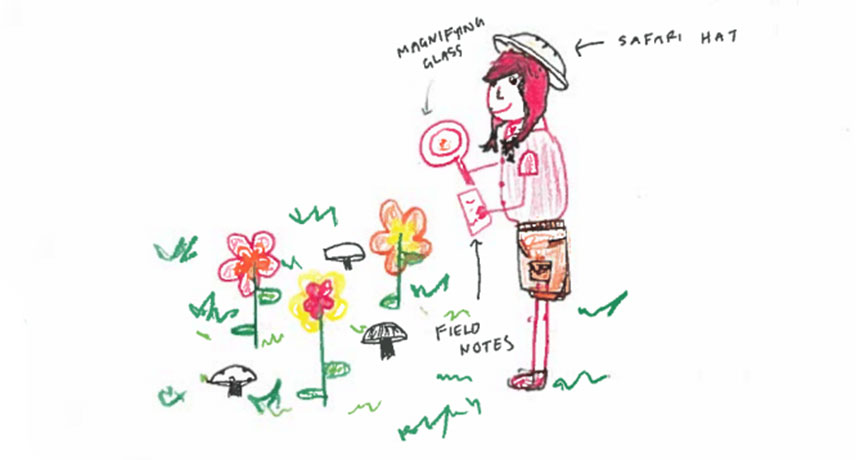
Ask a classroom of children to draw a scientist, and you’ll see plenty of Crayola-colored lab coats, goggles and bubbling beakers. That image hasn’t changed much since the 1960s. But the person wearing the lab coat is shifting.
A new analysis finds that more female scientists have appeared in kids’ drawings in recent decades — going from nearly nonexistent in the 1960s to about a third in 2016.
“A lot has changed since the 1960s,” says David Miller, a Ph.D. candidate in psychology at Northwestern University who reports the findings with colleagues March 20 in Child Development. The first of many “draw-a-scientist” studies asked nearly 5,000 children to draw a scientist between 1966 and 1977. “Of those 5,000 drawings,” Miller says, “only 28 … depicted a female scientist.” That’s just 0.6 percent.
Today, “more women are becoming scientists, and there’s some evidence that female scientists are being represented more in the media,” he says. For instance, in a content analysis of the magazine Highlights for Children, 13 percent of people pictured in science feature stories of the 1960s were women or girls, compared with 44 percent in the 2000s. To look for changes in children’s perceptions over time, the researchers conducted a meta-analysis, combining data from 78 studies that included a total of more than 20,000 U.S. children in kindergarten through 12th grade.
On average, 28 percent of children drew female scientists in studies conducted from 1985 to 2016, the researchers found.
What hasn’t changed much: Kids pick up stereotypes by gender as they grow up. At age 6, girls in the more recent studies drew female scientists about 70 percent of the time. By age 16, 75 percent drew male scientists.
“This is a critical period in which kids are learning stereotypes,” Miller says. “It’s important that teachers and parents present diverse examples of both male and female scientists.”
Editors’ note: This story was corrected on March 21, 2018, to note that by age 16, girls drew only 25 percent of scientists as female.
Josep Cornella doesn’t deal in absolutes. While chemists typically draw rigid lines between organic and inorganic chemistry, Cornella, a researcher at Max-Planck-Institut für Kohlenforschung in Mülheim an der Ruhr, Germany, believes in just the opposite.
“You have to be open to cross boundaries,” he says, “and learn from it.” The fringes are “where the rich new things are.”
Cornella is an organic chemist by industry standards; he synthesizes molecules that contain carbon. But he’s put together a team from a wide range of backgrounds: inorganic chemists, physical organic chemists, computational chemists. Together, the team brainstorms novel approaches to designing new catalysts, so that chemical reactions essential to pharmaceuticals and agriculture can be made more efficient and friendly for the environment. Along the way, Cornella has unlocked mysteries that stumped chemists for years.
“He has told us about catalysts … that we didn’t have before, and which were just pipe dreams,” says Hosea Nelson, a chemist at Caltech who has not worked with Cornella. Bold idea When Cornella heard a speaker at a 2014 conference say that bismuth was nontoxic, he was sure it was a mistake. Bismuth is a heavy metal that sits between toxic lead and polonium on the periodic table. But it is indeed relatively nontoxic — it’s even used in the over-the-counter nausea medicine Pepto-Bismol.
Still, bismuth remains poorly understood. That’s one reason it attracted him. “It was a rather forgotten element of the periodic table,” Cornella says. But, “it’s there for a reason.”
Cornella started wondering if an element like bismuth could be trained for use as a catalyst. For the last century, scientists have been using transition metals, like palladium and iron, as the main catalysts in industrial synthesis. “Could we actually train [bismuth] to do what these guys do so well?” he asked. It was a conceptual question that “was completely naïve, or maybe stupid.”
Far from stupid: His team successfully used bismuth as a catalyst to make a carbon-fluorine bond. And bismuth didn’t just mimic a transition metal’s role — it worked better. Only a small amount of bismuth was required, much less than the amount of transition metal needed to complete the same task.
“A lot of people, including myself and other [researchers] around the world, have spent a lot of time thinking about how to make bismuth reactions catalytic,” Nelson says. “He’s the guy who cracked that nut.”
Standout research While the bismuth research is “weird” and “exciting,” Cornella says, it remains a proof of concept. Bismuth, though cheap, is not as abundant as he had hoped, so it’s not a very sustainable option for industry.
But other Cornella team findings are already being used in the real world. In 2019, the group figured out how to make an alternative to Ni(COD)2, a finicky catalyst commonly used by chemists in the lab. If it’s not kept at freezing temperatures and protected from oxygen by a layer of inert gases, the nickel complex falls apart.
The alternative complex, developed by Lukas Nattmann, a Ph.D. student in Cornella’s lab at the time, stays stable in oxygen at room temperature. It’s a game changer: It saves energy and materials, and it’s universal. “You can basically take all those reactions that were developed for 60 years of Ni(COD)2 and basically replace all of them with our catalyst, and it works just fine,” Cornella says. Cornella’s lab is also developing new reagents, substances that transform one material into another. The researchers are looking to transform atoms in functional groups — specific groupings of atoms that behave in specific ways regardless of the molecules they are found in — into other atoms in a single step. Doing these reactions in one step could cut preparation time from two weeks to a day, which would be very useful in the pharmaceutical industry
Taking risks It’s the success that gets attention, but failure is “our daily basis,” Cornella says. “It’s a lot of failure.” As a student, when he couldn’t get a reaction to work, he’d set up a simple reaction called a TBS protection — the kind of reaction that’s impossible to get wrong — to remind himself that he wasn’t “completely useless.”
Today he runs a lab that champions taking risks. He encourages students to learn from one another about areas they know nothing about. For instance, a pure organic chemist could come into Cornella’s lab and leave with a good understanding of organometallic chemistry after spending long days working alongside a colleague who is an expert in that area.
To Cornella, this sharing of knowledge is crucial. “If you tackle a problem from just one unique perspective,” he says, “maybe you’re missing some stuff.”
While Cornella might not like absolutes, Phil Baran, who advised Cornella during his postdoctoral work at Scripps Research in San Diego, sees Cornella as fitting into one of two distinct categories: “There are chemists who do chemistry in order to eat, like it’s a job. And there are chemists who eat in order to do chemistry,” Baran says. Cornella fits into the latter group. “It’s his oxygen.”
The glossy leaves and branching roots of mangroves are downright eye-catching, and now a study finds that the moon plays a special role in the vigor of these trees.
Long-term tidal cycles set in motion by the moon drive, in large part, the expansion and contraction of mangrove forests in Australia, researchers report in the Sept. 16 Science Advances. This discovery is key to predicting when stands of mangroves, which are good at sequestering carbon and could help fight climate change, are most likely to proliferate (SN: 11/18/21). Such knowledge could inform efforts to protect and restore the forests. Mangroves are coastal trees that provide habitat for fish and buffer against erosion (SN: 9/14/22). But in some places, the forests face a range of threats, including coastal development, pollution and land clearing for agriculture. To get a bird’s-eye view of these forests, Neil Saintilan, an environmental scientist at Macquarie University in Sydney, and his colleagues turned to satellite imagery. Using NASA and U.S. Geological Survey Landsat data from 1987 to 2020, the researchers calculated how the size and density of mangrove forests across Australia changed over time.
After accounting for persistent increases in these trees’ growth — probably due to rising carbon dioxide levels, higher sea levels and increasing air temperatures — Saintilan and his colleagues noticed a curious pattern. Mangrove forests tended to expand and contract in both extent and canopy cover in a predictable manner. “I saw this 18-year oscillation,” Saintilan says.
That regularity got the researchers thinking about the moon. Earth’s nearest celestial neighbor has long been known to help drive the tides, which deliver water and necessary nutrients to mangroves. A rhythm called the lunar nodal cycle could explain the mangroves’ growth pattern, the team hypothesized.
Over the course of 18.6 years, the plane of the moon’s orbit around Earth slowly tips. When the moon’s orbit is the least tilted relative to our planet’s equator, semidiurnal tides — which consist of two high and two low tides each day — tend to have a larger range. That means that in areas that experience semidiurnal tides, higher high tides and lower low tides are generally more likely. The effect is caused by the angle at which the moon tugs gravitationally on the Earth.
Saintilan and his colleagues found that mangrove forests experiencing semidiurnal tides tended to be larger and denser precisely when higher high tides were expected based on the moon’s orbit. The effect even seemed to outweigh other climatic drivers of mangrove growth, such as El Niño conditions. Other regions with mangroves, such as Vietnam and Indonesia, probably experience the same long-term trends, the team suggests.
Having access to data stretching back decades was key to this discovery, Saintilan says. “We’ve never really picked up before some of these longer-term drivers of vegetation dynamics.”
It’s important to recognize this effect on mangrove populations, says Octavio Aburto-Oropeza, a marine ecologist at the Scripps Institution of Oceanography in La Jolla, Calif., who was not involved in the research.
Scientists now know when some mangroves are particularly likely to flourish and should make an extra effort at those times to promote the growth of these carbon-sequestering trees, Aburto-Oropeza says. That might look like added limitations on human activity nearby that could harm the forests, he says. “We should be more proactive.”