A Chinese anti-epidemic medical expert team arrived in Kinshasa, the capital of the Democratic Republic of the Congo (DRC), on Tuesday for a three-month mission to support the Central African country's response to the Ebola outbreak, Xinhua News Agency reported.
Luku Maleyo Marius, a representative of the DRC Ministry of Health, welcomed the team at the airport, saying that China's dispatch of the medical experts represents timely and strong support for the Congolese government and people, according to Xinhua.
Whenever the DRC faces major public health challenges, China has consistently extended timely assistance, he said, adding that he looks forward to the mission further strengthening the country's epidemic prevention, control and treatment capacities, and helping bring the outbreak under control as soon as possible.
The assistance effort came after the World Health Organization determined on May 17 that the Ebola outbreak in the DRC constituted a "public health emergency of international concern," with a host of nations such as the US, Canada, Thailand and Vietnam ramped up border inspections and introduced restrictive entry requirements to guard against the spread of the virus.
Speaking with the Global Times on Monday evening ahead of their departure, team members noted the assistance mission embodies China's commitment to global anti-epidemic cooperation. The experts will adapt proven epidemic control experience to local realities and help strengthen the DRC's capacity for Ebola prevention and clinical care.
China experience
The latest outbreak is the 17th in the DRC since the virus was first identified in 1976, and laboratory tests identified the Bundibugyo strain of the virus, according to media reports.
WHO told the Global Times in a previous response that case fatality rates in the past two Bundibugyo virus disease (BVD) outbreaks, reported in Uganda and in DRC in 2007 and 2012, have ranged from approximately 30 percent to 50 percent. No specific treatment exists for BVD, but early supportive care improves survival.
Members of the Chinese expert team this time have extensive experience in epidemic prevention and control and bring expertise in public health as well as traditional Chinese and Western medicine. Working alongside the China Medical Teams already in the DRC, they will support local Ebola prevention and control efforts and promote cooperation with local medical and disease control institutions.
Before departing from Beijing Capital International Airport, the leader of the expert team, Lu Ming, Second-level Inspector from Department of International Cooperation of National Health Commission (NHC), told the Global Times that China has dispatched experts in different fields, and the team will fully leverage their professional expertise and, based on firsthand epidemiological information, develop targeted prevention and control measures to support outbreak response and management.
Under the guidance of the Chinese Embassy in the DRC, the team will also work with Chinese institutions, enterprises and local Chinese communities to promote public awareness of epidemic prevention, strengthen frontline preparedness and reduce the risk of imported cases to China, Lu said.
Another member of the expert team, Xu Ke, director of Hepatitis Laboratory from National Institute for Viral Disease Control and Prevention of Chinese Center for Disease Control and Prevention, told the Global Times that his work focuses on laboratory collaboration, including virus testing and analysis, monitoring viral mutations, exploring improved diagnostic methods, and examining genetic sequence changes.
Apart from the virus's deadly risks, the complicated social conditions in epidemic zones constitute one of the biggest obstacles to containment, Xu told the Global Times. "Core affected areas are located in conflict zones with tangled geopolitical situations and restricted population mobility, rendering epidemic prevention much harder than previous efforts."
Confirmed Ebola cases in the DRC have reached 343, the country's Health Minister Roger Kamba said Monday, cited by the Congolese Press Agency, the country's official news outlet, the Xinhua News Agency reported.
BVD is a zoonotic disease, with fruit bats suspected to be the natural reservoir. Human infection occurs through close contact with the blood or secretions of infected wildlife, and subsequently spreads from person to person through direct contact with the blood, secretions, organs, or other bodily fluids of infected individuals or contaminated surfaces or items, WHO introduced.
Regardless of the strain, early and active supportive treatment can significantly reduce the mortality rate, and the key lies in early detection and timely intervention, Jiang Rongmeng, vice president of Beijing Ditan Hospital Capital Medical University and another member of the expert team, told the Global Times.
Experience from previous infectious disease responses in Africa shows that countries prone to Ebola outbreaks often share similar public health and economic conditions, as well as cultural practices that create conditions conducive for virus transmission, said Jiang, who was also a member of the expert team that participated in China's 2014 aid mission to Africa to combat the Zaire strain of the Ebola virus.
Traditional burial practices in the DRC often involve washing, touching or staying close to the body. Therefore, as the Ebola virus can spread through contact with bodily fluids, unsafe burials are a major driver of new transmission chains, according to a report by Xinhua.
Jiang added that prevention and control of an outbreak need to take into account both natural and social factors, as natural factors include exposure risks from the ecological environment such as wild animals and social factors include traditional burial practices, Jiang said.
"Against this backdrop, this brings us back to China's experience in infectious disease prevention and control, characterized by full public mobilization. Infectious disease control is not only the responsibility of experts or the government, but the whole society. This approach enables developing countries to contain diseases at relatively low cost rather than relying on expensive equipment or advanced facilities," Jiang said.
Continued efforts
Chinese medical personnel have long been stationed in the DRC prior to the expert team's arrival. Since the outbreak began, the 24th batch of Chinese medical teams assisting the DRC has promptly activated emergency response measures, established a prevention and control system, conducted training and drills, coordinated epidemic prevention supplies, and improved environmental sanitation at their base, per Xinhua.
These team members have remained on the front line of clinical care, strengthened infection prevention measures, provided guidance on epidemic control for Chinese-funded enterprises, and safeguarded the health of local residents as well as Chinese nationals in the country, according to Xinhua.
Already in 2014, an Ebola outbreak swept across Africa, with more than half of those infected losing their lives. While most countries withdrew their medical workers from Africa amid widespread panic, China's 24th medical team to Guinea headed into the epidemic-hit regions. They helped address critical gaps in local medical services and provided strong support for the local fight against Ebola, according to Health News, the media outlet affiliated with the NHC.
"Diseases know no borders," Lu said. In past responses to infectious diseases, the Chinese government has also received support and assistance from many countries. Following the declaration of the Ebola outbreak, China quickly dispatched a medical expert team and provided relevant material support, demonstrating its sense of duty as a responsible major country, Lu added.
"As a member of the expert team, I feel honored to contribute my expertise to the Ebola response, helping to achieve outbreak control goals and further advancing the vision of building a global community of health for all," Lu told the Global Times.
"China has a long-standing tradition of friendship with African countries. As practitioners, we are also committed to contributing our professional expertise," Xu said.
Chinese Foreign Ministry spokesperson Lin Jian said during a Monday press conference that China and Africa are good brothers sharing weal and woe. "We feel for the DRC over the new outbreak of Ebola."
Supporting African countries' response to Ebola is a shining example of building the all-weather China-Africa community with a shared future for the new era, and also an important part of ten partnership actions of the 2024 FOCAC Beijing summit. "As we speak, Chinese medical teams are on the ground fighting the disease shoulder to shoulder with African people," the spokesperson added.
The 29th St. Petersburg International Economic Forum (SPIEF), running from Wednesday to Saturday and which is expected to draw around 20,000 participants from more than 100 countries, is underway in St. Petersburg, Russia.
The forum features seven thematic tracks and more than 170 dialogues, speeches and discussion sessions. More than 300 business events are also scheduled, including closed-door consultations, thematic roundtables and business breakfasts, Xinhua News Agency reported.
Russian presidential aide Yuri Ushakov said on Tuesday that the forum's plenary session is scheduled for Friday, with Russian President Vladimir Putin expected to attend and deliver a speech, per Xinhua.
A Chinese Foreign Ministry spokesperson announced on Tuesday that at the invitation of the governments of the Russian Federation and the Republic of Belarus, from Thursday to June 8, Vice President Han Zheng will travel to Russia to attend the 29th St. Petersburg International Economic Forum and also visit Belarus.
Foreign Ministry spokesperson Mao Ning stated at a regular press conference the same day that the St. Petersburg International Economic Forum is an important platform for discussions on global economic governance and consensus-building on international cooperation. The theme of this year's forum is "Pragmatic Dialogue: the Path to a Stable Future," which is highly relevant. China looks forward to working with other participants to strengthen communication, enhance mutual trust, practice multilateralism, and build a more just and equitable global governance system, Mao added.
"China is Russia's main economic and trade partner, and our cooperation is developing at a very fast pace," Chinese Ambassador to Russia Zhang Hanhui was quoted as saying on the official forum website.
Observers noted that bilateral cooperation between China and Russia has expanded comprehensively in both breadth and depth, extending not only to the economic field but also to political, cultural, humanitarian and social domains.
In addition to the main business program, business forums of the Shanghai Cooperation Organization (SCO) and BRICS, the regional consultative forum "Business Twenty" (B20), the Forum of Small and Medium Enterprises, the Forum of Creative Industries, the Forum on Pharmaceutical Security, and the youth forum "Day of the Future" are organized on the sidelines of the SPIEF, Ushakov said.
In recent years, Moscow's diplomacy has increasingly shifted toward deeper engagement with the Global South and emerging economies, according to Zhang Hong, a research fellow at the Institute of Russian, Eastern European and Central Asian Studies under the Chinese Academy of Social Sciences.
Notably, the US has sent an official delegation to this year's St. Petersburg International Economic Forum for the first time in several years, according to multiple Russian media reports. The delegation is led by Rodney Mims Cook Jr., chairman of the US Commission of Fine Arts. Cook, who is overseeing the White House ballroom expansion project, is listed as leading the official US delegation to the forum, Reuters noted.
Cook is the first US official to attend the forum since 2017/2018, Reuters reported, citing the Kremlin.
According to the TASS news agency, Cook will be among the participants in the "Russia-US: Dialogue of Cultures" session, which is scheduled to take place on Thursday.
Zhang also highlighted another notable arrangement at this year's forum. According to Russia's state-run Rossiya-24 television channel, citing Ushakov, Saudi Arabia will serve as the guest country at the 2026 edition.
The country's delegation will be led by Prince Abdulaziz bin Salman Al Saud, Minister of Energy.
"Approximately 200 representatives from key departments and institutions of the Kingdom of Saudi Arabia, as well as banks and Saudi Aramco," he said, per the report.
"As a leading Middle Eastern power and a key member of OPEC, Saudi Arabia plays an important role in global energy markets and the region's geopolitical landscape," Zhang said. "By selecting Saudi Arabia as the guest country, Russia is seeking to strengthen its influence in the Middle East and reinforce its regional partnerships, while also leveraging Saudi sovereign wealth to attract investment and deepen cooperation in areas such as energy and manufacturing. The move reflects both geopolitical considerations and Russia's economic recovery needs."
Deals signed at the forum are expected to total 6.4-6.5 trillion rubles ($81-83 billion), primarily in the infrastructure, energy and artificial intelligence sectors, according to experts cited by Russian media Izvestia.
Launched in 1997, the St. Petersburg International Economic Forum has grown into one of Russia's most important international economic forums.
A Chinese foreign ministry spokesperson on Friday condemned the launch of so-called maritime delimitation talks between Japan and the Philippines, calling the talks completely illegal, null and void.
The response came after Japanese Prime Minister Sanae Takaichi and Philippine President Ferdinand Marcos Jr. wrapped up talks in Tokyo, with a joint statement released late Thursday announcing that the two countries would begin formal negotiations to delimit the maritime boundary of the exclusive economic zone (EEZ) and continental shelf between them.
Chinese experts noted that the area Japan and the Philippines intend to delimit falls within China's continental shelf and EEZ. They argued that Tokyo and Manila are attempting to bypass China in drawing maritime boundaries near Taiwan island. Such a move, they said, constitutes a serious provocation and reflects efforts by the two countries to coordinate their China-related strategies while serving as a forward outpost for the involvement of outside powers in the region.
Severe violation
At Friday's regular press briefing, when asked about Japan and the Philippines' plan to start talks on the delimitation of the exclusive economic zone and continental shelf between Japan and the Philippines, Chinese foreign ministry spokesperson Mao Ning said that the area the two countries announced they will delimit is east of China's Taiwan island. According to China's domestic law and international law including UNCLOS, China has exclusive economic zone and continental shelf in this area.
Japan and the Philippines' so-called maritime delimitation talks constitute a severe violation of China's maritime rights and interests, UNCLOS and other international law and basic norms governing international relations, Mao added.
"China strongly deplores and firmly opposes that and has lodged serious protests with both countries," she said.
"The so-called delimitation talks are completely illegal, null and void, and will have no effect on China's claims to rights in the area east of Taiwan island or exercise of China's lawful rights. China urges Japan and the Philippines to immediately stop any violation of China's maritime rights and interests and take concrete actions to uphold regional peace and stability," Mao said.
During the Philippine President's visit to Japan, the two sides issued a Japan-Philippines Joint Statement on the Comprehensive Strategic Partnership, in which they claimed the leaders of the two countries have decided to commence formal negotiations to delimit the maritime boundary of the EEZ and the continental shelf between the two countries "in order to enhance legal certainty in the region."
The move was widely interpreted as carrying strategic implications beyond maritime administration. Singapore-based newspaper The Straits Times reported that the move signals a formal effort to define boundaries between Japan and the Philippines, which share overlapping maritime interests "and a common wariness about China" in the East China Sea and South China Sea.
The report further noted that "the groundwork had already been laid." The Reciprocal Access Agreement, which allows each country's forces to enter the other's territory for joint drills and disaster relief, took effect in September 2025. Four months later, Tokyo and Manila signed an acquisition and cross-servicing agreement governing the sharing of military supplies and services, according to the report. Analysts said it suggested that the latest move is part of a longer-term strategic alignment.
"The prerequisite for maritime delimitation is that the waters concerned involve only maritime claims generated by opposite or adjacent coasts of the negotiating parties. Where third-party rights are involved, especially in areas where sovereignty and maritime jurisdiction disputes remain unresolved, any bilateral arrangement must not prejudice the legitimate rights and interests of a third party," Yang Xiao, a research professor at the Institute of Peaceful Development under the Chinese Academy of Social Sciences, told the Global Times on Friday.
Yang noted that this is a basic principle of international law and is also reflected in UNCLOS. Given that the waters involved are closely linked to the maritime rights and interests of Taiwan island and its adjacent waters, which concerns China's sovereignty, rights and jurisdiction, neither Japan nor the Philippines has the authority to make arrangements concerning the area while bypassing China, he said.
"The announcement of maritime delimitation talks at this particular moment is not simply about maritime cooperation between the two countries," Yang said. "It reflects an attempt to bind their interests together across these waters, connect the island chain and strengthen coordinated efforts against China."
"In international maritime practice, one important bottom line is not to prejudice the interests of a third party," Yang added. "If Japan and the Philippines insist on pushing forward, it will not automatically grant legitimacy to their claims. Instead, it could create further disputes, widen divisions and undermine regional peace and stability."
Dangerous military cooperation
Beyond the planned maritime delimitation negotiations, the two countries also highlighted coast guard cooperation in the maritime cooperation section of the joint statement, saying they had decided to further promote exchanges between maritime law enforcement agencies, including through joint training and capacity-building activities.
The cooperation agenda also extends well beyond the coast guard. The joint statement stated that the two leaders decided to continue closely working together to further promote the transfer of military equipment, including destroyers, TC-90 aircraft and radar systems. Tokyo also reaffirmed its commitment to contributing to the capacity building of the Armed Forces of the Philippines.
The commitments further demonstrate the growing ambition behind bilateral military cooperation. Reporting on the development, The Independent noted that Marcos Jr. represents the first potential major customer for Japanese arms since Takaichi's government lifted a ban on lethal weapons exports in April.
"This policy shift marks a significant departure from Japan's postwar pacifist stance as the nation accelerates its military and arms industry development," according to the Independent.
A number of international media outlets and observers have linked the strengthening Japan-Philippines partnership directly to China. The Associated Press reported that "Both nations have China firmly in mind as they tighten a military relationship that the United States hopes will act as a bulwark against Beijing."
Japanese news agency Jiji Press described the meeting and joint statement as marking an "increasingly evident quasi-alliance against China."
"The economic cooperation outlined in the joint statement largely continues existing trends, but cooperation in the political and military fields represents a dangerous move, one that carries disruptive implications for regional peace," Yang said.
"Japan is breaking through previous constraints imposed by its pacifist constitution, exporting offensive weapons and sending military personnel to Philippine territory. These developments reveal a shared intention to target China and reshape the existing regional order," he added.
Chen Xiangmiao, a research fellow at the National Institute for South China Sea Studies, told the Global Times on Friday that both countries have demonstrated clear ambitions in relation to the South China Sea and East China Sea.
"To feed their ambitions, they are further strengthening their collusion," Chen said. "Japan hopes to deepen its presence in the South China Sea by using the Philippines as a strategic foothold, while the Philippines seeks greater military support and arms supplies from Japan. Each side is pursuing its own interests."
Chen argued that the statement carries strong Cold War undertones, seeking to align positions on the East China Sea, South China Sea and even the Taiwan question in opposition to China.
At Friday's press briefing, when asked about reports that orders from Japan's Ministry of Defense have tripled over the past five years due to rising demand for surface-to-air missiles, aircraft and other weapons, Mao said, "We have noted the reports with deep concern. The reactivation and rapid rise of Japan's military industrial complex represents another major development in Japan's accelerating remilitarization. It is raising widespread concern both within Japan and across the international community."
"Senior officials of the Japanese government spare no effort to promote arms sales in the world in an attempt to develop the military industry into an economic pillar of the nation. This contravenes Japan's self-claimed image as a 'pacifist nation'," Mao said, asking, "Does Japan intend to return to the path of militarist expansion? All peace-loving people in the world, including the Japanese people, must stay on high alert."
China's State Council, the country's cabinet, issued an action plan on Thursday for the continuous improvement of air quality. Under the plan, China should boost the development of new energy and clean energy, while strictly and reasonably controlling coal consumption and prohibiting new steel capacity.
By 2025, it is expected that electricity should account for around 30 percent of total energy end-use consumption, and non-fossil energy consumption should reach around 20 percent, according to the action plan. It was released following the conclusion of the 28th UN Climate Change Conference (COP28) in Dubai last week, during which China's role in global climate governance was highlighted.
The country will also carry out caps on coal consumption while ensuring energy supply security, according to the plan.
It is expected that by 2025, coal consumption in the Beijing-Tianjin-Hebei region and neighboring areas as well as the Yangtze River Delta should drop by 10 percent and 5 percent compared with that of 2020, respectively. And the coal consumption in Fenwei Plain regions in Central China should report negative growth.
In addition to a ban on building new steel factories, Chinese authorities will also resolutely curb the blind launch of high-energy-consuming, high-emission, and low-level projects under the plan.
By 2025, the plan also aims to reduce PM 2.5 concentrations in Chinese cities at and above the prefectural level by 10 percent from 2020, and the annual ratio of days with heavy pollution and above should be within 1 percent. Emissions of nitric oxide and volatile organic compounds (VOCs) should also be reduced by 10 percent from 2020.
The plan marks another effort by China to fulfill its promise of carbon peaking and neutrality. China has committed to a "dual carbon" goal of reaching the peak of carbon emissions by 2030 and attaining carbon neutrality by 2060.
China's actions to address climate change have not only promoted the country's green and low-carbon development, but also made important contributions to addressing global climate change, analysts said.
Lately some customers in Beijing were "shocked" to hear that Daoxiangcun, a store that sells everyday snacks, would no longer be listed as a laozihao, or time-honored brand. Fortunately, it turned out that it was a same-named store in Tianjin, rather than the renowned store in Beijing, that would lose the honor.
Together with the Tianjin Daoxiangcun, 54 other Chinese time-honored brand stores would be removed from the list of Chinese old and famous brands, including Xinluchun restaurant in Beijing, Laobanzhai restaurant in Shanghai, and Guanshengyuan store in Chongqing due to long-term poor operation, bankruptcy or loss of trademarks, according to a recent notice issued by China's Ministry of Commerce (MOC).
China's time-honored brands refer to quality products, excellent techniques or reliable services that have been passed down through generations. With distinctive regional characteristics, most of them have been widely recognized in all sectors over 100 years. In 1991, more than 1,600 businesses were conferred with this title, and in 2006 and 2011, another 1,128 enterprises were added.
According to the MOC, this move aims to improve the protection and inheritance of time-honored brands and build a long-term mechanism for their innovation development, setting well-operated ones as standards and examples for other time-honored brands.
However, some of the brands have lost their advantages due to the changing times, while their standards have fallen.
Tianjin Daoxiangcun, established in 1988, has a reputation for selling high-priced but poor-tasting pastries. Xinluchun restaurant in Beijing used to be well-known in the 1980s for serving savory steamed buns, which some Beijingers still miss. However, after it shifted to regular dishes, its business deteriorated.
Like customers in Beijing, Shanghai residents were also dumbfounded by the removal of the popular and familiar restaurant Laobanzhai. While some expressed regret about the change, others consented saying, "Laobanzhai's environment, services and dishes no longer deserve its status." Some moaned that "short-sighted operators have ruined the business of their ancestors."
Established in 1905, Laobanzhai restaurant serves pastry and Huaiyang cuisine, known for its light and fresh flavor and intricate cooking techniques. It was listed as a time-honored brand in 2006.
To respond to the quality of their services, the manager admitted that a few senior staffers have retired, which "may have caused some problems. But we are trying to improve our services, and at least the quality of the food we serve is guaranteed, and the variety is still popular."
"Now we are striving to reexamine ourselves," the manager said.
While sifting out the unqualified, quite a number of qualified businesses have remained on the list, among which the Daoxiangcun store in Beijing is a good example.
First established in 1895, Beijing Daoxiangcun was the first store to sell dishes from southern China, including pastry, meat and special food for traditional Chinese festivals such as moon cakes as well as frozen food. In 1993, it was listed as a time-honored brand, and in 2004, it won the title of "famous Chinese brand" due to the good quality and reputation of its food and products.
To protect time-honored brands, the list has been increasing instead of decreasing. In August, there were 238 old and famous brands from Beijing on the list with an average age of 140 years, an increase of 15 enterprises , including a traditional Chinese medicine company. Including the Capital Automobile Group, Beijing Tongren Optometry Store and Beijing Ruizhenhou Restaurant, they are part of the eighth batch of businesses on the list and cover more diverse sectors.
Time-honored brands do not just represent the best of the business world, they also have profound cultural significance.
Before a brand was set up, choosing the right name was a major priority as an auspicious name carries the great expectations of the owner of the business.
Normally, owners selected names from famous verses in ancient Chinese literary works such as Dream of Red Mansion to pray for a thriving business, or to show their political aspirations such as jianhua, meaning "building the Chinese nation."
Some entrepreneurs in southern China named their stores with a distinctive local style. A catering business in Suzhou, East China's Jiangsu Province, located in a typical waterside building was named Caizhizhai, or "Collecting Water Lilies." It also serves various, exquisitely made pastries that have been well-received all over the country.
Besides cultural connections, these businesses also uphold customer-centered principles. For instance, each season, Beijing Daoxiangcun will promote different foods to customers and remind them of Chinese traditions.
These time-honored brands represent the best of traditional Chinese culture. Those who have remained on the list demonstrate their success in maintaining the businesses of their ancestors, the continuity of their products and services, and the inheritance of traditional Chinese culture. Those who have vanished must learn to catch up and adapt to the changing times. In this way, they can not only preserve their brands, but also do their bit for the protection of the traditional Chinese culture.
Not too long ago, the internet was stationary. Most often, we’d browse the Web from a desktop computer in our living room or office. If we were feeling really adventurous, maybe we’d cart our laptop to a coffee shop. Looking back, those days seem quaint.
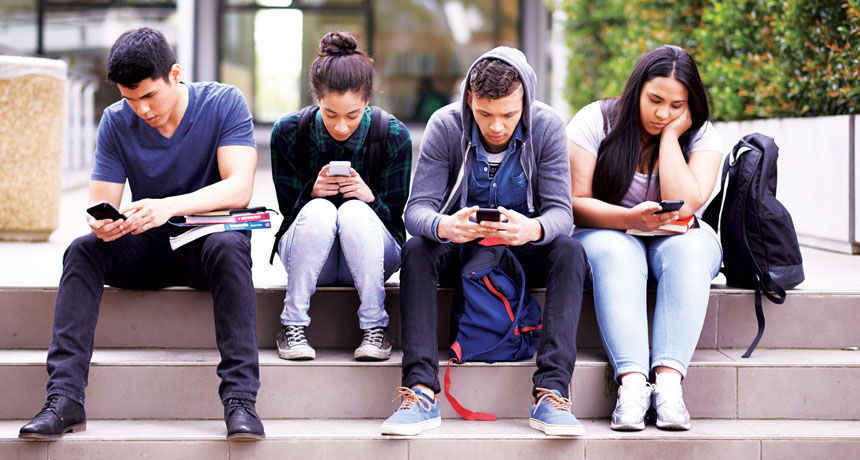
Today, the internet moves through our lives with us. We hunt Pokémon as we shuffle down the sidewalk. We text at red lights. We tweet from the bathroom. We sleep with a smartphone within arm’s reach, using the device as both lullaby and alarm clock. Sometimes we put our phones down while we eat, but usually faceup, just in case something important happens. Our iPhones, Androids and other smartphones have led us to effortlessly adjust our behavior. Portable technology has overhauled our driving habits, our dating styles and even our posture. Despite the occasional headlines claiming that digital technology is rotting our brains, not to mention what it’s doing to our children, we’ve welcomed this alluring life partner with open arms and swiping thumbs.
Scientists suspect that these near-constant interactions with digital technology influence our brains. Small studies are turning up hints that our devices may change how we remember, how we navigate and how we create happiness — or not. Somewhat limited, occasionally contradictory findings illustrate how science has struggled to pin down this slippery, fast-moving phenomenon. Laboratory studies hint that technology, and its constant interruptions, may change our thinking strategies. Like our husbands and wives, our devices have become “memory partners,” allowing us to dump information there and forget about it — an off-loading that comes with benefits and drawbacks. Navigational strategies may be shifting in the GPS era, a change that might be reflected in how the brain maps its place in the world. Constant interactions with technology may even raise anxiety in certain settings.
Yet one large study that asked people about their digital lives suggests that moderate use of digital technology has no ill effects on mental well-being.
The question of how technology helps and hinders our thinking is incredibly hard to answer. Both lab and observational studies have drawbacks. The artificial confines of lab experiments lead to very limited sets of observations, insights that may not apply to real life, says experimental psychologist Andrew Przybylski of the University of Oxford. “This is a lot like drawing conclusions about the effects of baseball on players’ brains after observing three swings in the batting cage.”
Observational studies of behavior in the real world, on the other hand, turn up associations, not causes. It’s hard to pull out real effects from within life’s messiness. The goal, some scientists say, is to design studies that bring the rigors of the lab to the complexities of real life, and then to use the resulting insights to guide our behavior. But that’s a big goal, and one that scientists may never reach.
Evolutionary neurobiologist Leah Krubitzer is comfortable with this scientific ambiguity. She doesn’t put a positive or negative value on today’s digital landscape. Neither good nor bad, it just is what it is: the latest iteration on the continuum of changing environments, says Krubitzer, of the University of California, Davis.
“I can tell you for sure that technology is changing our brains,” she says. It’s just that so far, no one knows what those changes mean.
Of course, nearly everything changes the brain. Musical training reshapes parts of the brain. Learning the convoluted streets of London swells a mapmaking structure in the brains of cabbies. Even getting a good night’s sleep changes the brain. Every aspect of our environment can influence brain and behaviors. In some ways, digital technology is no different. Yet some scientists suspect that there might be something particularly pernicious about digital technology’s grip on the brain.
“We are information-seeking creatures,” says neuroscientist Adam Gazzaley of the University of California, San Francisco. “We are driven to it in very powerful ways.” Today’s digital tools give us unprecedented exposure to information that doesn’t wait for you to seek it out; it seeks you out, he says. That pull is nearly irresistible.
Despite the many unanswered questions about whether our digital devices are influencing our brains and behaviors, and whether for good or evil, technology is galloping ahead. “We should have been asking ourselves [these sorts of questions] in the ’70s or ’80s,” Krubitzer says. “It’s too late now. We’re kind of closing the barn doors after the horses got out.” Attention grabber One way in which today’s digital technology is distinct from earlier advances (like landline telephones) is the sheer amount of time people spend with it. In just a decade, smartphones have saturated the market, enabling instant internet access to an estimated 2 billion people around the world. In one small study reported in 2015, 23 adults, ages 18 to 33, spent an average of five hours a day on their phones, broken up into 85 distinct daily sessions. When asked how many times they thought they used their phones, participants underestimated by half.
In a different study, Larry Rosen, a psychologist at California State University, Dominguez Hills, used an app to monitor how often college students unlocked their phones. The students checked their phones an average of 60 times a day, each session lasting about three to four minutes for a total of 220 minutes a day. That’s a lot of interruption, Rosen says. Smartphones are “literally omnipresent 24-7, and as such, it’s almost like an appendage,” he says. And often, we are compelled to look at this new, alluring rectangular limb instead of what’s around us. “This device is really powerful,” Rosen says. “It’s really influencing our behavior. It’s changed the way we see the world.”
Technology does that. Printing presses, electricity, televisions and telephones all shifted people’s habits drastically, Przybylski says. He proposes that the furor over digital technology melting brains and crippling social lives is just the latest incarnation of the age-old fear of change. “You have to ask yourself, ‘Is there something magical about the power of an LCD screen?’ ” Przybylski says.
Yet some researchers suspect that there is something particularly compelling about this advance. “It just feels different. Computers and the internet and the cloud are embedded in our lives,” says psychologist Benjamin Storm of the University of California, Santa Cruz. “The scope of the amount of information we have at our fingertips is beyond anything we’ve ever experienced. The temptation to become really reliant on it seems to be greater.”
Memory outsourcing Our digital reliance may encourage even more reliance, at least for memory, Storm’s work suggests. Sixty college undergraduates were given a mix of trivia questions — some easy, some hard. Half of the students had to answer the questions on their own; the other half were told to use the internet. Later, the students were given an easier set of questions, such as “What is the center of a hurricane called?” This time, the students were told they could use the internet if they wanted.
People who had used the internet initially were more likely to rely on internet help for the second, easy set of questions, Storm and colleagues reported online last July in Memory. “People who had gotten used to using the internet continued to do so, even though they knew the answer,” Storm says. This kind of overreliance may signal a change in how people use their memory. “No longer do we just rely on what we know,” he says. That work builds on results published in a 2011 paper in Science . A series of experiments showed that people who expected to have access to the internet later made less effort to remember things . In this way, the internet has taken the place formerly filled by spouses who remember birthdays, grandparents who remember recipes and coworkers who remember the correct paperwork codes — officially known as “transactive memory partners.” “We are becoming symbiotic with our computer tools,” Betsy Sparrow, then at Columbia University, and colleagues wrote in 2011. “The experience of losing our internet connection becomes more and more like losing a friend. We must remain plugged in to know what Google knows.”
That digital crutch isn’t necessarily a bad thing, Storm points out. Human memory is notoriously squishy, susceptible to false memories and outright forgetting. The internet, though imperfect, can be a resource of good information. And it’s not clear, he says, whether our memories are truly worse, or whether we perform at the same level, but just reach the answer in a different way.
“Some people think memory is absolutely declining as a result of us using technology,” he says. “Others disagree. Based on the current data, though, I don’t think we can really make strong conclusions one way or the other.”
The potential downsides of this memory outsourcing are nebulous, Storm says. It’s possible that digital reliance influences — and perhaps even weakens — other parts of our thinking. “Does it change the way we learn? Does it change the way we start to put information together, to build our own stories, to generate new ideas?” Storm asks. “There could be consequences that we’re not necessarily aware of yet.”
Research by Gazzaley and others has documented effects of interruptions and multitasking, which are hard to avoid with incessant news alerts, status updates and Instagrams waiting in our pockets. Siphoning attention can cause trouble for a long list of thinking skills, including short- and long-term memory, attention, perception and reaction time. Those findings, however, come from experiments in labs that ask a person to toggle between two tasks while undergoing a brain scan, for instance. Similar effects have not been as obvious for people going about their daily lives, Gazzaley says. But he is convinced that constant interruptions — the dings and buzzes, our own restless need to check our phones — are influencing our ability to think.
Making maps Consequences of technology are starting to show up for another cognitive task — navigating, particularly while driving. Instead of checking a map and planning a route before a trip, people can now rely on their smartphones to do the work for them. Anecdotal news stories describe people who obeyed the tinny GPS voice that instructed them to drive into a lake or through barricades at the entrance of a partially demolished bridge. Our navigational skills may be at risk as we shift to neurologically easier ways to find our way, says cognitive neuroscientist Véronique Bohbot of McGill University in Montreal.
Historically, getting to the right destination required a person to have the lay of the land, a mental map of the terrain. That strategy takes more work than one that’s called a “response strategy,” the type of navigating that starts with an electronic voice command. “You just know the response — turn right, turn left, go straight. That’s all you know,” Bohbot says. “You’re on autopilot.” A response strategy is easier, but it leaves people with less knowledge. People who walked through a town in Japan with human guides did a better job later navigating the same route than people who had walked with GPS as a companion, researchers have found.
Scientists are looking for signs that video games, which often expose people to lots of response-heavy situations, influence how people get around. In a small study, Bohbot and colleagues found that people who average 18 hours a week playing action video games such as Call of Duty navigated differently than people who don’t play the games. When tested on a virtual maze, players of action video games were more likely to use the simpler response learning strategy to make their way through, Bohbot and colleagues reported in 2015 in Proceedings of the Royal Society B.
That easier type of response navigation depends on the caudate nucleus, a brain area thought to be involved in habit formation and addiction. In contrast, nerve cells in the brain’s hippocampus help create mental maps of the world and assist in the more complex navigation. Some results suggest that people who use the response method have bigger caudate nuclei, and more brain activity there. Conversely, people who use spatial strategies that require a mental map have larger, busier hippocampi.
Those results on video game players are preliminary and show an association within a group that may share potentially confounding similarities. Yet it’s possible that getting into a habit of mental laxity may change the way people navigate. Digital technology isn’t itself to blame, Bohbot says. “It’s not the technology that’s necessarily good or bad for our brain. It’s how we use the technology,” she says. “We have a tendency to use it in the way that seems to be easiest for us. We’re not making the effort.”
Parts of the brain, including those used to navigate, have many jobs. Changing one aspect of brain function with one type of behavior might have implications for other aspects of life. A small study by Bohbot showed that people who navigate by relying on the addiction-related caudate nucleus smoke more cigarettes, drink more alcohol and are more likely to use marijuana than people who rely on the hippocampus. What to make of that association is still very much up in the air.
Sweating the smartphone Other researchers are trying to tackle questions of how technology affects our psychological outlooks. Rosen and colleagues have turned up clues that digital devices have become a new source of anxiety for people. In diabolical experiments, Cal State’s Rosen takes college students’ phones away, under the ruse that the devices are interfering with laboratory measurements of stress, such as heart rate and sweating. The phones are left on, but placed out of reach of the students, who are reading a passage. Then, the researchers start texting the students, who are forced to listen to the dings without being able to see the messages or respond. Measurements of anxiety spike, Rosen has found, and reading comprehension dwindles.
Other experiments have found that heavy technology users last about 10 minutes without their phones before showing signs of anxiety.
Fundamentally, an interruption in smartphone access is no different from those in the days before smartphones, when the landline rang as you were walking into the house with bags full of groceries, so you missed the call. Both situations can raise anxiety over a connection missed. But Rosen suspects that our dependence on digital technology causes these situations to occur much more often.
“The technology is magnificent,” he says. “Having said that, I think that this constant bombardment of needing to check in, needing to be connected, this feeling of ‘I can’t be disconnected, I can’t cut the tether for five minutes,’ that’s going to have a long-term effect.”
The question of whether digital technology is good or bad for people is nearly impossible to answer, but a survey of 120,000 British 15-year-olds (99.5 percent reported using technology daily) takes a stab at it. Oxford’s Przybylski and Netta Weinstein at Cardiff University in Wales have turned up hints that moderate use of digital technology — TV, computers, video games and smartphones — correlates with good mental health, measured by questions that asked about happiness, life satisfaction and social activity.
When the researchers plotted technology use against mental well-being, an umbrella-shaped curve emerged, highlighting what the researchers call the “Goldilocks spot” of technology use — not too little and not too much.
“We found that you’ve got to do a lot of texting before it hurts,” Przybylski says. For smartphone use, the shift from benign to potentially harmful came after about two hours of use on weekdays, mathematical analyses revealed. Weekday recreational computer use had a longer limit: four hours and 17 minutes, the researchers wrote in the February Psychological Science. For even the heaviest users, the relationship between technology use and poorer mental health wasn’t all that strong. For scale, the potential negative effects of all that screen time was less than a third of the size of the positive effects of eating breakfast, Przybylski and Weinstein found.
Even if a relationship is found between technology use and poorer mental health, scientists still wouldn’t know why, Przybylski says. Perhaps the effect comes from displacing something, such as exercise or socializing, and not the technology itself.
We may never know just how our digital toys shape our brains. Technology is constantly changing, and fast. Our brains are responding and adapting to it.
“The human neocortex basically re-creates itself over successive generations,” Krubitzer says. It’s a given that people raised in a digital environment are going to have brains that reflect that environment. “We went from using stones to crack nuts to texting on a daily basis,” she says. “Clearly the brain has changed.”
It’s possible that those changes are a good thing, perhaps better preparing children to succeed in a fast-paced digital world. Or maybe we will come to discover that when we no longer make the effort to memorize our best friend’s phone number, something important is quietly slipping away.
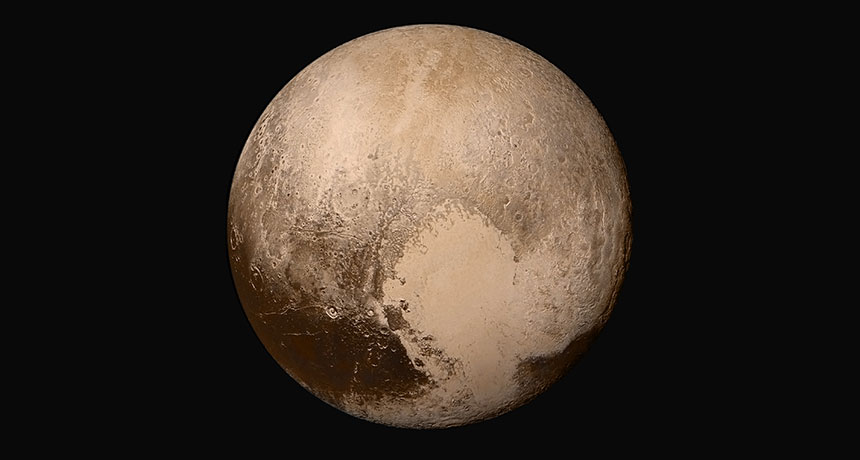
Pluto is a planet. It always has been, and it always will be, says Will Grundy of Lowell Observatory in Flagstaff, Arizona. Now he just has to convince the world of that.
For centuries, the word planet meant “wanderer” and included the sun, the moon, Mercury, Venus, Mars, Jupiter and Saturn. Eventually the moon and sun were dropped from the definition, but Pluto was included, after its discovery in 1930. That idea of a planet as a rocky or gaseous body that orbited the sun stuck, all the way up until 2006. Then, the International Astronomical Union narrowed the definition, describing a planet as any round object that orbits the sun and has moved any pesky neighbors out of its way, either by consuming them or flinging them off into space. Pluto failed to meet the last criterion (SN: 9/2/06, p. 149), so it was demoted to a dwarf planet.
Almost overnight, the solar system was down to eight planets. “The public took notice,” Grundy says. It latched onto the IAU’s definition — perhaps a bit prematurely. The definition has flaws, he and other planetary scientists argue. First, it discounts the thousands of exotic worlds that orbit other stars and also rogue ones with no star to call home (SN: 4/4/15, p. 22).
Second, it requires that a planet cut a clear path around the sun. But no planet does that; Earth, Mars, Jupiter and Neptune share their paths with asteroids, and objects crisscross planets’ paths all the time.
The third flaw is related to the second. Objects farther from the sun need to be pretty bulky to cut a clear path. You could have a rock the size of Earth in the Kuiper Belt and it wouldn’t have the heft required to gobble down or eject objects from its path. So, it couldn’t be considered a planet.
Grundy and colleagues (all members of NASA’s New Horizons mission to Pluto) laid out these arguments against the IAU definition of a planet March 21 at the Lunar and Planetary Science Conference in The Woodlands, Texas. A more suitable definition of a planet, says Grundy, is simpler: It’s any round object in space that is smaller than a star. By that definition, Pluto is a planet. So is the asteroid-belt object Ceres. So is Earth’s moon. “There’d be about 110 known planets in our solar system,” Grundy says, and plenty of exoplanets and rogue worlds would fit the bill as well.
The reason for the tweak is to keep the focus on the features — the physics, the geology, the atmosphere — of the world itself, rather than worry about what’s going on around it, he says.
The New Horizons mission has shown that Pluto is an interesting world with active geology, an intricate atmosphere and other features associated with planets in the solar system. It makes no sense to write Pluto off because it doesn’t fit one criterion. Grundy seems convinced the public could easily readopt the small world as a planet. Though he admits astronomers might be a tougher sell.
“People have been using the word correctly all along,” Grundy says. He suggests we stick with the original definition. That’s his plan.
It is the dazzling star of the biotech world: a powerful new tool that can deftly and precisely alter the structure of DNA. It promises cures for diseases, sturdier crops, malaria-resistant mosquitoes and more. Frenzy over the technique — known as CRISPR/Cas9 — is in full swing. Every week, new CRISPR findings are unfurled in scientific journals. In the courts, universities fight over patents. The media report on the breakthroughs as well as the ethics of this game changer almost daily.
But there is a less sequins-and-glitter side to CRISPR that’s just as alluring to anyone thirsty to understand the natural world. The biology behind CRISPR technology comes from a battle that has been raging for eons, out of sight and yet all around us (and on us, and in us).
The CRISPR editing tool has its origins in microbes — bacteria and archaea that live in obscene numbers everywhere from undersea vents to the snot in the human nose. For billions of years, these single-celled organisms have been at odds with the viruses — known as phages — that attack them, invaders so plentiful that a single drop of seawater can hold 10 million. And natural CRISPR systems (there are many) play a big part in this tussle. They act as gatekeepers, essentially cataloging viruses that get into cells. If a virus shows up again, the cell — and its offspring — can recognize and destroy it. Studying this system will teach biologists much about ecology, disease and the overall workings of life on Earth.
But moving from the simple, textbook story into real life is messy. In the few years since the defensive function of CRISPR systems was first appreciated, microbiologists have busied themselves collecting samples, conducting experiments and crunching reams of DNA data to try to understand what the systems do. From that has come much elegant physiology, a mass of complexity, surprises aplenty — and more than a little mystery. Spoiled yogurt The biology is complicated, and its basic nuts and bolts took some figuring out. There are two parts to CRISPR/Cas systems: the CRISPR bit and the Cas bit. The CRISPR bit — or “clustered regularly interspaced short palindromic repeats” — was stumbled on in the late 1980s and 1990s. Scientists then slowly pieced the story together by studying microbes that thrive in animals’ guts and in salt marshes, that cause the plague and that are used to make delicious yogurt and cheese.
None of the scientists knew what they were dealing with at first. They saw stretches of DNA with a characteristic pattern: short lengths of repeated sequence separated by other DNA sequences now known as spacers. Each spacer was unique. Because the roster of spacers could differ from one cell to the next in a given microbe species, an early realization was that these differences could be useful for forensic “typing” — investigators could tell whether food poisoning cases were linked, or if someone had stolen a company’s yogurt starter culture. But curious findings piled up. Some of those spacers, it turned out, matched the DNA of phages. In a flurry of reports in 2005, scientists showed, to name one example, that strains of the lactic acid bacterium Streptococcus thermophilus contained spacers that matched genetic material of phages known to infect Streptococcus. And the more spacers a strain had, the more resistant it was to attack by phages.
This began to look a lot like learned or adaptive immunity, akin to our own antibody system: After exposure to a specific threat, your immune system remembers and you are thereafter resistant to that threat. In a classic experiment published in Science in 2007, researchers at the food company Danisco showed it was so. They could see new spacers added when a phage infected a culture of S. thermophilus. Afterward, the bacterium was immune to the phage. They could artificially engineer a phage spacer into the CRISPR DNA and see resistance emerge; when they took the spacer away, immunity was lost.
This was handy intel for an industry that could find whole vats of yogurt-making bacteria wiped out by phage infestations. It was an exciting time scientifically and commercially, says Rodolphe Barrangou of North Carolina State University in Raleigh, who did a lot of the Danisco work. “It was not just discovering a cool system, but also uncovering a powerful phage-resistance technology for the dairy industry,” he says.
The second part of the CRISPR/Cas system is the Cas bit: a set of genes located near the cluster of CRISPR spacers. The DNA sequences of these genes strongly suggested that they carried instructions for proteins that interact with DNA or RNA in some fashion — sticking to it, cutting it, copying it, unraveling it. When researchers inactivated one Cas gene or another, they saw immunity falter. Clearly, the two bits of the system — CRISPR and Cas — were a team. It took many more experiments to get to today’s basic model of how CRISPR/Cas systems fight phages — and not just phages. Other types of foreign DNA can get into microbes, including circular rings called plasmids that shuttle from cell to cell and DNA pieces called transposable elements, which jump around within genomes. CRISPRs can fend off these intruders, as well as keep a microbe’s genome in tidy order.
The process works like this: A virus injects its genetic material into the cell. Sensing this danger, the cell selects a little strip of that genetic material and adds it to the spacers in the CRISPR cluster. This step, known as immunization or adaptation, creates a list of encounters a cell has had with viruses, plasmids or other foreign bits of DNA over time — neatly lined up in reverse chronological order, newest to oldest.
Older spacers eventually get shed, but a CRISPR cluster can grow to be long — the record holder to date is 587 spacers in Haliangium ochraceum, a salt-loving microbe isolated from a piece of seaweed. “It’s like looking at the last 600 shots you had in your arm,” says Barrangou. “Think about that.”
New spacer in place, the microbe is now immunized. Later comes targeting. If that same phage enters the cell again, it’s recognized. The cell has made RNA copies of the relevant spacer, which bind to the matching spot on the genome of the invading phage. That “guide RNA” leads Cas proteins to target and snip the phage DNA, defanging the intruder. Researchers now know there are a confetti-storm of different CRISPR systems, and the list continues to grow. Some are simple — such as the CRISPR/Cas9 system that’s been adapted for gene editing in more complex creatures (SN: 4/15/17, p. 16) — and some are elaborate, with many protein workhorses deployed to get the job done.
Those who are sleuthing the evolution of CRISPR systems are deciphering a complex story. The part of the CRISPR toolbox involved in immunity (adding spacers after phages inject their genetic material) seems to have originated from a specific type of transposable element called a casposon. But the part responsible for targeting has multiple origins — in some cases, it’s another type of transposable element. In others, it’s a mystery.
The downsides Given the power of CRISPR systems to ward off foes, one might think every respectable microbe out there in the soils, vents, lakes, guts and nostrils of this planet would have one. Not so.
Numbers are far from certain, partly because science hasn’t come close to identifying all the world’s microbes, let alone probe them all for CRISPRs. But the scads of microbial genetic data accrued so far throw up interesting trends.
Tallies suggest that CRISPR systems are far more prevalent in known archaea than in known bacteria — such systems exist in roughly 90 percent of archaea and about 35 percent of bacteria, says Eugene Koonin, a computational evolutionary biologist at the National Institutes of Health in Bethesda, Md. Archaea and bacteria, though both small and single-celled, are on opposite sides of the tree of life.
Perhaps more significantly, Koonin says, almost all the known microbes that live in superhot environments have CRISPRs. His group’s math models suggest that CRISPR systems are most useful when microbes encounter a big enough variety of viruses to make adaptive memory worth having. But if there’s too much variety, and viruses are changing very fast, CRISPRs don’t really help — because you’d never see the same virus again. The superhot ecosystems, he says, seem to have a stable amount of phage diversity that’s not too high or low.
And CRISPR systems have downsides. Just as people can develop autoimmune reactions against their own bodies, bacteria and archaea can accidentally make CRISPR spacers from bits of their own DNA — and risk chewing up their own genetic material. Researchers have seen this happen. “No immunity comes without a cost,” says Rotem Sorek, a microbial genomicist at the Weizmann Institute of Science in Rehovot, Israel.
But mistakes are rare, and Sorek and his colleagues recently figured out why in the microbe they study. The researchers reported in Nature in 2015 that CRISPR spacers are created from linear bits of DNA — and phage DNA is linear when it enters cells. The bacterial chromosome is protected because of its circular form. Should it break and become linear for a spell, such as when it’s being replicated, it contains signals that ward off the Cas proteins.
There are other negatives to CRISPR systems. It’s not always a bonus to keep out phages and other invaders, which can sometimes bring in useful things. Escherichia coli O157:H7, of food poisoning fame, can make humans sick because of toxin genes it harbors that were brought in by a phage, to name just one of myriad examples. Even CRISPR systems themselves are spread around the microbial kingdom via phages, plasmids or transposable elements.
For microbes that lack CRISPR systems, there are many other ways to repel foreign DNA — as much as 10 percent of a microbial genome may be devoted to hawkish warfare, and new defense systems are still being uncovered.
Countermeasures The war between bacteria and phages is two-sided, of course. Just as a microbe wants to keep doors shut to protect its genetic integrity and escape destruction, the phage wants in.
And so the phage fights back against CRISPRs. It genetically morphs into forms that CRISPRs no longer recognize. Or it designs bespoke artillery. Microbiologist Joe Bondy-Denomy, now at the University of California, San Francisco, happened upon such customized weapons as a grad student in the lab of molecular microbiologist Alan Davidson at the University of Toronto. The team knew that the bacterium Pseudomonas aeruginosa, which lives in soil and water and can cause dangerous infections, has a vigorous CRISPR system. Yet some phages didn’t seem fazed by it.
That’s because those phages have small proteins that will bind to and interfere with this or that part of the CRISPR machinery, such as the Cas enzyme that cuts phage DNA. The binding disables the CRISPR system, the researchers reported in 2015 in Nature. Bondy-Denomy and others have since found anti-CRISPR genes in other phages and other kinds of interloping DNA. The genes are so common, Davidson says, that he wonders how many CRISPR systems are truly active.
In an especially bizarre twist, microbiologist Kimberley Seed of the University of California, Berkeley found a phage that carries its own CRISPR system and uses it to fight back against the cholera bacterium it invades, she and colleagues reported in 2013 in Nature. It chops up a segment of bacterial DNA that normally inhibits phage infection.
Of course, in this never-ending scuffle one would expect the microbes to again fight back against the phages. “It’s something I often get asked: ‘Great, the anti-CRISPRs are there, so where are the anti-anti-CRISPRs?’ ” Bondy-Denomy says. Nobody has found such things yet.
Evolution drivers It’s one thing to study CRISPR systems in well-controlled lab settings, or in just one type of microbe. It’s another to understand what all the various CRISPRs do to shape the ecosystem of a bubbling hot spring, human gut, diseased lung or cholera-tainted river. Estimates of CRISPR abundance could drop as more sampling is done, especially of dark horse microbes that researchers know little about.
In a 2016 report in Nature Communications, for example, geomicrobiologist Jill Banfield of UC Berkeley and colleagues detected 1,724 microbes in Colorado groundwater that had been treated to boost the abundance of types that are difficult to isolate. CRISPR systems were much rarer in this sample than in databases of better-known microbes.
Tallying CRISPRs is just the start, of course. Microbial communities — including those inside our own guts, where there are plenty of CRISPR systems and phages — are dynamic, not frozen. How do CRISPRs shape the evolution of phages and microbes in the wild? Banfield’s and Barrangou’s labs teamed up to watch as S. thermophilus and phages incubated together in a milk medium for hundreds of days. The team saw bacterial numbers fall as phages invaded; then bacteria acquired spacers against the phage and rallied — and phage numbers fell downward in turn. Then new phage populations sprang up, immune to S. thermophilus defenses because of genetic changes. In this way, the researchers reported in 2016 in mBio, CRISPRs are “one of the fundamental drivers of phage evolution.”
CRISPR systems can be picked up, dropped, then picked up again by bacteria and archaea over time, perhaps as conditions and needs change. The bacterium Vibrio cholerae is an example of this dynamism, as Seed and colleagues reported in 2015 in the Journal of Bacteriology. The older, classical strains of this medical blight harbored CRISPRs, but these strains went largely extinct in the wild in the 1960s. Strains that cause cholera today do not have CRISPRs.
Nobody knows why, Seed says. But scientists stress that it is a mischaracterization to paint the relationship between microbes and phages, plasmids and transposable elements as a simplistic war. Phages don’t always wreak havoc; they can slip their genomes quietly into the bacterial chromosome and coexist benignly, getting copied along with the host DNA. Phages, plasmids and transposable elements can confer new, useful traits — sometimes even essential ones. Indeed, such movement of DNA across species and strains is at the heart of how bacteria and archaea evolve.
So it’s about finding balance. “If you incorporate too much foreign DNA, you cannot maintain a species,” says Luciano Marraffini, a molecular microbiologist at the Rockefeller University in New York City whose work first showed that DNA-cutting was key to CRISPR systems. But you do need to let some DNA in, and it’s likely that some CRISPR systems permit this: The system he studies in Staphylococcus epidermidis, for example, only goes after phages that are in their cell-killing, or lytic, state, he and colleagues reported in 2014 in Nature. Beyond defense One thing is very clear about CRISPR systems: They are perplexing in many ways. For a start, the spacers in a microbe should reflect its own, individual story of the phages it has encountered. So you’d think there would be local pedigrees, that a bacterium sampled in France would have a different spacer cluster from a bacterium sampled in Argentina. This is not what researchers always see.
Take the nasty P. aeruginosa. Rachel Whitaker, a microbial population biologist at the University of Illinois at Urbana-Champaign, studies Pseudomonas samples collected from people with cystic fibrosis, whose lungs develop chronic infections. She’s found no sign that two patients living close to each other carry more-similar P. aeruginosa CRISPRs than two patients thousands of miles apart. Yet surely one would expect nearby CRISPRs to be closer matches, because the Pseudomonas would have encountered similar phages. “It’s very weird,” Whitaker says.
Others have seen the same thing in heat-loving bacteria sampled from very distant bubbling hot springs. It’s as if scientists don’t truly understand how bacteria spread around the world — there could be a strong effect of far-flung passage by air or wind, says Konstantin Severinov, who studies CRISPR systems at Rutgers University in New Brunswick, N.J. Another weirdness is the differing vigor of CRISPR systems. Some are very active. Molecular biologist Devaki Bhaya of the Carnegie Institution for Science’s plant biology department at Stanford University sees clear signs that spacers are frequently added and dropped in the cyanobacteria of Yellowstone’s hot springs, for example. But other systems are sluggish, and E. coli, that classic workhorse of genetics research, has a respectable-looking CRISPR system — that is switched off.
It may have been off for a long time. Some 42,000 years ago, a baby woolly mammoth died in what is now northwestern Siberia. The remains, found in 2007, were so well-preserved that the intestines were intact and E. coli DNA could be extracted.
In research published in Molecular Ecology in January, Severinov’s team found surprising similarities between the spacers in the mammoth-derived E. coli CRISPR cluster and those in modern-day E. coli. “There was no turnover in all that time,” Severinov marvels. If the CRISPR system isn’t active, why does E. coli bother to keep it?
That quandary leads neatly to what some researchers refer to as an intellectually “scandalous situation.”
In some cases, the genetic sequence of spacers nicely matches phage DNA. But overall, only a fraction (around 1 to 2 percent) of the spacers scientists know about have been matched to a virus or a plasmid. In E. coli, the spacers don’t match common, classic phages known to infect the bacterium. “Is it the case that there is a huge, unknown amount of viral dark matter in the world?” says Koonin — or are phages evolving superfast? “Or is it something completely different?”
Faced with this conundrum, some researchers strongly suspect — and have evidence — that CRISPR systems may do more than defend; they may have other jobs. Communication, perhaps. Or turning genes on and off.
But some microbes’ CRISPR sequences do make sense, especially if looking at the spacers most recently added, and others may be clues to phages still undiscovered. So even as they scratch their heads about many things CRISPR, scientists are also excited by the stories CRISPR clusters can tell about the viruses and other bits of DNA that bacteria and archaea encounter and that they choose, for whatever reason, to note for the record. What do microbes pay attention to? What do they ignore?
CRISPRs offer a bright new window on such questions and, indeed, already are unearthing novel phages and facts about who infects whom in the microscopic world.
“We can catalog everything that’s out there. But we don’t really know what matters,” says Bondy-Denomy. “CRISPRs can help us understand.”
Eggs, long condemned for making raw cookie dough a forbidden pleasure, can stop taking all the blame. There’s another reason to resist the sweet uncooked temptation: flour.
The seemingly innocuous pantry staple can harbor strains of E. coli bacteria that make people sick. And, while not a particularly common source of foodborne illness, flour has been implicated in two E. coli outbreaks in the United States and Canada in the last two years.
Pinning down tainted flour as the source of the U.S. outbreak, which sickened 63 people between December 2015 and September 2016, was trickier than the average food poisoning investigation, researchers recount November 22 in the New England Journal of Medicine. Usually, state health departments rely on standard questionnaires to find a common culprit for a cluster of reported illnesses, says Samuel Crowe, an epidemiologist at the Centers for Disease Control and Prevention in Atlanta, who led the study. But flour isn’t usually tracked on these surveys. So when the initial investigation yielded inconclusive results, public health researchers turned to in-depth personal interviews with 10 people who had fallen ill.
Crowe spent up to two hours asking each person detailed questions about what he or she had eaten around the time of getting sick. Asking people what they ate eight weeks ago can be challenging, Crowe says: Many people can’t even remember what they ate for breakfast that morning.
“I got a little lucky,” Crowe says. Two people remembered eating raw cookie dough before getting sick. They each sent Crowe pictures of the bag of flour they had used to make the batter. It turned out that both bags had been produced in the same plant. That was a “pretty unusual thing,” he says. Follow-up questioning helped Crowe and his team pin down flour as the likely source. Eventually, U.S. Food and Drug Administration scientists analyzed the flour and isolated strains of E. coli bacteria that produce Shiga toxins, which make E. coli dangerous.
Disease-causing bacteria, including E. coli, usually thrive in moist environments, like bags of prewashed lettuce (SN: 12/24/16, p. 4). But the bacteria can also survive in a desiccated state for months and be re-activated with water, says Crowe. So as soon as dry flour mingles with eggs or oil, dormant bacteria can reawaken and start to replicate.
Cookie dough wasn’t the culprit in every case. A few children who got sick had been given raw tortilla dough to play with while waiting for a table at a restaurant. The cases all involved wheat flour from the same facility, leading to a recall of more than 250 flour-containing products.
There are ways to kill bacteria in flour before it reaches grocery store shelves, but they aren’t in use in the United States. Heat treatment, for example, will rid flour of E. coli and other pathogens. But the process also changes the structure of the flour, which affects the texture of baked goods, says Rick Holley, a food safety expert at the University of Manitoba in Canada who wasn’t part of the study. Irradiation, used to kill parasites and other pests in flour, might be a better option, Holley says. But it takes a higher dose of radiation to zap bacteria than it does to kill pests.
Or, of course, people could hold out for warm, freshly baked cookies.
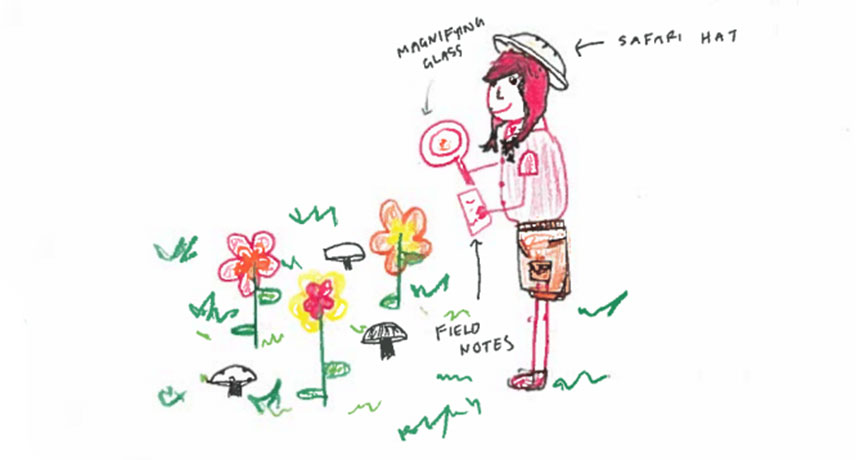
Ask a classroom of children to draw a scientist, and you’ll see plenty of Crayola-colored lab coats, goggles and bubbling beakers. That image hasn’t changed much since the 1960s. But the person wearing the lab coat is shifting.
A new analysis finds that more female scientists have appeared in kids’ drawings in recent decades — going from nearly nonexistent in the 1960s to about a third in 2016.
“A lot has changed since the 1960s,” says David Miller, a Ph.D. candidate in psychology at Northwestern University who reports the findings with colleagues March 20 in Child Development. The first of many “draw-a-scientist” studies asked nearly 5,000 children to draw a scientist between 1966 and 1977. “Of those 5,000 drawings,” Miller says, “only 28 … depicted a female scientist.” That’s just 0.6 percent.
Today, “more women are becoming scientists, and there’s some evidence that female scientists are being represented more in the media,” he says. For instance, in a content analysis of the magazine Highlights for Children, 13 percent of people pictured in science feature stories of the 1960s were women or girls, compared with 44 percent in the 2000s. To look for changes in children’s perceptions over time, the researchers conducted a meta-analysis, combining data from 78 studies that included a total of more than 20,000 U.S. children in kindergarten through 12th grade.
On average, 28 percent of children drew female scientists in studies conducted from 1985 to 2016, the researchers found.
What hasn’t changed much: Kids pick up stereotypes by gender as they grow up. At age 6, girls in the more recent studies drew female scientists about 70 percent of the time. By age 16, 75 percent drew male scientists.
“This is a critical period in which kids are learning stereotypes,” Miller says. “It’s important that teachers and parents present diverse examples of both male and female scientists.”
Editors’ note: This story was corrected on March 21, 2018, to note that by age 16, girls drew only 25 percent of scientists as female.