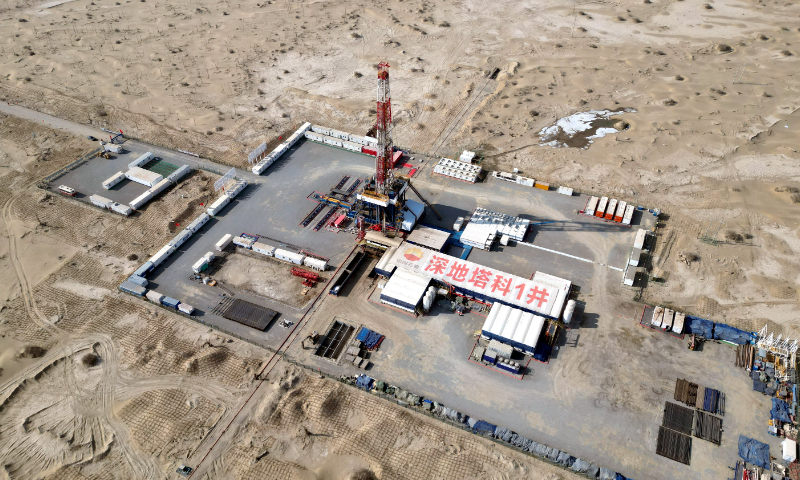
China's ultra-deep oil well broke through the 10,000-meter depth mark on Monday, after 279 days of drilling. This is China's first well to exceed a vertical depth of more than 10,000 meters. It has the record for the deepest well in Asia and also the world record for the shortest time taken to drill a 10,000-meter deep well.
It shows that China has independently overcome the bottleneck in extra-deep well drilling technology, and that its deep-earth oil and gas drilling capability and supporting technology have reached the international advanced level.
With a designed depth of 11,100 meters, the Shendi Take 1 ultra-deep well, located in the Tarim Basin in Northwest China's Xinjiang Uygur Autonomous Region, is part of China's efforts to expand domestic oil production.
The well will also be used to carry out deep-earth science exploration to examine the internal structure and evolution of the Earth, as well as oil and gas accumulation in the 10,000-meter-deep layer, China National Petroleum Corp (CNPC), the operator of the well, said in a post on its WeChat account.
The drilling started on May 30, 2023 and will continue to the designed depth of 11,100 meters, said CNPC.
The difficulty increases exponentially as the depth increases, project personnel said. The Shendi Take 1 ultra-deep well crosses 13 earth layers in the basin from top to bottom. Currently, the 12th layer has been drilled, and drill bits are drilling into rocks dating back 500 million years.
In order to hit the 10,000-meter-deep mark, China independently developed the world's first automatic drilling rig that can reach 12,000 meters. It involves technology such as 220 C ultra-high temperature drilling fluid and high temperature-resistant screws.
At the same time, various kinds of core equipment and technologies were used, with 21 breakthroughs in seven categories, and the localization rate of materials and equipment used reached 90 percent.
According to the project staff, 26 drill bits and 1,060 drill stems have been used to drill the well.In the oil drilling industry, wells that are between 4,500 and 6,000 meters deep are called deep wells. Wells that are between 6,000 and 9,000 meters deep are called super-deep wells, and those that are deeper than 9,000 meters are classified as ultra-deep wells.
At present, China's onshore deep and ultra-deep oil and gas resources account for 34 precent of the country's total oil and gas resources, and the proportion of new deep and ultra-deep oil and gas reserves is increasing year by year.
The Tarim Basin is China's largest petroliferous basin, accounting for more than 60 percent of the country's onshore ultra-deep oil and gas resources.
However, the Tarim Basin is also one of the most difficult areas to explore in China, in part because many of its reserves lie between 6,000 and 10,000 meters underground.
Therefore, technological innovations that allow for ultra-deep wells have become crucial.
In recent years, China has conducted ultra-deep well projects in the Tarim Basin and has successfully drilled more than 140 wells with a depth of more than 8,000 meters.
In 2023, CNPC's oilfields in Tarim Basin produced 19.57 million tons of ultra-deep oil and gas, ranking first in China and making the basin the largest ultra-deep oil and gas production base in the country.
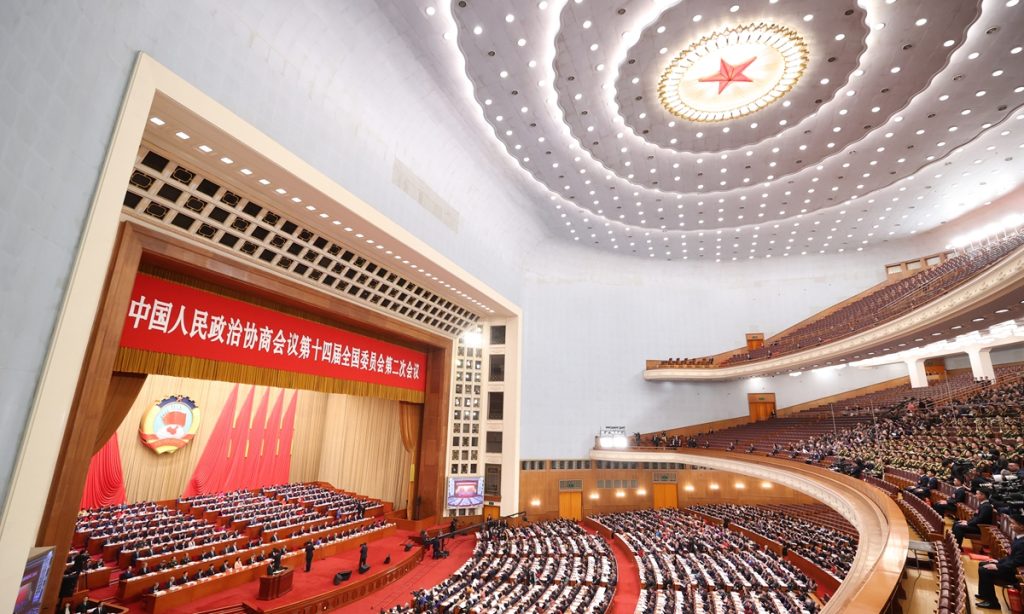
China's top political advisory body started its annual session on Monday in Beijing, ushering in an important political season that will highlight new missions to steadily boost high-quality development in a bid to build the country into a great modern socialist country while injecting new impetus into global growth.
This year marks the 75th anniversary of the founding of the People's Republic of China and is a key year for achieving the goals outlined in the nation's 14th Five-Year Plan (2021-25). In this pivotal year of comprehensively deepening reform, analysts and deputies and members to the two sessions expect major measures to be announced at the key political event to further promote high-quality development and advance Chinese modernization.
Observers projected that China's high-quality development in 2024 and medium to long term will be driven by new quality productive forces such as artificial intelligence (AI), digital economy and other innovation industries. With continuous improvement in economic structure, strong economic development momentum and sound development trend, the Chinese economy will remain a promising destination for foreign investment and a major engine driving global growth.
New productive forces At the 11th group study session of the Political Bureau of the Communist Party of China (CPC) Central Committee held on January 31, 2024, Xi Jinping, general secretary of the CPC Central Committee, said that developing new quality productive forces is an endogenous requirement and a pivot for high-quality development.
Sci-tech innovation has become an important driving force for China's development. Recently, the term "new productive force" has become a key word for central and local governments in their arrangement of economic work, and is also an area that national legislators and political advisors are expected to provide suggestions for during the ongoing two sessions.
"New quality productive forces represent advanced productivity and is an important direction of China's development. The vigorous development of new quality productive forces will eventually help achieve high-quality development in China," Yu Miaojie, president of Liaoning University and a deputy to the 14th National People's Congress (NPC), told the Global Times on Monday.
In order to boost the development of new productive forces, China should further increase investment in original innovations and basic research, Yu said. In 2022, the country's investment in basic research accounted for 6.57 percent of the total research and development (R&D) spending, and the share should further climb to 7 percent or even 10 percent by the end of 14th Five-Year Plan period (in 2025), he said.
The development of new quality productive forces is currently picking up speed in China. Along with advances in the new technological revolution and industrial transformation, data, computing power and AI have become new drivers of new productive forces.
Yang Jie, chairman of China Mobile and a member of the 14th National Committee of the Chinese People's Political Consultative Conference (CPPCC), suggested that the country boost the "AI+" campaign at the national level by strengthening top-level design and clarifying development goals and key tasks, in order to give full play to the huge potential of AI in achieving leapfrog development of technologies, industrial upgrade and productivity.
Comprised of AI and the manufacturing sector, smart manufacturing is an important part of new productive forces. However, China's smart manufacturing faces three major problems: Supply capability needs to be strengthened, application needs to be promoted and a standard system needs to be established, said Zhong Zheng, an NPC deputy and vice president of the Midea Group.
She suggested that the country support leading companies in various industries to take the lead in developing industry solutions so as to help more companies set up world-leading smart factories that contribute to sustained development.
While new quality productive forces are important to the world's second-largest economy, private enterprises also need to earnestly enhance their own productivity and boost transformation surrounding sci-tech innovations, Wang Junjin, a member of the 14th National Committee of the CPPCC and chairman of Shanghai Junyao (Group) Co, told the Global Times on Monday.
Wang said that efforts should also be made to inject momentum into the country's burgeoning consumption sector, for example by building new business models and new spending scenarios in order to drive the high-quality development of China's economy.
Vibrant economy China's economy grew by 5.2 percent year-on-year in 2023, contributing to more than 30 percent of the world's economic growth. More importantly, steady progress was made in pursuing high-quality development last year, with consumption playing a larger part in driving growth, tech innovations making breakthroughs and new momentum accumulating.
The Chinese economy kicked off 2024 with a robust display of economic resilience and vitality. For example, China saw 474 million domestic tourist trips during the eight-day Spring Festival holidays that ended on February 17, up 34.3 percent year-on-year. China's box office revenue during the same holiday season reached 8 billion yuan ($1.1 billion), setting a new record for the period.
"Overall, China's development is seeing more favorable conditions than unfavorable ones, and the overall trend of China's economic recovery and long-term improvement remains unchanged. We have plenty of confidence in that," Lou Qinjian, spokesperson for the second session of the 14th NPC, said at a press conference on Monday, one day ahead of the opening of its annual session.
It is widely expected that policymakers will set a GDP target of around 5 percent for 2024 in the Government Work Report to be delivered by Chinese Premier Li Qiang on Tuesday, which will greatly boost market confidence and gather strength for the high-quality development of the economy.
The two sessions are a timely and clear response to certain pessimistic voices on the Chinese economy, mainly from Western countries, Han Baojiang, a member of the 14th National Committee of the CPPCC, told the Global Times.
"Chinese policymakers are sober and their approach to economic development - as shown by the Central Economic Work Conference and the Government Work Report set to be delivered on Tuesday - is very clear," Han said. "To put it simply, improving our economy, enhancing people's livelihoods, and ensuring stable employment may be the most effective way to deal with all those challenges."
Foreign chambers of commerce and companies operating in China have also shown confidence in the prospects of the Chinese economy, eyeing greater opportunities from Chinese modernization.
"China remains an important market for our member companies," Juha Tuominen, chairman of FinnCham Beijing, told the Global Times, saying that the chamber's latest surveys showed that Finnish companies are positive about Chinese market potential.
Although the Chinese economy faces challenges such as weak consumption, a property market downturn and weak export momentum, the Chinese government has drawn up the appropriate policies. It's hoped that there will be an improvement after this year's two sessions, and Panasonic will strengthen local operations to deal with market changes, Tetsuro Homma, executive vice president of Panasonic Corporation, told the Global Times.
"China is the most important technology and supply chain base for Panasonic… We will closely follow topics such as healthcare, smart manufacturing and green development during the two sessions and are seeking opportunities in other key areas as well," Homma said.
Editor's Note: While China's economy is undergoing a crucial transformation and upgrade amid the current complex international environment, Western propaganda machines persist in attempting to undermine China's economic progress by creating biased and inaccurate narratives. To counter these false claims, the Global Times is publishing a series of articles that unveil the reality of China's consistent economic development.
Since the start of reform and opening-up, there have been several waves of talking down the prospects of the Chinese economy in the international public opinion arena. Looking back, it is evident that those arguments were all incorrect.
When China's economic development encountered challenges during the late 1980s and early 1990s, the international community was abuzz with discussions regarding the potential "collapse of the Chinese economy." However, with China setting the objective of reforming the socialist market economy system, the economy has sustained rapid growth. From 1991 to 1995, the GDP experienced an average annual growth rate of 12.3 percent.
During the period of 1997 to 2001, as China's economic landscape underwent transformations, a resurgence of the theory of "China's economic collapse" was put forth by some foreign economists. However, the reality is that, through deepening reforms, expanding openness, and macroeconomic policy adjustments, China not only withstood the impact of financial crises, preventing a decline in economic growth, but also entered a period of rapid economic growth after 2000. From 2001 to 2005, China's average annual GDP growth rate was 9.8 percent.
Since 2007, China's economy has been under pressure due to the effects of the international financial crisis. Some foreign scholars have expressed concern about a potential decline in the Chinese economy. For instance, Nobel laureate in economics Paul Krugman wrote an article in The New York Times entitled "Will China break?" In fact, the Chinese government effectively mitigated the impact of the international financial crisis by implementing proactive fiscal policies and moderately easy monetary policies, enabling the economy to maintain stable and rapid growth. In 2010, China's GDP exceeded 40 trillion yuan ($5.6 trillion), solidifying its position as the world's second-largest economy and the largest manufacturing nation.
After 2010, with changes in economic development conditions such as the cost increase of China's labor force, coupled with the lingering impacts of the international financial crisis and the subsequent European sovereign debt crisis, China's economic development entered a new normal. There were once again voices predicting a downturn in the Chinese economy, suggesting that it would face stagnation or even an economic crisis. The fact is that China has promptly implemented measures such as supply-side structural reform, which has helped stabilize and boost the economy, leading to high-quality economic development.
Western cognitive biases Those who consistently predict the decline of the Chinese economy repeatedly make mistakes because they have cognitive biases and misconceptions about the strong resilience and development principles of the Chinese economy.
First, Western doomsayers simply use Western economic theories to analyze and judge the development prospects of the Chinese economy. Western economic theories, which are developed through analyzing the development experiences of developed Western countries, should not be simply replicated in developing countries, especially in large economies like China that are undergoing economic transformation.
Historical experience has consistently demonstrated that developing nations, when blindly adopting Western economic theories without taking into account their unique national circumstances, have failed to achieve economic development success. Instead, they have often encountered economic stagnation and political unrest.
China has steadfastly followed the path of socialism with Chinese characteristics, implementing reforms toward a socialist market economy and driving Chinese modernization. These efforts have led to notable achievements that have garnered global recognition, showcasing a promising outlook for the great rejuvenation of the Chinese nation.
Second, Western critics have tended to exaggerate short-term and localized challenges, overlooking the resilience of China's economic growth. It is essential to consider both short-term and long-term perspectives when evaluating the economic landscape, rather than fixating on isolated issues. Excessively amplifying short-term or local problems and risks within the Chinese economy is not warranted.
Upon reflection, it is evident that many of the challenges perceived to have a substantial impact on the Chinese economy in the past were not as severe as initially anticipated. This can be attributed to China's status as a major economy, as well as the distinctive advantages of the socialism with Chinese characteristics in effectively addressing the risks and challenges.
Moreover, China's economic development continues to show an upward trajectory, indicating its resilience and capacity to weather shocks with self-stabilizing and self-repairing mechanisms. Although short-term adjustments may be necessary in response to challenges, China has demonstrated its ability to explore new pathways for development.
Third, the negative portrayals of China's economy from the Western media lack clear evidence. Instead, they are rife with biased, ill-intentioned and narrow-minded misinterpretations. Analyzing and studying China's economy necessitates the integration of economic principles with China's specific national circumstances and stage of development. However, some pessimists lack a comprehensive and in-depth research on the Chinese economy, with certain scholars seldom visiting China. There are individuals who even engage in negative commentary to attract attention, and some exploit China slander for financial gain in the capital market.
Positive trajectory unchanged At present, China's economy is entering in a crucial phase of transition toward high-quality development. Throughout this process, it is bound to face a range of issues and challenges. Nevertheless, China's economic progress remains steadfast. It is bolstered by confidence, advantages, and opportunities, ensuring that its enduring positive trajectory remains unchanged.
First, the foundation of China's economic development remains stable, with new growth drivers emerging and expanding. The country has amassed significant material and technological resources, and its vast domestic market demand serves as a robust pillar for sustaining steady economic growth and navigating through various risks and challenges. In terms of scientific and technological innovation, despite certain countries intensifying efforts to restrict China's high-tech industries and advocate for "decoupling and disrupting industrial chains," it is impossible for them to impede the progress of China's scientific and technological advancements and industrial upgrades.
Second, China has outstanding comprehensive advantages in human resources, capital, infrastructure and industrial systems, and has huge economic development potential. Although major changes in the total population size and structure will have a certain impact on economic growth, it should be noted that compared with population size, the key factor affecting medium- and long-term economic growth is educating level of labor force. In 2023, China's working-age population aged 16-59 stayed at 865 million, of which more than 240 million received higher education.
From an investment perspective, China's savings rate still remains at a high level, with great investment potential. In addition, after years of development, China has formed a relatively complete and ultra-large-scale infrastructure network. The comprehensive transportation network, power generation installed capacity, power grid, 5G network and other scales all rank first in the world. At the same time, it has built a large-scale, and complete industrial system.
Third, facing new strategic opportunities, there is broad space for the development of new industrialization and new urbanization. The rapid development of a new round of scientific and technological revolution and industrial transformation has brought new opportunities. At present, a new round of scientific and technological revolution and industrial transformation represented by artificial intelligence, life sciences, new energy have entered a period of breakthrough development. Digital, intelligent, and green transformation are advancing at speed, which will enable China to leverage its advantages and improve total factor productivity and promote high-quality economic development.
Admittedly, China's economic development still faces new challenges. Yet, these challenges are inherent to the developmental process and are akin to the "growing pains" experienced during advancement. Despite this, the overall trajectory and momentum of economic development remain steadfast. Historical evidence and present circumstances demonstrate that China's economy has consistently thrived amid adversity. The robust external pressures being exerted will undoubtedly serve as a catalyst for driving China's economic growth.
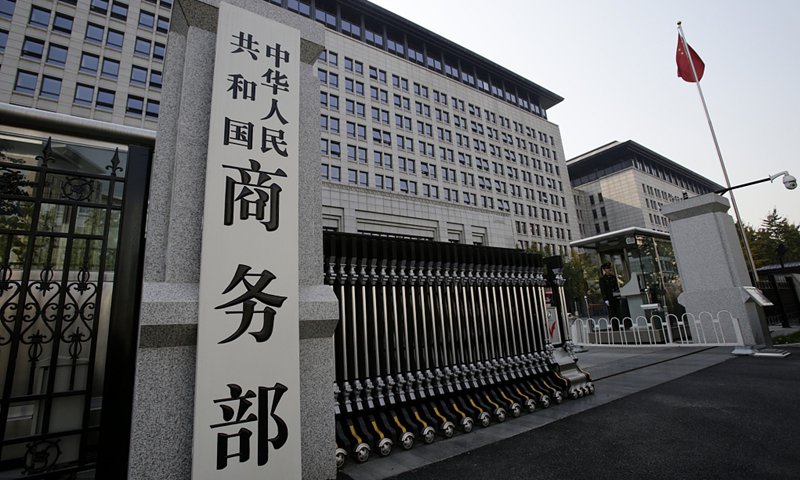
American companies in China have recognized the improvement in China's economy and the continuous improvement of the business environment, which reflects the confidence of those investing in China and deepening their roots here, China's Ministry of Commerce (MOFCOM) spokesperson He Yadong said at a regular press conference on Thursday, referring to the results of the latest report from the American Chamber of Commerce in China (AmCham China).
About half of US companies surveyed view China as a top three global priority despite challenges such as tense China-US relations, the AmCham in Beijing said on February 1.
Specifically, this year, 50 percent of AmCham China members consider China a top three investment priority, up 5 percentage points on a yearly basis. The majority of US companies will continue their presence in China, with 77 percent saying that they have no plan to transfer production or procurement out of China, the chamber said on its website.
Almost all the US companies surveyed said that China-US relations are important, and nearly 30 percent expect bilateral relations to improve in 2024, according to the report.
In responding to media inquiries for comment on the report, the MOFCOM spokesperson said that the results of the corresponding report are another example of China remaining a prime destination for global investment.
At the same time, the ministry also notes that American companies in China have considered the "tense China-US relations" as the biggest operational challenge for four consecutive years, which precisely reflects the eager anticipation of the business community for stable development in the bilateral relations, He said.
China is willing to work with the US to earnestly implement the important consensus reached by the leaders of the two countries, fully leverage the role of multi-level communication mechanisms between the Chinese and American commerce departments, the spokesperson said.
Also, China is willing to promote mutually beneficial cooperation with the US, effectively manage differences, and create a favorable environment for pragmatic cooperation between the business communities of the two countries, He said.
China-US relations have achieved positive outcomes amid the intensive business interactions over the recent past. This week, a US Chamber of Commerce delegation led by the chamber's President and CEO Suzanne Clark visited China, and they are meeting with senior Chinese government officials and local business leaders.
China and the US are continuing to step up engagement, which analysts said would provide much-needed confidence for businesses in both countries and the international community amid increasing global challenges.
The pressure on Apple to reorganize its products structure and find more and stronger business avenues is on, ever since Microsoft has topped Apple about one month ago to become the most valuable public company in the world. The competition between the two major tech titans is expected to persist in the coming two to three years, if not longer.
Now, generative artificial intelligence (AI) is churning the seas and making big waves after OpenAI launched the newest ChatGPT bot "Sora" which is able to make vivid and utterly realistic clips of video streams if fed with descriptive texts. Deemed as the next transformative technology that may be capable to reshape our work and life, AI innovation and development is currently on the top agenda of both Apple and Microsoft.
And on Tuesday, Apple's Chief Operating Officer Jeff Williams affirmed that the company is winding down its decade-old endeavor to build an electric vehicle, abandoning one of the most ambitious projects in the company's history. Many employees working on the EV project reportedly will be shifted to Apple's AI project group. Obviously, AI innovation is a key priority of the company and Apple cannot take it for granted.
AI is presumably the next big thing for the world's corporate giants, as joggling for achieving an AI edge has already started. Microsoft, a major stakeholder of OpenAI, seems to be leading in generative AI development and usage. Microsoft has invested billions of dollars in OpenAI and spent the whole of last year racing to push its AI solutions into every product the company offers, which many watchers claim will enable Microsoft to cash in on what they see as its lead in AI.
Apple does not want to fall behind in AI innovation. Apple CEO Tim Cook told investors earlier this month that it has been working on generative AI and was planning to announce some progress later in 2024. "We've got some things that we're incredibly excited about that we'll be talking about later this year," he said on a call with industry analysts.
The decision to shut down its high-profile EV bid is a bombshell for many, which effectively ended a multibillion-dollar effort named Project Titan which would have vaulted the company into a whole new industry. Apple started working on its EV program about 10 years ago, eyeing on a fully autonomous electric car with voice-guided navigation, but the project stumbled and struggled from the start, causing investors to be increasingly concerned with the eventual birth of a car.
But Apple continues to spend heavily in new technology advances. It spent a total of $113 billion on research and development during the past five years, with an average annual growth rate of 16 percent, one of the highest among major tech companies in the world. For instance, Apple last year launched the popular Vision Pro headset.
But Microsoft has moved from "talking about AI to applying AI at scale," according to its chief executive Satya Nadella. The company's more than $3 trillion market valuation is significantly supported by its lead in AI innovation and its flagship cloud computing product called Azure. In the just concluded quarter ending December, the company netted revenue totaling $62 billion, growing 18 percent from a year earlier. Its profit reached $21.9 billion, up 33 percent. Microsoft's cloud offerings brought in $33.7 billion business, just behind Amazon.
Microsoft vowed to invest tens of billions more in building more data centers for AI and cloud computing. Corporate customers have just started trying Microsoft's Copilot offering, which integrates newest AI tools into its cloud productivity programs including Word, Excel and Teams. The improvements have become widely available at the end of last year and cost about $30 per user per month, which is able to create new streams of revenue for Microsoft.
Years ago, Microsoft trailed in market capitalization as its stock price lacked luster after the company acquired Nokia's mobile phone business, which ultimately failed as it could not compete with smartphone giants like Apple and a slew of Chinese phone makers. But Microsoft again places its focus on software development, cloud computing and AI innovation, which eventually pays off and leads to steadily rising stock prices and becomes a darling at Wall Street.
According to Japanese media, Japanese government sources stated on January 15 that Japan and Australia are discussing potential military cooperation in case of simultaneous contingencies in their nearby regions. They also mentioned increasing the sophistication and frequency of joint drills between the Self-Defense Forces and the Australian military and Tokyo has also asked for Canberra's cooperation in using Australia's vast continent as a testing ground for Japanese missiles that are under development, "apparently with China's growing maritime assertiveness in mind."
This reflects the step-by-step implementation of the Australia-Japan Joint Declaration on Security Cooperation signed by Japanese Prime Minister Fumio Kishida and Australian Prime Minister Anthony Albanese in October 2022. It is also a result of vigorous facilitation and promotion by the US. Japan and Australia are becoming two pawns in the US Indo-Pacific Strategy, or more specifically, in the strategy to contain China. This can be likened to the sharp claws of a feline extending from concealed pads.
Following Washington's instructions and deployment, the two countries are overtly strengthening military interactions and cooperation with the explicit goal of countering China. The impact of this approach on the regional situation is inevitably disruptive and detrimental, poisoning the regional peace environment, intensifying tensions, and exerting significant efforts to push the Asia-Pacific region into security dilemmas or traps.
The revealed development, particularly Japan's intention to conduct long-range missile launch tests in Australia, is indeed noteworthy. Japan lacks strategic depth domestically and does not have the conditions for testing medium to long-range missiles. It also faces the restricts of the constitution. Utilizing Australia's territory for this purpose is undoubtedly advantageous for Japan. Australia is breeding an inexplicable "sense of insecurity" under the malicious instigation and misleading of the US, blindly cooperating with and supporting Japan's dangerous actions instead of taking precautions. This is very regrettable.
If this comes to fruition, it would represent a fundamental and substantive betrayal and breach of the Constitution of Japan. Many peace-loving individuals in the Asia-Pacific region, including a significant number of Japanese citizens, have long been strongly concerned about and vehemently opposed to such actions. Japanese media has described the US-Japan-Australia defense relationship as "changing the rules of the game." However, the development of long-range missiles by Japan goes beyond merely "changing the rules of the game." For countries that have previously suffered from Japanese militaristic aggression, it is more akin to lifting the seal on a demon.
Japan enacted a peace constitution after being defeated in World War II and pursued a principle of "exclusive self-defense," establishing an image of a "peaceful nation" and embarking on a "peaceful path" to help Japan quickly gain recognition and trust from countries affected by World War II and integrate into the international community. The rapid recovery and development of Japan's economy after World War II are closely related to this. However, when Japan deviates from the path of peace, recognition and trust of the international community immediately turn into vigilance and suspicion, further becoming obstacles and restrictions on Japan's development path.
Medium to long-range missiles are undoubtedly significant offensive weapons. In late 2022, Japan passed "three security documents," which clearly stated Japan's commitment to policies such as having "enemy base strike capabilities," including various types of long-range offensive missiles and the "integrated air and missile defense" system used in conjunction with the US military. From this news, it can be seen that Japan is moving forward along the planned route of the new security documents, and ahead of this path lies a huge crisis.
This road is not only full of dangers but also causes great harm to the people and the economy. Japan's defense budget for the fiscal year 2024 will increase by 16.5 percent compared to the previous fiscal year, reaching a historical high. The Asahi Shimbun commented that such a large-scale budget "has completely exceeded its own needs and is in an inflated state." The high defense expenditure will undoubtedly squeeze out more financial resources related to people's livelihoods, negatively impacting the lives of Japanese citizens.
Since the intensification of global geopolitical tensions, Japan has been distorting the concept, turning regional countries' expectations for peace into tacit approval or even support for its military development. Facts have proven that Japan's actions are seriously stimulating the escalation of regional tensions. As victims of Japan's past militaristic aggression, Canberra and the South Pacific countries should in no way contribute to the growth of Japan's military ambitions.
Australia, located in the southern hemisphere, could have been free from the disturbance of geopolitical conflicts. There is absolutely no need to let military weapons from other countries cast a shadow of war over this land. In December of last year, Australian defense minister refused to send warships or aircraft to the US-led Red Sea coalition, citing "our strategic focus is our region." If Australia truly feels responsible for its surrounding region, this should be reflected in actions that maintain peace and reduce the risk of war. And Australia should demonstrate strategic autonomy through practical actions.
After netizens in several parts of China captured footage of an unidentified flying object in the sky on Sunday, experts stated that this phenomenon was caused by the passivation process of the rocket launched by SpaceX carrying Starlink satellites over North China, according to media reports on Monday.
Netizens posted videos on Sunday claiming that an unidentified flying object were seen flying across the sky in many parts of China. Internet users in Beijing commented that the unidentified light cluster looked like a moving cloud-like object, but it was definitely not an airplane.
"The glowing object had three light sources arranged in an isosceles triangle, and it dispersed like a mist and disappeared without a trace," another netizen wrote.
People from North China's Hebei and Shanxi provinces also reported seeing the flying object and described it as resembling a large mosquito, and some questioned whether it was a rocket launch.
In response to the doubts of netizens, Zhu Jin, a researcher from the Beijing Planetarium, stated that the unidentified flying object was a phenomenon caused by the passivation treatment of the rocket carrying the Starlink satellites launched by SpaceX at 16:59 on Sunday Beijing time passing over North China, according to the Beijing News on Monday.
Zhu said that passivation treatment can be seen as the process of the rocket discarding unused fuel. When a rocket completes its mission, there is usually leftover fuel, which is not brought back to Earth with the rocket. Instead, the remaining fuel from the final stage of the rocket is vented through passivation treatment to prevent explosions.
According to the China Newsweek, Yang Yuguang, Vice Chair of the Space Transportation Committee at the International Astronautical Federation, further explained that passivation treatment is a common practice by major countries to mitigate the space debris, which includes three aspects: emptying the remaining propellant, releasing gas from high-pressure cylinders, and discharging the electrical energy from its batteries. These three aspects are all aimed at avoiding the danger caused by self-explosion of the rocket's final stage, according to Yang.
The expert stated that currently, humans use multi-stage rockets to deliver payloads, such as satellites, spacecraft and space stations, into orbit around the Earth. The batteries are used in the last stage of the launch vehicle, and once the battery power is depleted, the spacecraft loses all functionality and becomes space junk, which is detrimental to the mitigation of space debris. The space junk may collide with other spacecraft or explode itself, generating more and larger space debris, Yang said.
Under normal circumstances, when people observe the final stage of a launch vehicle passing through a certain area, it appears as a bright spot, which is actually a reflection of sunlight. It can be seen only if the sky is not too bright and it must be able to be illuminated by the sun, so it is more likely to see the artificial spacecraft during dawn and dusk, Yang noted.
According to the SpaceX website, Falcon 9 launched 22 Starlink satellites to low-Earth orbit at 12:59 am Pacific Time Sunday and 23 Starlink satellites at 8:52 pm US Eastern Time Sunday.
A Chinese mainland spokesperson on Saturday commented on the outcomes of Taiwan leadership and legislature elections.
Chen Binhua, a spokesperson for the State Council Taiwan Affairs Office, said the results reveal that the Democratic Progressive Party cannot represent the mainstream public opinion on the island.
Noting that Taiwan is China's Taiwan, Chen said that the elections will not change the basic landscape and development trend of cross-Strait relations, will not alter the shared aspiration of compatriots across the Taiwan Strait to forge closer ties, and will not impede the inevitable trend of China's reunification.
"Our stance on resolving the Taiwan question and realizing national reunification remains consistent, and our determination is as firm as rock," Chen said.
"We will adhere to the 1992 Consensus that embodies the one-China principle and firmly oppose the separatist activities aimed at 'Taiwan independence' as well as foreign interference," Chen said.
He said the mainland will work with relevant political parties, groups and people from various sectors in Taiwan to boost cross-Strait exchanges and cooperation, enhance cross-Strait integrated development, jointly promote Chinese culture, and advance the peaceful development of cross-Strait relations as well as the cause of national reunification.
China's National Immigration Administration (NIA) officially implements five measures to facilitate foreign nationals coming to China, effective on Thursday, including relaxing visa application requirements and simplifying visa application materials. This move represents that China continues to speed up its opening-up to the outside world.
The sluggish recovery of international flights and Western media's disinformation against China are partly responsible for the slow recovery of foreigners' visits to China, said experts. However, they anticipate a boost in visits to China in the coming year. This increase in tourism not only has the potential to enhance trade and people-to-people exchanges but also allows foreigners to gain firsthand experiences and information in China, thereby dispelling any malicious disinformation propagated by Western media.
Liu Haitao, an official from NIA, announced the measures at a conference held on Thursday. One of these measures include the relaxation of the conditions for foreign nationals to apply for port visas to China. For foreign nationals who urgently need to engage in business cooperation, visit exchanges, investment and other non-diplomatic and non-official activities, if they are unable to obtain a visa overseas in time, they can apply for a port visa to enter China by presenting invitation letters and other relevant supporting documents to the port visa authorities.
Foreign nationals can transit through Beijing Capital Airport and other designated international airports in China without going through immigration procedures for up to 24 hours. This policy applies to nine international airports, including Beijing Capital, Beijing Daxing, Shanghai Pudong, and Xi'an Xianyang.
Travelers with international connecting flights within 24 hours can transit through any of these airports to a third country or region without going through immigration procedures and enjoy visa-free transit, said Liu.
The measures will also allow foreign nationals to apply for visa extensions, replacements, or reissues at the nearest location. Foreign nationals who need to enter and exit China multiple times can apply for reentry visas, as the application process will now be simplified.
For foreign nationals applying for visas, if their accommodation registration records and business licenses can be accessed through information sharing, they are exempt from providing relevant paper documents for verification. For foreign nationals in China applying for short-term family reunion visas, a declaration of kinship by the inviting person can be used instead of proof of kinship.
According to the official, as China's economy continues to recover and improve, and its level of opening-up to the outside world expands, there has been a surge in demand for enhanced immigration management services from both domestic and foreign enterprises and individuals.
In response, the NIA is proactively collaborating with relevant authorities to address key challenges and obstacles pertaining to the entry of foreigners for business, study, and tourism in China.
[The recent new measures] are a game-changer for business, a British national doing business in Shanghai who only gave his name as Barrie told the Global Times on Thursday. "This could open up all kinds of opportunities. I can say from experience that the visa application procedures (even for visiting) had been challenging in the past, this easing of process for foreigners to enter will bring flows of travelers, and workers, and commerce."
Border inspection authorities across China checked a total of 210 million visitors entering the country in 2023, recovering to 62.9 percent of the levels seen in 2019. The number of visitors entering the country will continue to rise in 2024 thanks to the resumption of international flights and cross-border personnel exchanges, said an official from the NIA.
The NIA said the number of new applications and replacements for 'Five-Star Card' that is designated for foreign permanent residents increased significantly. Foreigners with permanent residence permits in China can apply for financial services, including banking, securities, and foreign exchanges, said the administration.
Open up further and wider
The latest measures are in line with China's offering of visa-free policy to six countries last year and Central Economic Work Conference held at the end of last year, signaling efforts should be made to foster new drivers of foreign trade, Miao Lu, secretary general of Center for China and Globalization, a Beijing-based non-governmental think tank, told the Global Times on Thursday.
Last month, China rolled out a one-year visa-free policy to ordinary passport holders from six countries - France, Germany, Italy, the Netherlands, Spain and Malaysia - starting from December 1, 2023.
Charles Loke Chee Kin, a Malaysian who has business ties with China, told the Global Times on Thursday, "I used to fly to China once a month. In the past, I had to apply for a visa every time which requires long processing. Now, with the implementation of the visa-free policy between China and Malaysia, it is really convenient for overseas personnel like us who come to China frequently."
Miao said apart from stimulating trade and tourism, the new policies also aim to promote people-to-people exchanges between China and other countries.
According to experts, there is still significant potential for increasing the number of foreigners visiting China, as the number of visitors entering the country in 2023 only reached 62.9 percent of the pre-pandemic level. Miao suggests that one major factor contributing to this slow recovery is the sluggish rebound of international flights.
By the end of 2023, China's scheduled international passenger flights had returned to 4,782 flights per week, around 62.8 percent of the pre-pandemic level, the Civil Aviation Administration of China said on Monday
The pervasive toxic anti-China rhetoric that prevails in the West has undoubtedly taken a psychological toll on some individuals, instilling fear and apprehension in their minds when considering a visit to China, Zhang Yiwu, a professor of Chinese language and literature from Peking University, told the Global Times on Thursday.
For example, some foreign media have been hyping China's revised Counter-Espionage Law since April 2023. A piece published in the Wall Street Journal in April 2023 said that the law and "China's detention of foreigners" have made businesses worried and spooked people who plan to travel there.
Zhang expressed his concerns over the Western media's distortion and defamation of China's efforts to safeguard its national security. He emphasized that this has hindered meaningful people-to-people exchanges. He highlighted that the latest measures, coupled with China's warm gesture, will effectively convey the message that the country welcomes individuals with legitimate intentions. Zhang believes that firsthand experiences in China will dispel the unfounded negative portrayal perpetuated by biased Western media reports.
In the disguise of maintaining national security, the US has been ratcheting up chip export control measures against China and unreasonably suppressing Chinese semiconductor companies, which is a genuine act of economic bullying, Mao Ning, a spokesperson of China's Foreign Ministry, told a press conference on Monday.
Noting that the US often talks about international rules, but what it really does is to ignore the rules and violate them, Mao said the implementation by the US of semiconductor export control measures against Chinese companies constitutes a discriminatory practice against China and violates the principle of most-favored-nation treatment under Article I of the General Agreement on Tariffs and Trade (GATT).
Its blacklisting of relevant Chinese telecommunication equipment enterprises and banning of the entry of Chinese telecommunication equipment into the US market under the pretext of threatening its information security is a contravention of the principle of the general elimination of quantitative restrictions stipulated in Article XI of the GATT, the spokesperson said.
"The US uses 'national security' as a pretext to restrict chip exports to China, but in fact its relevant initiatives completely go beyond the boundaries of the concept of national security, so that the normal trade of ordinary civilian-use chips is significantly restricted," Mao said.
The Nvidia RTX4090 chip is positioned as a consumer-grade graphics card, which is mainly designed for gamers. However, due to the impact of US export control measures, the chip was forced to be taken off the shelves in the Chinese market.
In addition, the US also blackmailed a number of other countries to suppress Chinese enterprises, which has nothing to do with security, but is of typical economic coercion, Mao said.
The facts clearly show that the US' deliberate suppression of the development of China's chip industry is not based on national security considerations, let alone legitimate competitive behavior, but rather unilateral bullying act without any principle or bottom line. It is aimed to deprive emerging markets and developing countries of the right to pursue a happy life, the spokesperson noted.
"The actions of the US have seriously impacted the stability of the international production and supply chain, poisoned the atmosphere of international cooperation and fostered division and confrontation, and this self-serving approach is destined to lead to shooting itself in the foot," said Mao.