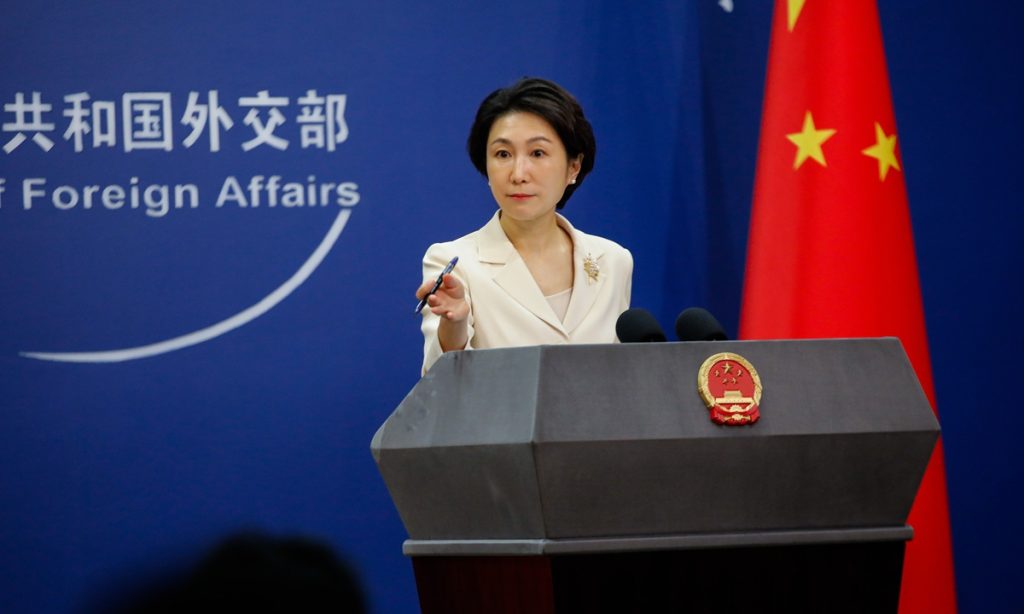
In response to a media inquiry regarding reports that the city of Nagasaki plans to complete updates to exhibition panels at the Nagasaki Atomic Bomb Museum during fiscal year 2026, including replacing the term "Nanjing Massacre" with "Nanjing Incident" on a display panel, Chinese Foreign Ministry spokesperson Mao Ning said on Friday that the Nanjing Massacre was a brutal crime committed by Japanese militarism, with overwhelming and irrefutable evidence, and that history must not be distorted.
She said the Tokyo Trial explicitly determined that the atrocities committed by Japanese forces in Nanjing constituted a "massacre," not an "incident." Mao said the judgment of the International Military Tribunal for the Far East devoted a special section to the atrocities in Nanjing and, based on extensive survivor testimonies, records by third-party foreign witnesses, and Japanese military archives, established through an international judicial ruling the grave crimes committed by the invading Japanese army during the Nanjing Massacre.
Mao said that General Iwane Matsui, held responsible for the Nanjing Massacre, was sentenced to death by hanging as a Class-A war criminal and stressed that history must not be overturned. She added that many Japanese atomic bomb survivors, civic groups in Nagasaki, and other people of insight have called for a correct and complete account of the crimes and history of Japanese militarism as an aggressor.
Japan should deeply reflect on its wartime crimes and responsibilities and make a clean break with militarism, Mao said.
At the invitation of Zhao Leji, chairman of China's National People's Congress Standing Committee, Seah Kian Peng, speaker of the Parliament of Singapore, will lead a delegation to visit China from June 8 to 13.
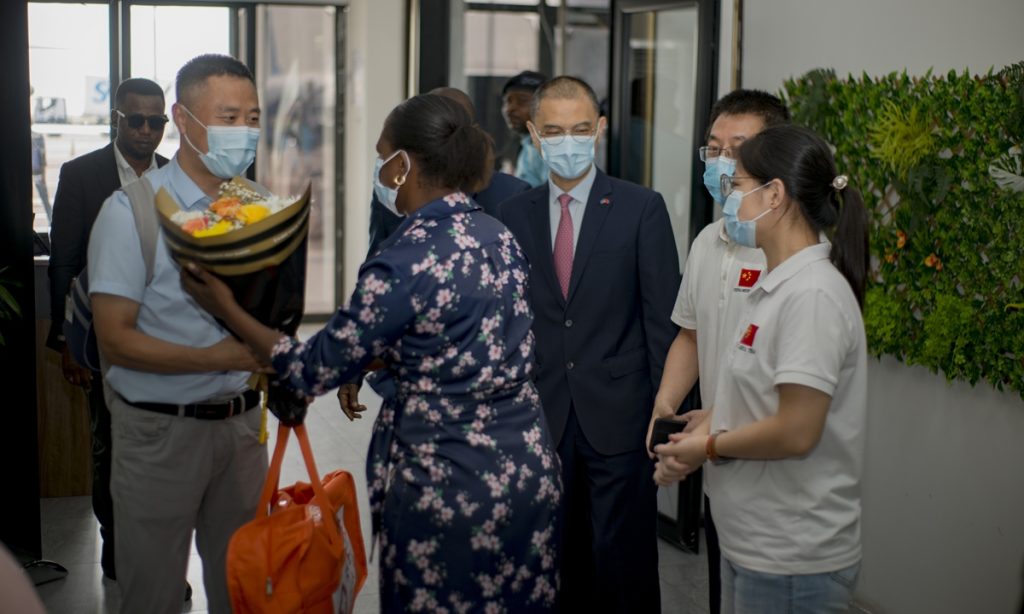
A Chinese anti-epidemic medical expert team arrived in Kinshasa, the capital of the Democratic Republic of the Congo (DRC), on Tuesday for a three-month mission to support the Central African country's response to the Ebola outbreak, Xinhua News Agency reported.
Luku Maleyo Marius, a representative of the DRC Ministry of Health, welcomed the team at the airport, saying that China's dispatch of the medical experts represents timely and strong support for the Congolese government and people, according to Xinhua.
Whenever the DRC faces major public health challenges, China has consistently extended timely assistance, he said, adding that he looks forward to the mission further strengthening the country's epidemic prevention, control and treatment capacities, and helping bring the outbreak under control as soon as possible.
The assistance effort came after the World Health Organization determined on May 17 that the Ebola outbreak in the DRC constituted a "public health emergency of international concern," with a host of nations such as the US, Canada, Thailand and Vietnam ramped up border inspections and introduced restrictive entry requirements to guard against the spread of the virus.
Speaking with the Global Times on Monday evening ahead of their departure, team members noted the assistance mission embodies China's commitment to global anti-epidemic cooperation. The experts will adapt proven epidemic control experience to local realities and help strengthen the DRC's capacity for Ebola prevention and clinical care.
China experience
The latest outbreak is the 17th in the DRC since the virus was first identified in 1976, and laboratory tests identified the Bundibugyo strain of the virus, according to media reports.
WHO told the Global Times in a previous response that case fatality rates in the past two Bundibugyo virus disease (BVD) outbreaks, reported in Uganda and in DRC in 2007 and 2012, have ranged from approximately 30 percent to 50 percent. No specific treatment exists for BVD, but early supportive care improves survival.
Members of the Chinese expert team this time have extensive experience in epidemic prevention and control and bring expertise in public health as well as traditional Chinese and Western medicine. Working alongside the China Medical Teams already in the DRC, they will support local Ebola prevention and control efforts and promote cooperation with local medical and disease control institutions.
Before departing from Beijing Capital International Airport, the leader of the expert team, Lu Ming, Second-level Inspector from Department of International Cooperation of National Health Commission (NHC), told the Global Times that China has dispatched experts in different fields, and the team will fully leverage their professional expertise and, based on firsthand epidemiological information, develop targeted prevention and control measures to support outbreak response and management.
Under the guidance of the Chinese Embassy in the DRC, the team will also work with Chinese institutions, enterprises and local Chinese communities to promote public awareness of epidemic prevention, strengthen frontline preparedness and reduce the risk of imported cases to China, Lu said.
Another member of the expert team, Xu Ke, director of Hepatitis Laboratory from National Institute for Viral Disease Control and Prevention of Chinese Center for Disease Control and Prevention, told the Global Times that his work focuses on laboratory collaboration, including virus testing and analysis, monitoring viral mutations, exploring improved diagnostic methods, and examining genetic sequence changes.
Apart from the virus's deadly risks, the complicated social conditions in epidemic zones constitute one of the biggest obstacles to containment, Xu told the Global Times. "Core affected areas are located in conflict zones with tangled geopolitical situations and restricted population mobility, rendering epidemic prevention much harder than previous efforts."
Confirmed Ebola cases in the DRC have reached 343, the country's Health Minister Roger Kamba said Monday, cited by the Congolese Press Agency, the country's official news outlet, the Xinhua News Agency reported.
BVD is a zoonotic disease, with fruit bats suspected to be the natural reservoir. Human infection occurs through close contact with the blood or secretions of infected wildlife, and subsequently spreads from person to person through direct contact with the blood, secretions, organs, or other bodily fluids of infected individuals or contaminated surfaces or items, WHO introduced.
Regardless of the strain, early and active supportive treatment can significantly reduce the mortality rate, and the key lies in early detection and timely intervention, Jiang Rongmeng, vice president of Beijing Ditan Hospital Capital Medical University and another member of the expert team, told the Global Times.
Experience from previous infectious disease responses in Africa shows that countries prone to Ebola outbreaks often share similar public health and economic conditions, as well as cultural practices that create conditions conducive for virus transmission, said Jiang, who was also a member of the expert team that participated in China's 2014 aid mission to Africa to combat the Zaire strain of the Ebola virus.
Traditional burial practices in the DRC often involve washing, touching or staying close to the body. Therefore, as the Ebola virus can spread through contact with bodily fluids, unsafe burials are a major driver of new transmission chains, according to a report by Xinhua.
Jiang added that prevention and control of an outbreak need to take into account both natural and social factors, as natural factors include exposure risks from the ecological environment such as wild animals and social factors include traditional burial practices, Jiang said.
"Against this backdrop, this brings us back to China's experience in infectious disease prevention and control, characterized by full public mobilization. Infectious disease control is not only the responsibility of experts or the government, but the whole society. This approach enables developing countries to contain diseases at relatively low cost rather than relying on expensive equipment or advanced facilities," Jiang said.
Continued efforts
Chinese medical personnel have long been stationed in the DRC prior to the expert team's arrival. Since the outbreak began, the 24th batch of Chinese medical teams assisting the DRC has promptly activated emergency response measures, established a prevention and control system, conducted training and drills, coordinated epidemic prevention supplies, and improved environmental sanitation at their base, per Xinhua.
These team members have remained on the front line of clinical care, strengthened infection prevention measures, provided guidance on epidemic control for Chinese-funded enterprises, and safeguarded the health of local residents as well as Chinese nationals in the country, according to Xinhua.
Already in 2014, an Ebola outbreak swept across Africa, with more than half of those infected losing their lives. While most countries withdrew their medical workers from Africa amid widespread panic, China's 24th medical team to Guinea headed into the epidemic-hit regions. They helped address critical gaps in local medical services and provided strong support for the local fight against Ebola, according to Health News, the media outlet affiliated with the NHC.
"Diseases know no borders," Lu said. In past responses to infectious diseases, the Chinese government has also received support and assistance from many countries. Following the declaration of the Ebola outbreak, China quickly dispatched a medical expert team and provided relevant material support, demonstrating its sense of duty as a responsible major country, Lu added.
"As a member of the expert team, I feel honored to contribute my expertise to the Ebola response, helping to achieve outbreak control goals and further advancing the vision of building a global community of health for all," Lu told the Global Times.
"China has a long-standing tradition of friendship with African countries. As practitioners, we are also committed to contributing our professional expertise," Xu said.
Chinese Foreign Ministry spokesperson Lin Jian said during a Monday press conference that China and Africa are good brothers sharing weal and woe. "We feel for the DRC over the new outbreak of Ebola."
Supporting African countries' response to Ebola is a shining example of building the all-weather China-Africa community with a shared future for the new era, and also an important part of ten partnership actions of the 2024 FOCAC Beijing summit. "As we speak, Chinese medical teams are on the ground fighting the disease shoulder to shoulder with African people," the spokesperson added.
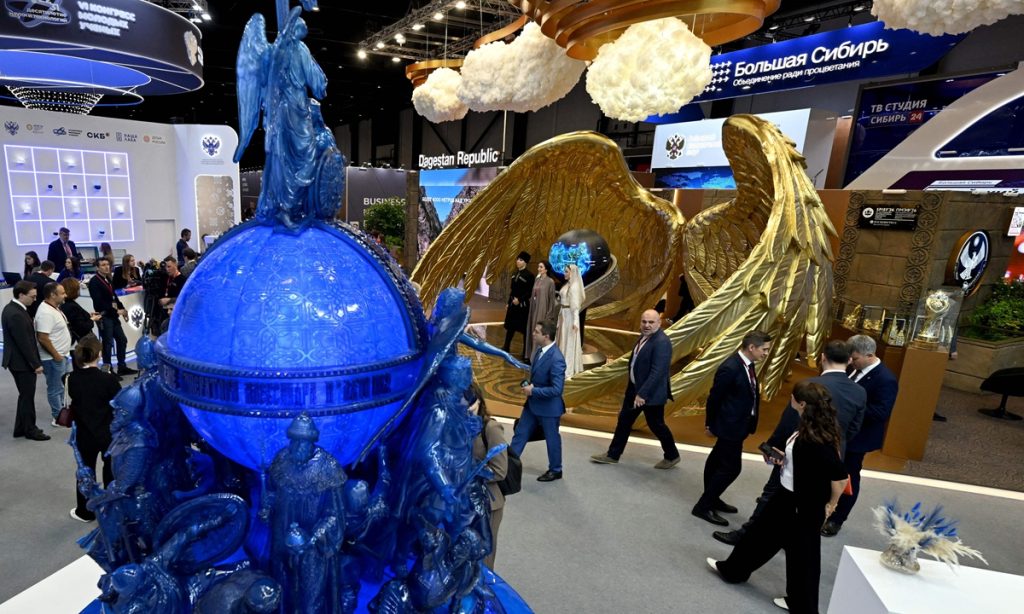
The 29th St. Petersburg International Economic Forum (SPIEF), running from Wednesday to Saturday and which is expected to draw around 20,000 participants from more than 100 countries, is underway in St. Petersburg, Russia.
The forum features seven thematic tracks and more than 170 dialogues, speeches and discussion sessions. More than 300 business events are also scheduled, including closed-door consultations, thematic roundtables and business breakfasts, Xinhua News Agency reported.
Russian presidential aide Yuri Ushakov said on Tuesday that the forum's plenary session is scheduled for Friday, with Russian President Vladimir Putin expected to attend and deliver a speech, per Xinhua.
A Chinese Foreign Ministry spokesperson announced on Tuesday that at the invitation of the governments of the Russian Federation and the Republic of Belarus, from Thursday to June 8, Vice President Han Zheng will travel to Russia to attend the 29th St. Petersburg International Economic Forum and also visit Belarus.
Foreign Ministry spokesperson Mao Ning stated at a regular press conference the same day that the St. Petersburg International Economic Forum is an important platform for discussions on global economic governance and consensus-building on international cooperation. The theme of this year's forum is "Pragmatic Dialogue: the Path to a Stable Future," which is highly relevant. China looks forward to working with other participants to strengthen communication, enhance mutual trust, practice multilateralism, and build a more just and equitable global governance system, Mao added.
"China is Russia's main economic and trade partner, and our cooperation is developing at a very fast pace," Chinese Ambassador to Russia Zhang Hanhui was quoted as saying on the official forum website.
Observers noted that bilateral cooperation between China and Russia has expanded comprehensively in both breadth and depth, extending not only to the economic field but also to political, cultural, humanitarian and social domains.
In addition to the main business program, business forums of the Shanghai Cooperation Organization (SCO) and BRICS, the regional consultative forum "Business Twenty" (B20), the Forum of Small and Medium Enterprises, the Forum of Creative Industries, the Forum on Pharmaceutical Security, and the youth forum "Day of the Future" are organized on the sidelines of the SPIEF, Ushakov said.
In recent years, Moscow's diplomacy has increasingly shifted toward deeper engagement with the Global South and emerging economies, according to Zhang Hong, a research fellow at the Institute of Russian, Eastern European and Central Asian Studies under the Chinese Academy of Social Sciences.
Notably, the US has sent an official delegation to this year's St. Petersburg International Economic Forum for the first time in several years, according to multiple Russian media reports. The delegation is led by Rodney Mims Cook Jr., chairman of the US Commission of Fine Arts. Cook, who is overseeing the White House ballroom expansion project, is listed as leading the official US delegation to the forum, Reuters noted.
Cook is the first US official to attend the forum since 2017/2018, Reuters reported, citing the Kremlin.
According to the TASS news agency, Cook will be among the participants in the "Russia-US: Dialogue of Cultures" session, which is scheduled to take place on Thursday.
Zhang also highlighted another notable arrangement at this year's forum. According to Russia's state-run Rossiya-24 television channel, citing Ushakov, Saudi Arabia will serve as the guest country at the 2026 edition.
The country's delegation will be led by Prince Abdulaziz bin Salman Al Saud, Minister of Energy.
"Approximately 200 representatives from key departments and institutions of the Kingdom of Saudi Arabia, as well as banks and Saudi Aramco," he said, per the report.
"As a leading Middle Eastern power and a key member of OPEC, Saudi Arabia plays an important role in global energy markets and the region's geopolitical landscape," Zhang said. "By selecting Saudi Arabia as the guest country, Russia is seeking to strengthen its influence in the Middle East and reinforce its regional partnerships, while also leveraging Saudi sovereign wealth to attract investment and deepen cooperation in areas such as energy and manufacturing. The move reflects both geopolitical considerations and Russia's economic recovery needs."
Deals signed at the forum are expected to total 6.4-6.5 trillion rubles ($81-83 billion), primarily in the infrastructure, energy and artificial intelligence sectors, according to experts cited by Russian media Izvestia.
Launched in 1997, the St. Petersburg International Economic Forum has grown into one of Russia's most important international economic forums.
Five days and six nights, three countries and four cities, over 30 bilateral or multilateral activities… these figures encapsulate Chinese President Xi Jinping's recent visit to Europe, the first of its kind in five years.
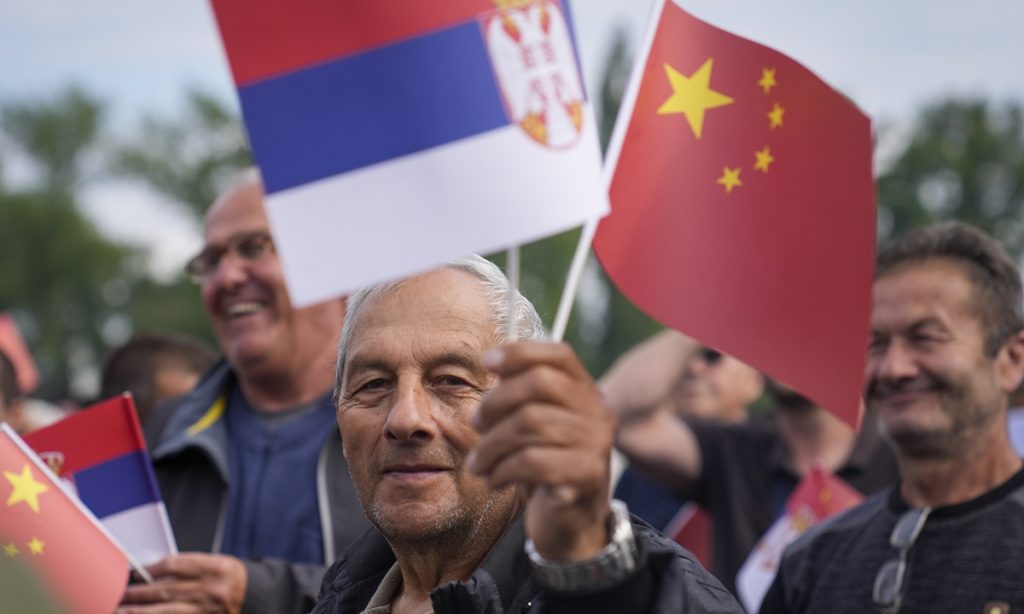
Chinese national flags adorned the cities, with crowds eagerly welcoming President Xi. The Global Times reporters observed these details during the visit, highlighting the anticipation in the continent to strengthen friendship and cooperation between China and the three countries of France, Serbia, and Hungary. People across the continent hoped that the visit would pave the way for stronger ties between China and the three countries, as well as with Europe as a whole.
During a press conference, Chinese Foreign Minister Wang Yi stated that President Xi's recent state visits have solidified China's relations with the three European countries and relaunched China-EU cooperation.
Wang, also a member of the Political Bureau of the Communist Party of China (CPC) Central Committee, described Xi's Europe trip as a journey to carry forward friendship, enhance mutual trust, boost confidence and chart the course for the future. Personal touch
French President Emmanuel Macron invited Xi to meet at the Pyrenees Mountains, a mountainous area in southern France which is close to the home of Macron's maternal grandmother.
It seems that it has become a routine that the two heads of state treat each other with something beyond the courtesy of a normal state visit. In March 2019, in the French city of Nice, Macron received Xi at Villa Kerylos, a century-old house overlooking the Mediterranean. Later that year, President Xi and his wife Peng Liyuan met with Macron and his wife Brigitte Macron in the Yuyuan Garden in Shanghai.
In April 2023 when the Chinese and French top leaders met for informal talks in Guangzhou, the capital of South China's Guangdong Province, they listened to the guqin (Chinese zither) melody "High Mountain and Flowing Water" at Baiyun Hall.
This year, on a cold snowy spring day, the two leaders continued to write the story of "High Mountain and Flowing Water," showing the world that despite China and France being an Eastern power and a Western power respectively, they can still cooperate on bilateral, regional and world affairs.
A local resident from a town near the Pyrenees is no stranger to China. He told the Global Times that his niece used to study in Shanghai and now works at a multinational company that has many businesses in China. A cyclist at the Pyrenees Mountains, who cannot speak English very well, said "friendship" when asked about the meeting between Xi and Macron at the mountain.
Xi's visit coincided with the 60th anniversary of the establishment of diplomatic relations between China and France. Thanks to former French president general Charles de Gaulle's grand vision and his advocacy for French autonomy, he made this bold decision 60 years ago, making France the first Western country to establish official ties with China.
In 2014, when Xi visited France, he went to the Charles de Gaulle Foundation. This time, the Global Times paid a visit there and had director of the foundation to recall Xi's visit 10 years ago and what prompted general de Gaulle to make the decision.
"President Xi laid a wreath in honor of General de Gaulle in the office where he worked from 1947 to 1958. Gifts were exchanged," Antoine Broussy, director of the foundation, told the Global Times, and showed a guest book on which President Xi wrote: "Paying Tribute to the Great Man and Composing a New Chapter in Chinese and French History."
In a showroom on the ground floor of the Charles de Gaulle Foundation, a bronze half-body statue of de Gaulle stands. He looks contemplative, apparently observing the historical trajectory of China-France relations. Steel-clad friends
During his stay in Serbia, a country Xi visited eight years ago, the Chinese president presented a special gift to Serbian President Aleksandar Vucic - steel models in the shape of the Temple of Heaven in Beijing, and the Church of Saint Sava in Belgrade.
The models were made from steel produced by the HBIS Smederevo steel plant, or Hesteel Serbia, a century-old factory which was invigorated through close cooperation between China and Serbia.
Xi visited the plant in June 2016, months after China's Hesteel Group purchased this venture on the verge of closure and the future of its more than 5,000 employees was unsettled.
Xi interacted with the workers and encouraged them to work hard to bring benefits to local residents. Factory workers presented a round plate with the silhouette of the steel plant to Xi as a gift.
The visit significantly boosted the morale of all the workers, and encouraged the Chinese executive team to optimize production and management. Smiles returned to the faces of Serbian workers as they felt secure and began to "plan for the future."
Hesteel Serbia now has become a major exporter in the Balkan country and a crucial taxpayer. Its success is an embodiment of the "ironclad" friendship between China and Serbia.
Before his state visit this time, Xi replied to a letter written by Serbian steelworkers who shared the progress the steel plant had achieved and expressed their appreciation for Xi's care and support.
When presenting the steel models to Vucic on Wednesday, Xi said we are now "steel-clad friends with even stronger ties than iron-clad friends."
In a signed article by Xi published on Serbian local media outlet Politika before his arrival, he wrote "the China-Serbia friendship, forged with the blood of our compatriots," citing NATO's flagrant bombing of the Chinese Embassy in Yugoslavia on May 7, 1999.
In his first public event during the 2016 visit, Xi and Serbian leaders paid homage to three Chinese martyrs in the bombing at a memorial erected on the site where the embassy once stood.
Now standing on the site is the China Cultural Center, for which Xi laid the foundation stone in 2016. This site has now gained a new life while retaining the sentiment of friendship.
Carefully decorated with Chinese elements, the center offers courses on Chinese, calligraphy, Tai Chi, and guzheng, a traditional musical instrument. The center also holds a library which has a collection ranging from language learning materials and dictionaries, to popular novels and classics.
Various cultural events are held here, and the center issues commemorative stamps with Serbian Post biannually, the Global Times learned from the center.
Many locals also come to the center for classes out of interest, gain better knowledge of China and Chinese culture.
Milica Milovic, the first Serbian employee at the center, told the Global Times that working at the center is really a pride as she is now part of the strong China-Serbia friendship.
This ironclad friendship has become deeper and deeper through efforts of every ordinary Chinese and Serbian who are contributing to bilateral exchanges and friendliness.
A East-West model
Upon President Xi's arrival in Budapest, the final stop on his five-day European visit, Chinese national flags were placed next to Hungarian flags on the Elisabeth Bridge in this beautiful capital.
Xi previously visited Hungary in 2009. Some things have changed, while some have not. The Danube River still flows silently and gently, witnessing the development of relations between China and Hungary. During Xi's visit this time, the two countries elevated bilateral relations to an all-weather comprehensive strategic partnership for the new era.
What deeply impressed President Xi during his state visit to Hungary, he said, was a Hungarian girl who presented flowers to him when he landed in Budapest. She was the same girl who presented flowers to Xi 15 years ago. The president recollected that encounter: "You've grown up. You were only this tall back then," he said, making a gesture with his hand.
The girl can speak fluent Chinese. So can many young Hungarians, who have cultivated a strong interest in China and the Chinese language as exchanges between China and Hungary have flourished over the last couple of years. In Buda Castle, the historical castle and palace complex of the Hungarian Kings, nearly half of the tourists come from China, and they have a tourist guide who can speak Chinese very well.
Many Hungarians who speak fluent Chinese learned the language at the Hungarian-Chinese bilingual school in Budapest. Established in 2004, the Hungarian-Chinese bilingual school is a 12-year all-through public school that teaches in both Chinese and Hungarian.
In October 2009, Xi, then Chinese vice president, visited the school during his visit to Hungary. Today, a group photo of Xi and the school's students and teachers, as well as Xi's reply letter to the students in early 2023, hangs on the wall in the school's hallway.
Xin Hua, director and chair professor of the Center for European Union Studies, Shanghai International Studies University, told the Global Times that an important reason that China and Hungary can develop friendly ties is that the two countries have similar historical and cultural traditions.
"Welcome home!" Hungarian Prime Minister Viktor Orban greeted Xi at the airport. The next day, Xi was received with a military ceremony in the Lion Courtyard of Buda Castle.
In an interview with Chinese media, Hungarian Prime Minister Orban explained what "home" means.
"We are settled here in the West, but the origin is very important. So, we know that relatives are somewhere, they are far away. So, when somebody from the East is coming to Hungary, especially with the high civilization for several thousands of years as China, it always has a special emotional element of that meeting," Orban said.
More than 181,000 visitors from the Chinese mainland entered Hong Kong on Wednesday, the first day of the five-day May Day holidays, surpassing numbers for the same period in 2023, data from the Immigration Department of the Hong Kong Special Administrative Region government revealed.
About 468,000 people entered the city on Wednesday. Among them, visitors from the Chinese mainland numbered over 181,000, it said.
Departures from Hong Kong totaled around 340,000 people, with nearly 60 percent being residents of the city. Despite the single-day holiday, many residents in Hong Kong opted to travel out of the city for leisure.
The Immigration Department previously estimated that passenger arrivals and departures will total 5.9 million from Tuesday to Sunday, among which more than 800,000 trips will be made by tourists from the Chinese mainland.
Timothy Chui, executive director of the Hong Kong Tourism Association, said that the number of visitors from the Chines mainland on Wednesday was satisfactory, similar to last year's figures, with hotel occupancy rates being at strong levels, reported the Chinese News Service.
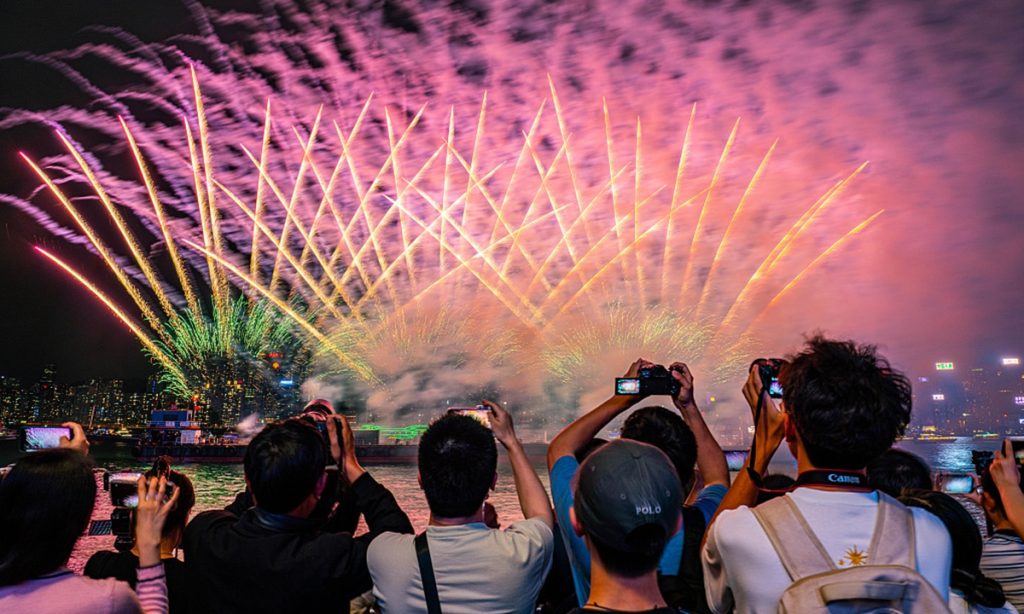
He said that the numbers could have been higher if not for weather conditions. Chu noted that he learned some visitors came to Hong Kong to witness fireworks displays, which he believed was influenced by the promotional efforts of the government on social media platforms.
Starting at 8 pm on Wednesday, the 10-minute display blended in with the night view of the Victoria Harbor and is accompanied by a light and music show. The gold-toned fireworks were set off from a boat 130 meters offshore.
Many tourists and Hong Kong residents had arrived three hours early for the show to find the perfect viewing spot despite the drizzles throughout the day, according to the Xinhua News Agency.
"I anticipate the fireworks the most for my four-day Hong Kong tour this Labor Day holiday,"said a tourist surnamed Lu from South China's Guangdong Province.
In addition, in preparation for the May Day holidays, which last from Wednesday to Sunday in the Chinese mainland this year, the Hong Kong Tourism Board announced that 16,000 travel vouchers would be distributed free of charge to individual travelers from Xi'an and Qingdao, which could be used at more than 100 premium Hong Kong brands and 2,000 shopping outlets.
Citizens in Xi'an and Qingdao have been eligible to visit the Hong Kong and Macao special administrative regions on an individual basis starting from March 6.
The Tourism Industry Council of Hong Kong estimated a 50% increase in visitors from these two cities following the opening of individual travel arrangements, the China News Service reported.
On April 23, Hong Kong Chief Executive John Lee Ka-chiu stated that Hong Kong government had made comprehensive preparations for the May Day holidays, estimating that there would be at least 800,000 mainland visitors and around 5.9 million people passing through various immigration control points.
Lee noted that many operators in the service industry have developed promotional plans and experiential activities, aiming to provide a positive experience for travelers in dining, shopping and other aspects, with the hope of promoting Hong Kong even after their return home, media outlet ifeng reported .
According to CCTV, citing words from the Ministry of Transport, it's expected that there will be a total inter-regional population movement of 280 million people, a 15.9 percent increase compared with the same period in 2019 on Wednesday.
Railway passenger volume is expected to reach 20.4 million, while inter-regional road traffic is projected to hit 257 million. Waterway passenger traffic is estimated at 900,000, with civil aviation passenger volume forecasted at 2.11 million.
As in previous years, during this year's May Day holidays, small passenger cars with seven seats or fewer will continue to enjoy toll-free passage on highways.
Additionally, many tourist attractions in various cities will implement policies of free or reduced admission during the May Day period. Viral videos online showed that across China, people are packed in railways stations, tourist attractions and even less-popular traveling cities.
US payment company Mastercard's Chinese joint venture (JV) opened for business on Thursday, after the People's Bank of China approved the arrangement for the bank card clearing operations in November 2023.
The opening marks Mastercard as the second overseas bank card clearing institution to enter the Chinese market, after American Express in 2020, which industry analysts said demonstrates the country's determination to open wider to the outside world in the financial sector.
The move is conducive to promoting a more open and internationalized development of China's payment and clearing services, providing diversified and differentiated services for all parties in finance, as well as deepening the supply-side structural reform of the payment industry, analysts noted.
In2023, China's central bank and the National Financial Regulatory Administration approved an application by Mastercard NetsUnion Information Technology (Beijing) Co, a JV between Mastercard and NetsUnion Clearing Corp, to conduct bank card clearing operations in the country.
According to the official Mastercard website, its Chinese JV has begun processing payments made in China with Mastercard cards issued by the country's banks. In addition, the JV confirmed that Mastercard-branded cards will now be accepted for both domestic and international purchases.
"This is another significant milestone for Mastercard... Our goal is to simplify the payments experience for China's Mastercard cardholders both at home and overseas," Michael Miebach, CEO of Mastercard, was quoted in a statement sent to the Global Times on Thursday.
"To offer more choices and deliver greater value for Chinese consumers and businesses of all sizes, we will expand the availability of Mastercard-branded products, facilitate the addition of millions of new acceptance locations across the country, and deliver seamless and safe payments experiences every day," said Ling Hai, chairman of the board of Mastercard NetsUnion and president of Asia Pacific, Europe, Middle East & Africa for Mastercard.
The JV reinforced its commitment to continue providing comprehensive support for Mastercard NetsUnion's operations, under the guidance and support of Chinese regulators.
To facilitate seamless, secure payments for Chinese cardholders at home and overseas, Mastercard NetsUnion will collaborate with local acquirers to expand its acceptance network in China, bolstering its extensive network of more than 130 million acceptance locations worldwide, according to the statement.
Clearing agencies want to operate in China because of the huge demand for cross-border payments with the externally oriented character of its economy. High-quality opening-up is creating the conditions for these clearing agencies to conduct business in the country, economist Pan Helin told the Global Times on Thursday.
"The establishment of JV clearing agencies is a notable sign of the opening-up of the financial market. It has not only allowed the entry of foreign capital, but also facilitated exchanges of technology and knowledge, all of which are direct results of the opening-up policy," said Wang Peng, an associate research fellow at the Beijing Academy of Social Sciences.
In addition to providing consumers and businesses with a wider choice of financial services and products, Wang told the Global Times that the move is also an important step in the internationalization of China's financial market, as cooperation with internationally recognized financial institutions helps the country's banking industry introduce advanced technology and management practices.
"China's banking industry needs to cooperate with foreign clearing organizations to develop overseas business, in order to expand its incremental banking business," Pan noted.
Mastercard's move to boost its presence in the Chinese market has debunked Western claims of foreign capital leaving China, analysts said.
"The active participation of foreign organizations in China demonstrates their long-term optimism in the world's second-largest economy's development. This confidence stems from the huge potential of the Chinese market, including a large consumer base and growing economic strength," Wang said.
Guo Tingting, a vice commerce minister, said that the number of newly established foreign-invested enterprises in the first quarter of this year came at 12,000, an increase of 20.7 percent year-on-year, maintaining the rapid growth trend of last year.
In terms of investment scale, the actual use of foreign capital reached 301.67 billion yuan ($41.67 billion), a record high, the vice minister said.
With its continued financial market opening-up, China, which has the world's largest banking system and the second-largest insurance, stock and bond markets, is creating broad opportunities for global financial institutions, Wang noted.
China has implemented more than 50 financial opening-up measures in recent years, including eliminating foreign ownership limitations in the banking and insurance sectors and lowering access criteria for foreign investors.
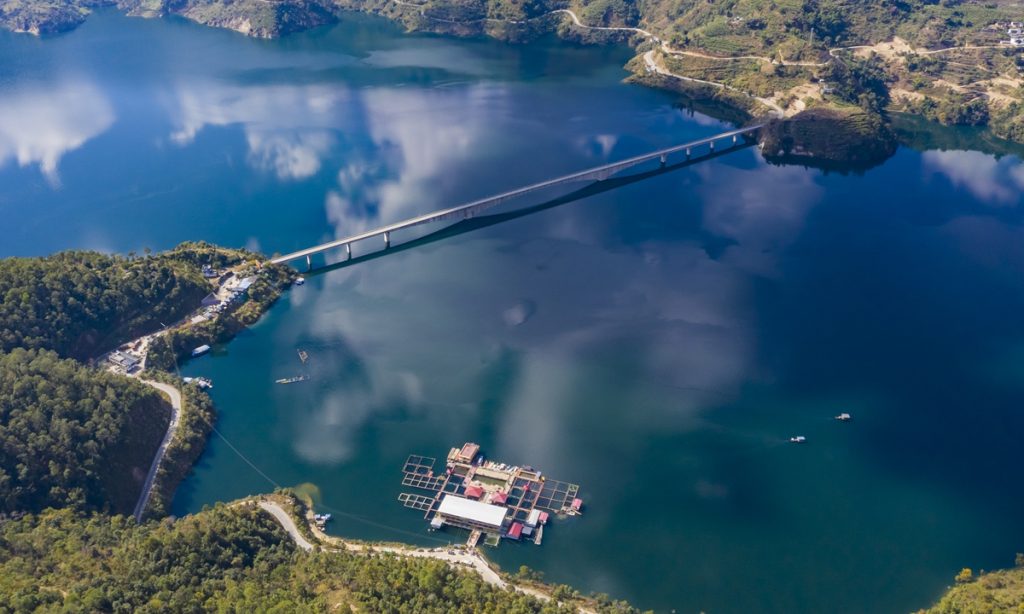
Standing on the observation deck, one is easily captivated by the majestic view of the Xiaowan Hydropower Station (Xiaowan). The massive dam, standing tall and proud, stretches across the roaring Lancang River, creating a mesmerizing sight. It is hard to imagine how the model of an advanced Chinese hydropower station, known as the world's landmark double-curvature arch concrete dam, uses its slender body to generate an impressively large output of clean and sustainable electricity and benefit riparian countries along the Mekong River.
As Lancang-Mekong River countries vowed to work together to promote regional prosperity at a recently concluded foreign ministers' meeting held in Beijing, Global Times reporters, together with envoys from many Mekong countries, visited Xiaowan, one of the leading hydropower stations along the Lancang River, to see how it brings practical benefits to downstream countries through flood control, water supply, power generation, and ecological protection. Practical benefits witnessed
"It's so impressive!" This is the overall consensus of foreign diplomats who have visited Xiaowan. When the engineers of the Xiaowan Hydropower Station were introducing the specific technical parameters of the hydropower station, the Global Times witnessed foreign diplomats' keen interest and continuous praise, as they displayed a strong curiosity in understanding the "difficulties" associated with the Xiaowan project.
They were amazed that Xiaowan has solved many global challenges, and were amazed by the design and manufacturing of large-capacity, large-range, and high-parameter turbine generators in such a complex geological and topographical environment, and under such construction conditions, as well as the 30 years of round-the-clock hard work by the hydropower station personnel from start to completion.
Together with other hydropower stations, Xiaowan increases the discharge and emergency water supply downstream in a timely fashion, effectively alleviating the drought caused by El Nino in downstream Mekong countries, ensuring agricultural irrigation in downstream countries, and preventing seawater invasion in the Mekong Delta. This has fully demonstrated the significance of practical cooperation in Lancang-Mekong water resource management for the benefits of people in the Lancang-Mekong region.
"I am very grateful that I had the chance to see the great achievements of China in the hydropower industry and water management system. Those achievements are results of good policy guidance and tireless efforts of the Chinese people. I believe that all of us can follow the examples of China and on the other hand, China could also share its experiences with us, as suggested in the theme of the trip: shared river, shared future," said Win Myat Aung, Education Counsellor of Embassy of the Republic of the Union of Myanmar in China.
Currently, 11 hydropower stations, including Xiaowan, are operational on the Lancang River. From the map, these power stations are like fortresses of hope built upon the river, providing much needed help to downstream countries when they suffer from extreme flooding and droughts.
Member of the Political Bureau of the Communist Party of China Central Committee and Foreign Minister Wang Yi noted at the 8th Lancang-Mekong Cooperation (LMC) Foreign Ministers' Meeting held in Beijing on December 7 that by enjoying geographical proximity and cultural affinity and drinking water from the same river, the six LMC countries are as close as one family. With a good start, rapid growth, and extensive benefits, the LMC has been expanding in breadth and depth, injecting new vitality into sub-regional prosperity and development and delivering tangible benefits to sub-regional people.
Wang said that joint working groups in six priority areas, including water resources, are progressing in an orderly manner, and mechanisms such as the Lancang-Mekong Water Resources Cooperation Center and the Global Center for Mekong River Studies are operating at high efficiency, making progress daily, delivering results monthly, and reaching new heights annually.
At the meeting, all parties appreciated China's positive contribution to promoting the LMC, and all agreed to strengthen solidarity and cooperation, uphold mutual trust and mutual respect, build a stronger Lancang-Mekong Cooperation Economic Development Belt, and jointly build an even closer Lancang-Mekong community of shared future.
In 2016 and 2019, severe droughts occurred downstream, and China and the Mekong River countries actively cooperated to increase the discharge of reservoirs including at Xiaowan, and provide emergency supplementary water to downstream areas.
In 2016 alone, 12.65 billion cubic meters of water were supplemented to downstream areas, an increase of about 85 percent compared with the natural water inflow during the same period. This effectively alleviated the drought caused by the El Niño phenomenon in downstream countries such as Vietnam, Thailand, and Cambodia, ensuring agricultural irrigation in downstream coastal countries.
Upstream Xiaowan and Nuozhadu hydropower stations also made efforts to reduce peak inundation during the flood season. Additionally, navigation conditions in the lower reaches of the Lancang-Mekong River have significantly improved. In 2001, the Lancang-Mekong international waterway was officially opened for navigation, thanks to increased flow during the dry season, which helped achieve year-round navigation.
The joint visit held in Southwest China's Yunnan Province from December 11 to 15 gathered representatives from the Chinese Foreign Ministry and the Ministry of Water Resources, as well as diplomats and representatives from Cambodia, Laos, Myanmar, Thailand, and Vietnam, to better understand the results of the 8th LMC Foreign Ministers' Meeting, further consolidate consensus, and deepen cooperation on water resources in the Lancang-Mekong region.
Conquer world-class difficulties
Xiaowan is the world's first 300-meter-high double-curvature arch concrete dam, known as the "shoulder of the giants" among China's dam constructors.
Developed by the Huaneng Lancang River Hydropower Development Company, Xiaowan has a total storage capacity of 15 billion cubic meters. The power station is equipped with 6 units at a total installed capacity of 4200MW. It became fully operational in August 2010, with an average annual power generation of 19 billion kilowatt-hours.
Global Times reporters learned that the Xiaowan Hydropower Station is widely recognized as one of the most challenging hydropower projects in the world in terms of construction. The completion of the project has filled many technical gaps in China's hydropower industry and is a milestone in leading the development of global hydropower construction.
After the completion of Xiaowan, downstream cascade power stations are now able to increase their power generation during the dry season by approximately 1.1 million kilowatts-hours, which is equivalent to building a million-kilowatt hydropower station without spending a penny.
Pan Jiazheng, the late Academician of Chinese Academy of Sciences once said: "After the construction of the Xiaowan Hydropower Station, it is no more that the Chinese who will go abroad to learn about hydropower construction, but the foreigners who come to China to learn about hydropower construction." This is because challenges in the design and construction of Xiaowan, a 300-meter-high arched dam and the stability of its shoulder under complex geological conditions, have been successfully solved.
The successful construction of Xiaowan has put China at the forefront of the world's hydropower construction in terms of design, scientific research, construction, and management, according to the introductions of the engineers responsible for the construction of the hydropower station during the visit.
Closer community of shared future
Counsellor Sun Lushan from the Department of Boundary and Ocean Affairs, China's Ministry of Foreign Affairs, called the LMC water resources cooperation a "golden model" of Lancang-Mekong cooperation.
"LMC cooperation is characterized by a high starting point, rapid development, deepened cooperation, a wide range of profiting parties, and additional benefits. It is becoming a role model of national cooperation and a benchmark for South-South cooperation, which will go a long way in ensuring prosperity and development of the sub-region," Sun said at the International Symposium on the Multistakeholders' Involvement in LMC Water Resources Cooperation of LM Trip held on December 14.
"Countries in the Lancang-Mekong sub-region are not only China's friendly neighbors, but also strategic partners. We are ready to continue to work with our friends to promote more pragmatic cooperation in the sub-region through Chinese modernization so as to contribute to the development of the region and the world at large," Sun noted.
Looking ahead, China will continue to pursue good neighborhood diplomacy of amity, sincerity, mutual benefit and inclusiveness by further deepening water resources cooperation with all parties, sharing development opportunities, addressing common risks and challenges, and building a community in water resources for shared future, Sun added.
Zhou Zhiwei, secretary-general of Lancang-Mekong Water Resources Cooperation Center, revealed at the symposium that since the implementation of the Five-year Action Plan of Lancang-Mekong Water Resources Cooperation (2018-2022), the water resources authorities of the six member countries have been actively organizing and implementing more than 50 water-related livelihood projects. The Lancang-Mekong Sweet Spring Project has established a total of 62 rural water supply technology demonstration points, providing local residents with safer drinking water, and technical demonstrations for the member countries as well. It was included in the List of Practical Cooperation Deliverables of the 3rd Belt and Road Forum for International Cooperation held on October 18, 2023.
Another project, named "Dam Safety Evaluation Action Plan for Lancang-Mekong Countries," has conducted safety inspections and demonstrations on dams in Laos, Thailand, and Vietnam. Safe wings have been installed for the dam to better serve humanity.
China also supported the carrying out of hydrological monitoring projects and has built a central station and 25 automatic monitoring stations in Laos. "It will help us to better understand rivers and lakes, and better respond to flood and drought disasters," Zhou said.
Moreover, since November 2020, China has provided annual Lancang River hydrological data to the five Mekong countries and the Mekong River Commission. The Lancang-Mekong Water Resources Cooperation Information Sharing Platform website has been put into operation, and more than 50,000 pieces of information have been shared in a timely manner.
"I highly value an active contribution from member countries, especially China, in Mekong-Lancang development, particularly in 2021 when many projects were adopted by the leaders that supported the LMC special fund, and I do believe that in the coming years, the water related projects will increase productively," said Singhalath Boupha, the third secretary of the Embassy of the Lao People's Democratic Republic in Beijing.
"Thailand has seen the benefits of this cooperation," said Wanapol Sangiamsin, deputy consul-general at the Royal Thai Consulate General in Kunming. "As the incoming co-chair of the Lancang-Mekong Cooperation, Thailand looks forward to collaborating closely with other Lancang-Mekong colleagues toward the realization of a peaceful community of shared future, sustainable development, and prosperity."
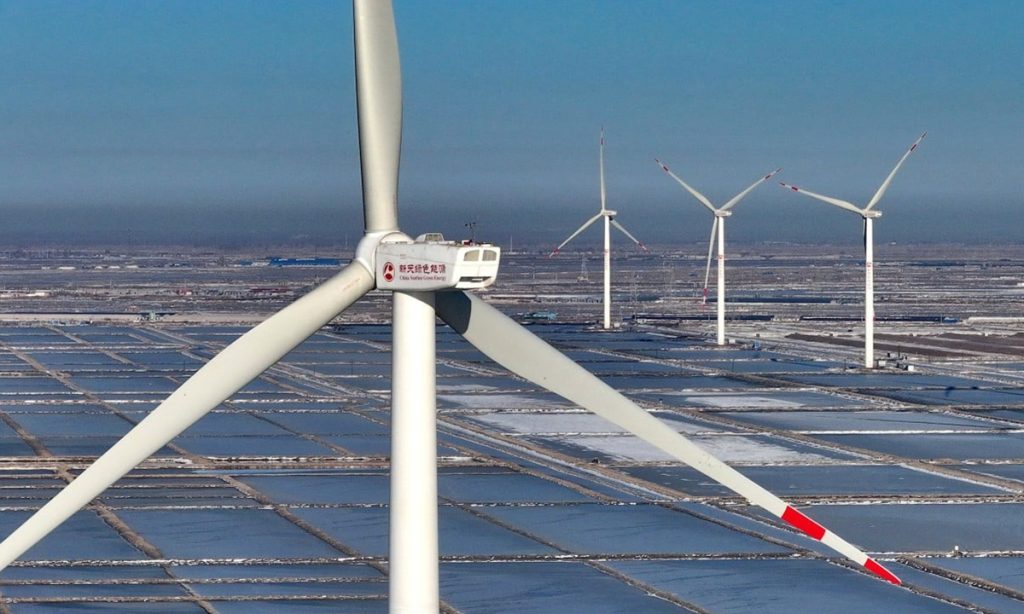
Chinese experts said on Monday that Australia's move to suspend anti-dumping tariffs targeting wind towers from China is in line with Australia's green development, and is also a "good gesture" by the Australian side ahead of a visit by Chinese Foreign Minister Wang Yi.
Australia announced it would suspend trade remedy measures against China's wind towers when the current measures expire on April 16, 2024, according to a notice released by Australia's Department of Industry, Science and Resources on Friday.
The notice, signed by Australian Minister for Industry and Science Ed Husic, said that the Anti-Dumping Commission has completed an inquiry into whether the continuation of anti-dumping measures applying to certain utility scale wind towers exported from China is justified. The inquiry commenced on May 12, 2023, and the measures are in the form of a dumping duty notice applying to all exporters from China except Shanghai Taisheng Wind Power Equipment Co.
Wind towers are used to create cross ventilation and cooling in buildings.
The anti-dumping measures targeting wind towers have not only affected normal operation and business diversification for Chinese businesses, but have also increased the cost for Australia to optimize its energy structure amid its energy transition, Zhou Mi, a senior research fellow at the Chinese Academy of International Trade and Economic Cooperation, told the Global Times on Monday.
Zhou added that the move is in line with Australia's need for development, noting that the termination also released a positive signal for promoting economic and trade recovery.
This is a good gesture by the Australian side amid Wang's visit, Zhou Fangyin, professor at the Guangdong Research Institute for International Strategies, told the Global Times on Monday. The professor also noted that China is conducting a review of anti-dumping and countervailing duties on Australian wine and may eventually cancel those duties.
Zhou Mi said that both Australia and China have been reviewing the cases and making decisions under the WTO framework.
Zhou Fangyin said Wang's visit will help cement the achievements of bilateral relations by reducing impediments, although few new cooperation projects are in sight.
"Many Australian products such as beef, lobster and barley are of good quality and they are competitive in the Chinese market. However, the previous Australian government's provocative behavior put off many Chinese consumers," Zhou Fangyin said.
He said Canberra should figure out where its own interests lie and stop following the US' anti-China policies too closely. "By doing that, China-Australia relations are expected to maintain stable development," he said.
Wang is paying an official visit to New Zealand and Australia from Sunday to Thursday, China's Foreign Ministry announced previously. Australian companies have expressed high hopes for Wang's visit to Australia with the Global Times in recent interviews, saying that they hope to expand their presence in the Chinese market and strengthen mutually beneficial economic and trade cooperation with their Chinese partners.
As for the much-watched anti-dumping and countervailing duties on Australian wine, the Chinese Ministry of Commerce (MOFCOM) said on March 14 that China will make a final review ruling in accordance with the investigation procedures.
Last week, the ministry disclosed the basic facts regarding the ruling, and gave all parties an opportunity to express their opinions.
China and Australia reached a consensus on resolving their disputes on wine and wind towers properly under the WTO framework, MOFCOM announced in October 2023. The two countries have conducted friendly consultations under the WTO framework governing areas that are of mutual concern, and they have reached consensus on properly resolving them, a MOFCOM spokesperson said in a statement published in October.
Australia's Anti-Dumping Commission in October already proposed to recommend that the anti-dumping measures on wind towers exported to Australia from China expire on April 16, 2024.
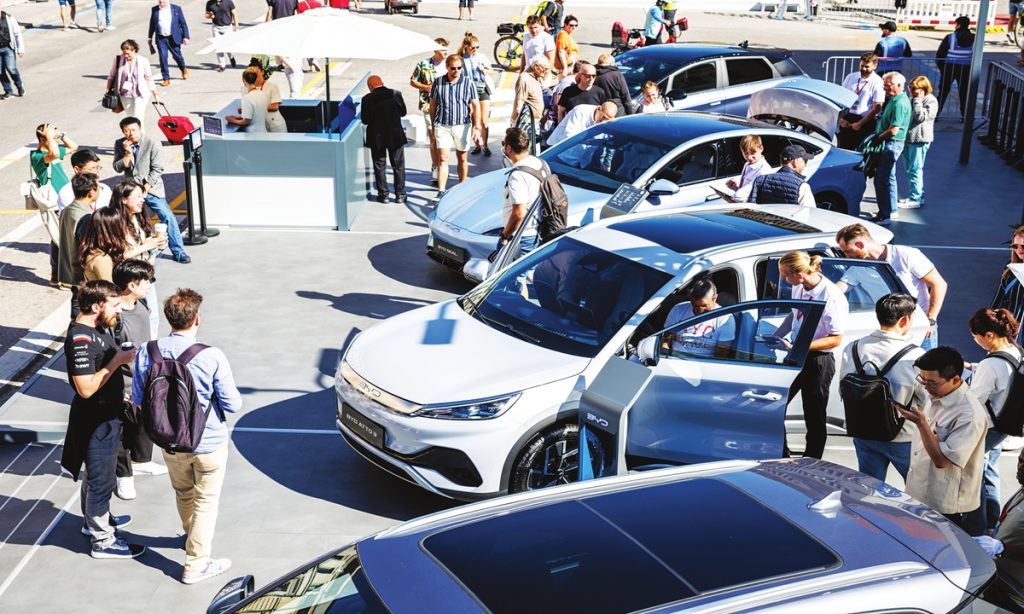
The China Chamber of Commerce to the EU (CCCEU) on Wednesday voiced its disappointment with the EU's mandate for customs registration of electric vehicle (EV) imports from China while an investigation remains ongoing, according to a statement that the chamber sent to the Global Times.
Both the chamber and its members expressed worries regarding potential retroactive measures in the future, the statement said.
The EU issued on Wednesday the Official Journal of the European Union regarding its commission's implementation regulation that makes imports of new battery electric vehicles designed for the transport of persons originating in China subject to registration.
This regulation enters into force on the day following that of its publication in the Official Journal of the European Union, according to the Official Journal of the EU.
The CCCEU said that the chamber has observed that a new implementation regulation was issued on Wednesday, concerning the registration of electric vehicle imports from China by the EU. The purpose of the registration requirement is to address Chinese imports and potential retrospective measures, the chamber said.
According to European Commission data, between October 2023 and January 2024, the EU imported a total of 177,839 Chinese EVs. Compared with the coverage period of the "countervailing investigation" (October 2022 to September 2023), the average monthly import volume increased by 11 percent.
The chamber highlighted that the recent surge in Chinese EV imports mirrors the increasing demand for EVs in Europe and underscores Chinese car companies' commitment to fostering the European market.
"We earnestly hope that the European side will effectively safeguard the legitimate rights and interests of Chinese enterprises and establish a fair, impartial, and non-discriminatory business environment for them," the chamber said.
"This, in turn, will facilitate our joint contribution to the global low-carbon and green transformation," the chamber further noted.
In February, China's Minister of Commerce Wang Wentao said that China is highly concerned about the trade remedy investigation targeting Chinese EVs and other products, while also expressing strong dissatisfaction regarding the investigation, which lacks a factual basis.