Action of Japan and Australia is bringing the Asia-Pacific into danger: Global Times editorial
According to Japanese media, Japanese government sources stated on January 15 that Japan and Australia are discussing potential military cooperation in case of simultaneous contingencies in their nearby regions. They also mentioned increasing the sophistication and frequency of joint drills between the Self-Defense Forces and the Australian military and Tokyo has also asked for Canberra's cooperation in using Australia's vast continent as a testing ground for Japanese missiles that are under development, "apparently with China's growing maritime assertiveness in mind."

This reflects the step-by-step implementation of the Australia-Japan Joint Declaration on Security Cooperation signed by Japanese Prime Minister Fumio Kishida and Australian Prime Minister Anthony Albanese in October 2022. It is also a result of vigorous facilitation and promotion by the US. Japan and Australia are becoming two pawns in the US Indo-Pacific Strategy, or more specifically, in the strategy to contain China. This can be likened to the sharp claws of a feline extending from concealed pads.

Following Washington's instructions and deployment, the two countries are overtly strengthening military interactions and cooperation with the explicit goal of countering China. The impact of this approach on the regional situation is inevitably disruptive and detrimental, poisoning the regional peace environment, intensifying tensions, and exerting significant efforts to push the Asia-Pacific region into security dilemmas or traps.

The revealed development, particularly Japan's intention to conduct long-range missile launch tests in Australia, is indeed noteworthy. Japan lacks strategic depth domestically and does not have the conditions for testing medium to long-range missiles. It also faces the restricts of the constitution. Utilizing Australia's territory for this purpose is undoubtedly advantageous for Japan. Australia is breeding an inexplicable "sense of insecurity" under the malicious instigation and misleading of the US, blindly cooperating with and supporting Japan's dangerous actions instead of taking precautions. This is very regrettable.

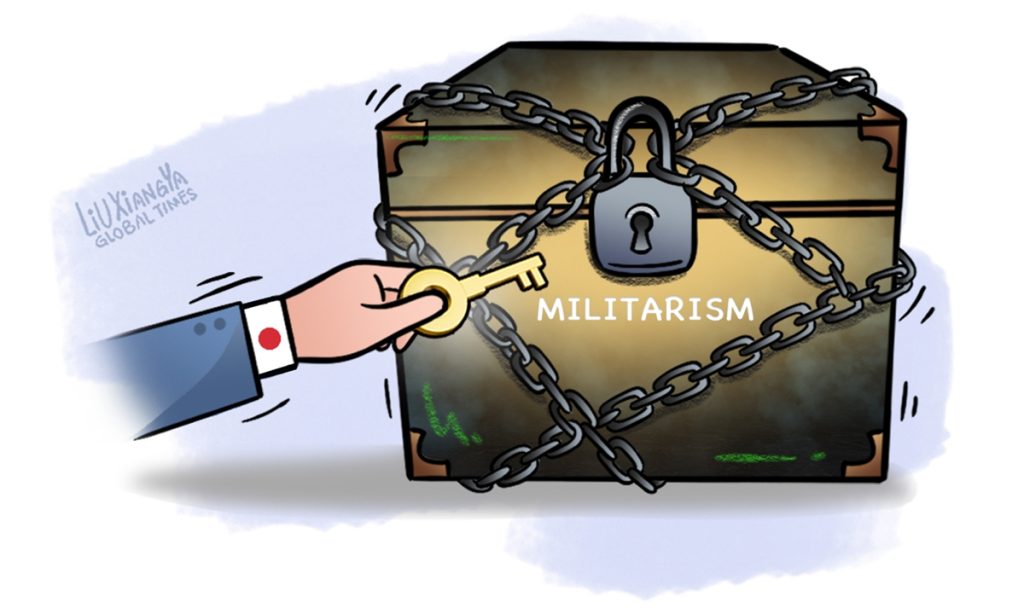
If this comes to fruition, it would represent a fundamental and substantive betrayal and breach of the Constitution of Japan. Many peace-loving individuals in the Asia-Pacific region, including a significant number of Japanese citizens, have long been strongly concerned about and vehemently opposed to such actions. Japanese media has described the US-Japan-Australia defense relationship as "changing the rules of the game." However, the development of long-range missiles by Japan goes beyond merely "changing the rules of the game." For countries that have previously suffered from Japanese militaristic aggression, it is more akin to lifting the seal on a demon.

Japan enacted a peace constitution after being defeated in World War II and pursued a principle of "exclusive self-defense," establishing an image of a "peaceful nation" and embarking on a "peaceful path" to help Japan quickly gain recognition and trust from countries affected by World War II and integrate into the international community. The rapid recovery and development of Japan's economy after World War II are closely related to this. However, when Japan deviates from the path of peace, recognition and trust of the international community immediately turn into vigilance and suspicion, further becoming obstacles and restrictions on Japan's development path.

Medium to long-range missiles are undoubtedly significant offensive weapons. In late 2022, Japan passed "three security documents," which clearly stated Japan's commitment to policies such as having "enemy base strike capabilities," including various types of long-range offensive missiles and the "integrated air and missile defense" system used in conjunction with the US military. From this news, it can be seen that Japan is moving forward along the planned route of the new security documents, and ahead of this path lies a huge crisis.

This road is not only full of dangers but also causes great harm to the people and the economy. Japan's defense budget for the fiscal year 2024 will increase by 16.5 percent compared to the previous fiscal year, reaching a historical high. The Asahi Shimbun commented that such a large-scale budget "has completely exceeded its own needs and is in an inflated state." The high defense expenditure will undoubtedly squeeze out more financial resources related to people's livelihoods, negatively impacting the lives of Japanese citizens.

Since the intensification of global geopolitical tensions, Japan has been distorting the concept, turning regional countries' expectations for peace into tacit approval or even support for its military development. Facts have proven that Japan's actions are seriously stimulating the escalation of regional tensions. As victims of Japan's past militaristic aggression, Canberra and the South Pacific countries should in no way contribute to the growth of Japan's military ambitions.

Australia, located in the southern hemisphere, could have been free from the disturbance of geopolitical conflicts. There is absolutely no need to let military weapons from other countries cast a shadow of war over this land. In December of last year, Australian defense minister refused to send warships or aircraft to the US-led Red Sea coalition, citing "our strategic focus is our region." If Australia truly feels responsible for its surrounding region, this should be reflected in actions that maintain peace and reduce the risk of war. And Australia should demonstrate strategic autonomy through practical actions.
Unidentified flying object seen over several cities in China to be SpaceX rocket carrying Starlink satellites: experts

After netizens in several parts of China captured footage of an unidentified flying object in the sky on Sunday, experts stated that this phenomenon was caused by the passivation process of the rocket launched by SpaceX carrying Starlink satellites over North China, according to media reports on Monday.

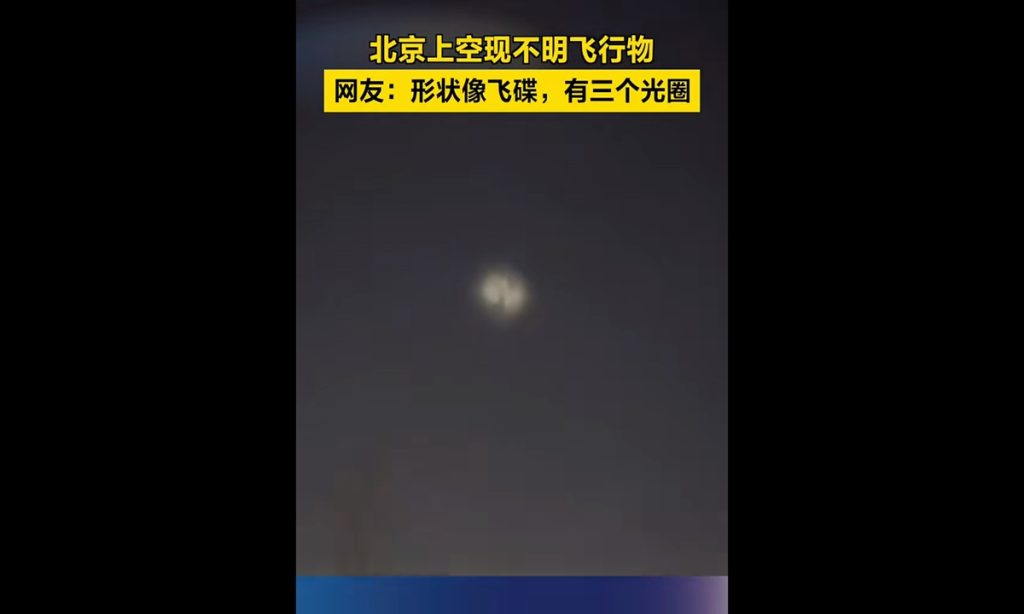
Netizens posted videos on Sunday claiming that an unidentified flying object were seen flying across the sky in many parts of China. Internet users in Beijing commented that the unidentified light cluster looked like a moving cloud-like object, but it was definitely not an airplane.

"The glowing object had three light sources arranged in an isosceles triangle, and it dispersed like a mist and disappeared without a trace," another netizen wrote.

People from North China's Hebei and Shanxi provinces also reported seeing the flying object and described it as resembling a large mosquito, and some questioned whether it was a rocket launch.

In response to the doubts of netizens, Zhu Jin, a researcher from the Beijing Planetarium, stated that the unidentified flying object was a phenomenon caused by the passivation treatment of the rocket carrying the Starlink satellites launched by SpaceX at 16:59 on Sunday Beijing time passing over North China, according to the Beijing News on Monday.

Zhu said that passivation treatment can be seen as the process of the rocket discarding unused fuel. When a rocket completes its mission, there is usually leftover fuel, which is not brought back to Earth with the rocket. Instead, the remaining fuel from the final stage of the rocket is vented through passivation treatment to prevent explosions.

According to the China Newsweek, Yang Yuguang, Vice Chair of the Space Transportation Committee at the International Astronautical Federation, further explained that passivation treatment is a common practice by major countries to mitigate the space debris, which includes three aspects: emptying the remaining propellant, releasing gas from high-pressure cylinders, and discharging the electrical energy from its batteries. These three aspects are all aimed at avoiding the danger caused by self-explosion of the rocket's final stage, according to Yang.

The expert stated that currently, humans use multi-stage rockets to deliver payloads, such as satellites, spacecraft and space stations, into orbit around the Earth. The batteries are used in the last stage of the launch vehicle, and once the battery power is depleted, the spacecraft loses all functionality and becomes space junk, which is detrimental to the mitigation of space debris. The space junk may collide with other spacecraft or explode itself, generating more and larger space debris, Yang said.

Under normal circumstances, when people observe the final stage of a launch vehicle passing through a certain area, it appears as a bright spot, which is actually a reflection of sunlight. It can be seen only if the sky is not too bright and it must be able to be illuminated by the sun, so it is more likely to see the artificial spacecraft during dawn and dusk, Yang noted.

According to the SpaceX website, Falcon 9 launched 22 Starlink satellites to low-Earth orbit at 12:59 am Pacific Time Sunday and 23 Starlink satellites at 8:52 pm US Eastern Time Sunday.

China rolls out new measures to facilitate foreigners’ visit to country

China's National Immigration Administration (NIA) officially implements five measures to facilitate foreign nationals coming to China, effective on Thursday, including relaxing visa application requirements and simplifying visa application materials. This move represents that China continues to speed up its opening-up to the outside world.

The sluggish recovery of international flights and Western media's disinformation against China are partly responsible for the slow recovery of foreigners' visits to China, said experts. However, they anticipate a boost in visits to China in the coming year. This increase in tourism not only has the potential to enhance trade and people-to-people exchanges but also allows foreigners to gain firsthand experiences and information in China, thereby dispelling any malicious disinformation propagated by Western media. 

Liu Haitao, an official from NIA, announced the measures at a conference held on Thursday. One of these measures include the relaxation of the conditions for foreign nationals to apply for port visas to China. For foreign nationals who urgently need to engage in business cooperation, visit exchanges, investment and other non-diplomatic and non-official activities, if they are unable to obtain a visa overseas in time, they can apply for a port visa to enter China by presenting invitation letters and other relevant supporting documents to the port visa authorities.

Foreign nationals can transit through Beijing Capital Airport and other designated international airports in China without going through immigration procedures for up to 24 hours. This policy applies to nine international airports, including Beijing Capital, Beijing Daxing, Shanghai Pudong, and Xi'an Xianyang. 

Travelers with international connecting flights within 24 hours can transit through any of these airports to a third country or region without going through immigration procedures and enjoy visa-free transit, said Liu. 

The measures will also allow foreign nationals to apply for visa extensions, replacements, or reissues at the nearest location. Foreign nationals who need to enter and exit China multiple times can apply for reentry visas, as the application process will now be simplified.

For foreign nationals applying for visas, if their accommodation registration records and business licenses can be accessed through information sharing, they are exempt from providing relevant paper documents for verification. For foreign nationals in China applying for short-term family reunion visas, a declaration of kinship by the inviting person can be used instead of proof of kinship.

According to the official, as China's economy continues to recover and improve, and its level of opening-up to the outside world expands, there has been a surge in demand for enhanced immigration management services from both domestic and foreign enterprises and individuals. 

In response, the NIA is proactively collaborating with relevant authorities to address key challenges and obstacles pertaining to the entry of foreigners for business, study, and tourism in China. 

[The recent new measures] are a game-changer for business, a British national doing business in Shanghai who only gave his name as Barrie told the Global Times on Thursday. "This could open up all kinds of opportunities. I can say from experience that the visa application procedures (even for visiting) had been challenging in the past, this easing of process for foreigners to enter will bring flows of travelers, and workers, and commerce."

Border inspection authorities across China checked a total of 210 million visitors entering the country in 2023, recovering to 62.9 percent of the levels seen in 2019. The number of visitors entering the country will continue to rise in 2024 thanks to the resumption of international flights and cross-border personnel exchanges, said an official from the NIA.

The NIA said the number of new applications and replacements for 'Five-Star Card' that is designated for foreign permanent residents increased significantly. Foreigners with permanent residence permits in China can apply for financial services, including banking, securities, and foreign exchanges, said the administration. 

Open up further and wider

The latest measures are in line with China's offering of visa-free policy to six countries last year and Central Economic Work Conference held at the end of last year, signaling efforts should be made to foster new drivers of foreign trade, Miao Lu, secretary general of Center for China and Globalization, a Beijing-based non-governmental think tank, told the Global Times on Thursday. 

Last month, China rolled out a one-year visa-free policy to ordinary passport holders from six countries - France, Germany, Italy, the Netherlands, Spain and Malaysia - starting from December 1, 2023. 

Charles Loke Chee Kin, a Malaysian who has business ties with China, told the Global Times on Thursday, "I used to fly to China once a month. In the past, I had to apply for a visa every time which requires long processing. Now, with the implementation of the visa-free policy between China and Malaysia, it is really convenient for overseas personnel like us who come to China frequently."

Miao said apart from stimulating trade and tourism, the new policies also aim to promote people-to-people exchanges between China and other countries. 

According to experts, there is still significant potential for increasing the number of foreigners visiting China, as the number of visitors entering the country in 2023 only reached 62.9 percent of the pre-pandemic level. Miao suggests that one major factor contributing to this slow recovery is the sluggish rebound of international flights.

By the end of 2023, China's scheduled international passenger flights had returned to 4,782 flights per week, around 62.8 percent of the pre-pandemic level, the Civil Aviation Administration of China said on Monday

The pervasive toxic anti-China rhetoric that prevails in the West has undoubtedly taken a psychological toll on some individuals, instilling fear and apprehension in their minds when considering a visit to China, Zhang Yiwu, a professor of Chinese language and literature from Peking University, told the Global Times on Thursday. 

For example, some foreign media have been hyping China's revised Counter-Espionage Law since April 2023. A piece published in the Wall Street Journal in April 2023 said that the law and "China's detention of foreigners" have made businesses worried and spooked people who plan to travel there.

Zhang expressed his concerns over the Western media's distortion and defamation of China's efforts to safeguard its national security. He emphasized that this has hindered meaningful people-to-people exchanges. He highlighted that the latest measures, coupled with China's warm gesture, will effectively convey the message that the country welcomes individuals with legitimate intentions. Zhang believes that firsthand experiences in China will dispel the unfounded negative portrayal perpetuated by biased Western media reports.

County in NE China’s Heilongjiang closes down paper money shops and plants to remove fire risks

The market watchdog in a county in Northeast China’s Heilongjiang Province sealed up joss paper shops and confiscated paper money in an effort to eliminate fire hazards, ahead of the traditional Chinese Winter Solstice, or Dongzhi, which falls on December 22 this year, when Chinese people burn ghost money to honor their deceased family members. 

Some joss paper merchants in Huanan county in Jiamusi city, Heilongjiang, told Chengdu-based Red Star News that their shops, warehouses and production workshops were closed down and their commodities were confiscated. 

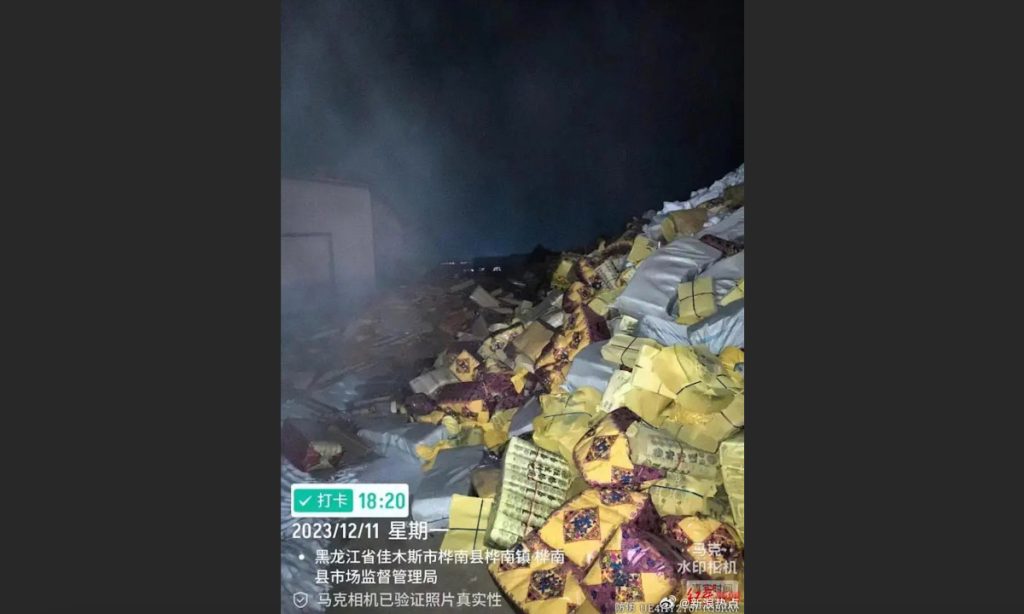
Some photos provided by the sellers show that large quantities of confiscated ghost money were seen piled up in the courtyard of the local market supervision bureau. 

While the local market watchdog declined the interview request from media, the local government’s citizen service hotline told the media that it was a move to remove security hazards and advocated to discard outdated superstitions. 

A joss paper merchant surnamed Wang told the Red Star News that the shutting down of the paper money businesses in the county started in early December. Several major wholesalers’ shops and warehouses with particularly huge inventories have been closed down. The value of their goods amounts up to 1 million yuan ($139,237). 

According to Wang, the market supervision bureau employee told him that decision to suspend paper money shops came after a fire disaster happened to a ghost money warehouse in Zhaozhou county in Daqing city, Heilongjiang. The Huanan county market watchdog took the action in a bid to remove security risks. 

According to a news report by China Central Television (CCTV), a fire disaster causing seven deaths occurred in an aging wooden warehouse built illegally for storing ghost money in Zhaozhou county on November 20. 

The warehouse was built with poor quality and highly flammable material which was identified for the reason for multiple casualties, thepaper.cn reported on Wednesday. 

A joss paper warehouse operator surnamed Zhao from Huanan county said his processing equipment of joss paper used to produce ghost money provided to surrounding villages and towns. His warehouse was closed down around December 1 and his inventory was confiscated and that he would also be fined possibly. 

According to Wang, the local authorities in Jiamusi issued regulations on the civilized sacrifices and worshipping in 2020. According to the regulations enacted on January 1, 2021, those who produce or sell feudal superstitious sacrificial articles shall be punished with confiscation of their goods by the local market supervision and administration department together with the civil affairs department. They may also be imposed a fine of with the amount of higher than one time and lower than three times the value of the production and sales. 

According to a law enforcement notification issued by the Huanan county people’s government, the production and sales of ghost money, joss paper, and gold and silver ingots made of tin foil, paper figures, paper cows, paper horses and all kinds of houses, transportation tools, daily necessities, certificates made of paper and other feudal superstitious sacrificial articles, are prohibited in the administrative area of the county. Burning and using sacrificial articles are prohibited in the whole county under the regulation. 

According to Red Star News, the county has carried out multiple rectification campaigns over the past two years to prohibit business of feudal superstitious sacrificial articles. 

Seven cases of COVID-19 subvariant JN.1 detected in one month in Chinese mainland

Chinese mainland has detected seven cases of contracting COVID-19 subvariant JN.1 in about one month. The possibility of the variant becoming a dominant strain in the country cannot be ruled out, according to the National Disease Control and Prevention Administration.

Experts suggested the public not to overact about the new variant as infectious diseases are inevitable for all mankind but warned health threats posed by overlapping of various pathogens, including the dominant influenza and mycoplasma pneumonia with COVID-19.

Outside of China, since November this year, the proportion of JN.1 variant as a share of circulating strains has increased rapidly, from about 4 percent in early November to about 30 percent in early December. As of December 10, the variant has been detected in at least 40 countries worldwide.

The proportion of JN.1 variant in Europe was the highest, and its proportion in the US and other continents also showed a rapid growth trend.

On the Chinese mainland, the main strains at this stage are still EG.5 and its subvariants. Since the local JN.1 variant was first discovered in November, as of December 10, a total of seven JN.1 variants have been detected in the country.

"Although the current prevalence level of the JN.1 variant in China is extremely low, due to the subsequent impact of international epidemic strains and imported cases, the possibility of the JN.1 variant becoming a dominant epidemic strain in the country cannot be ruled out," the administration noted.

A Beijing-based immunologist who preferred not to be named told the Global Times more cases of JN.1 variant are expected as virus has no boundary and infectious diseases are the common destiny of all mankind. But it is not a concern of the public because new variants of the novel coronavirus can appear in the future anytime.

Only by improving immunity system can the public manage various pathogens infection and improve overall resistance to respiratory infections, the immunologist said.

Lu Hongzhou, head of the Third People's Hospital of Shenzhen, pointed out that although the immune escape ability of JN.1 had increased, there was no evidence to show that the pathogenicity of JN.1 variant had increased. According to the ministry, the seven JN.1 infections are mild and asymptomatic cases.

Some Chinese experts said people who have had the flu are more susceptible to contracting COVID-19. After being infected with the flu, it takes several months for CD4+ T cells in the body to recover. During the recovery process, the body's immune system is weaker, making it more susceptible to infection with the COVID-19.

According to latest weekly report by China CDC, the positive rate of influenza virus in southern and northern provinces of China slowed down between December 4 and 10, and some provinces showed a downward trend. The subtype A(H3N2) was predominant, followed by B(Victoria).

Chinese men's U16 national football players to train at Bundesliga clubs

The internationalization of Chinese football youth training is very important, said Chinese Football Association (CFA) President Song Kai at a launch ceremony for the Bundesliga Dream project in Shanghai on Wednesday. "We are working on it by both introducing international youth football coaches to China, and sending young athletes and coaches to learn and train abroad, including in Germany," Song told the Global Times.

Song noted the significance of strengthening youth training and overseas cooperation for the development of Chinese football. "Germany's youth football training system is probably the most advanced in the world, and it is worth learning from it," Song said in a speech at the ceremony.

Bundesliga Dream is a cooperative project between Bundesliga International and the CFA. Set to take place between February and March in 2024, a group of talented Chinese players from the U16 national team will train at the youth academies of several Bundesliga and Bundesliga 2 clubs, as well as playing against youth teams from around Germany, according to Bundesliga International.

Under the project, Chinese youth players will follow a structured training plan curated by the CFA in collaboration with the Bundesliga and participating clubs. This plan focuses on several key in-match scenarios, including the transition from defense to attack.

"We also encourage young football players from all cities, especially from our 16 key 'football cities,' to have the opportunity to get trained in countries like Germany," Song said, in response to a question raised by the Global Times at the Wednesday ceremony.

Song mentioned China's 3-0 home loss to South Korea in the 2026 FIFA World Cup Asian Zone qualifying tournament second stage on the previous evening.

"That match made me feel deeply that if Chinese football wants to improve, first, we must do a good job in cultivating the young people; and second, we must examine the development of our youth football from a global perspective," he said.

"So I'm glad to sign a long-term cooperation agreement with the Bundesliga," Song said. "Last night, German Jurgen Klinsmann led the South Korean team to a 3-0 victory over the Chinese team. I hope that one day, there will be a German head coach who leads the Chinese football team to a 4-0 victory over South Korea," he joked, drawing laughter and applause.

Peer Naubert, head of marketing at Bundesliga International, said that the Bundesliga Dream is mostly committed to working with Chinese football in supporting its youth development system and projects on a long-term basis. "We aim to create a long-term pathway for talented Chinese players … hopefully following the path of former Chinese players such as Shao Jiayi, Yang Chen, and more recently Liu Shaoziyang, who signed for Bayern Munich in 2021," Naubert said in a speech at the ceremony.

Renowned Bundesliga stars Shao and Lothar Matthäus also attended the ceremony.

"I'm happy to have this Bundesliga Dream for the Chinese young generation," Matthäus said. When the young Chinese players go to Germany, they will have the opportunities of playing against stronger players, and the competition can make them better, he added.

Argentina: Argentine president visits site of first CPC National Congress during China trip

Argentine President Alberto Fernandez visited the Memorial of the Communist Party of China (CPC)'s First National Congress in downtown Shanghai, on October 15, before he attended the third Belt and Road Forum for International Cooperation in Beijing.

Staffers at the memorial shared stories of how the young CPC pioneers founded the Party a century ago with Fernandez during his visit. At the hall in the memorial, Fernandez took photos of the full-body bronze statues of the 13 delegates of the CPC's first National Congress.

According to the memorial's staffers, Fernandez carefully listened to the docent's introduction and periodically asked questions. He inquired about the statue of Li Hanjun, who was one of the 13 delegates and the site's owner at that time. The site of the CPC's first National Congress was originally a traditional Shanghai-style "shikumen" apartment. 

"The memorial's display and presentation are very well done," praised Fernandez.

Argentine Ambassador to China Sabino Vaca Narvaja also accompanied the Argentine President on the Sunday visit. 

During the visit to the memorial, Narvaja shared that his Chinese name "Niu Wangdao" came from a renowned Chinese translator Chen Wangdao, who was the first person to translate The Communist Manifesto into Chinese in 1920. Shanghai was the first stop on Fernandez's China tour.

Beijing, Hebei authorities mobilize all-out effort to safeguard people from impact of flooding

Amid torrential rain, rivers surged, houses collapsed and communications were disrupted... Under the influence of Typhoon Doksuri, heavy rainfall has persisted in Northern China, impacting regions like Beijing, the neighboring Tianjin Municipality and Hebei Province and setting records that haven't been seen in a century. Rescuers are racing against time, fighting to establish a "lifeline" to save lives and property.

From 8 pm on July 29 to 7 am on August 2, extreme heavy rainfall has drenched China's capital city. The highest recorded rainfall was at the Wangjiayuan Reservoir in the Changping district, being a total of 744.8 millimeters over this period, the local meteorological department reported on Wednesday. 

This extreme rainfall has significantly exceeded historical records, ranking it as the highest recorded rainfall in the past 140 years.

In Beijing, multiple areas in Mentougou district in western Beijing faced dangerous situations, while communications were disrupted in 62 villages across seven townships in Fangshan district in southwestern Beijing. 

The water level of the Yongding River, the main waterway in Beijing, surged, while a bridge over the Xiaoqing River located west of Lugou Bridge collapsed. 

In response to the torrential rainstorms and floods that have wreaked havoc in Beijing and its surrounding regions, authorities are mobilizing an all-out effort to safeguard the people from the impact of disasters. Various rescue teams have been working tirelessly to provide assistance.

On Thursday, the Global Times reporters saw People's Armed Police soldiers assist in the relocation of disaster-affected residents in Liulihe township, Fangshan district. 

Fortunately, as water levels gradually recede, rescue operations in Fangshan are nearing completion.

Simultaneously, to alleviate flood control pressure on Beijing and Tianjin, Hebei has activated seven flood water detention areas and relocated 1.2 million residents, according to a report from the Hebei Daily on Wednesday.

Zhuozhou, a city in Hebei Province that neighbors the Fangshan district of Beijing, has seen over 130,000 people affected by the disaster and is still being heavily impacted by flooding. More than 150 civilian rescue teams arrived, and more have been summoned from across the country.

On Thursday, members of the volunteer rescue team, including the Blue Sky Rescue team, helped transfer flood-affected residents and supplies in Huangjiajie village and Mengjiajie village in Matou township, Zhuozhou. Meanwhile, more rescue supplies were arriving at the scene.

Before the arrival of the flood, residents living on low ground had been notified and relocated to safe places, the Global Times learned from local residents.

On Wednesday evening, the Global Times witnessed villagers from Mentougou district departing from Yanchi township and moving downhill along the railway to safer areas. 

Meanwhile, soldiers of the People's Liberation Army rescued villagers from remote mountainous villages, especially elderly people with mobility issues, using military trucks, transporting them to temporary shelters.

During the evacuation process, an interim command center was established in the Mentougou district to coordinate various rescue efforts. Simultaneously, emergency, firefighting, medical, and other rescue and support forces were deployed. 

Relief points were set up to provide drinking water, food, medicine, and other supplies to ensure the safety and basic needs of the evacuees.

Xi’s reply letter inspires momentum in strong ‘Chinese hearts’ creation for domestic aircrafts

Editor's Note:

Chinese people believe that letters are as valuable as gold. For thousands of years, letters, across mountains and oceans, have been delivering writers' sentiments and conveyed friendship and expectations.

Xi Jinping, general secretary of the Communist Party of China (CPC) Central Committee and Chinese president, has managed to find time to reply to some letters from different parts of society and the world despite his busy work schedule.

Through his letters, Xi has corresponded with international friends from all walks of life on numerous occasions, part of a series of excellent stories of China's international exchanges in the new era. The letters have also added vivid color to the diplomacy between China and other countries.

The Global Times traced and contacted some of the recipients of Xi's letters, to hear the inspiring stories behind the letters and their communication with the president.

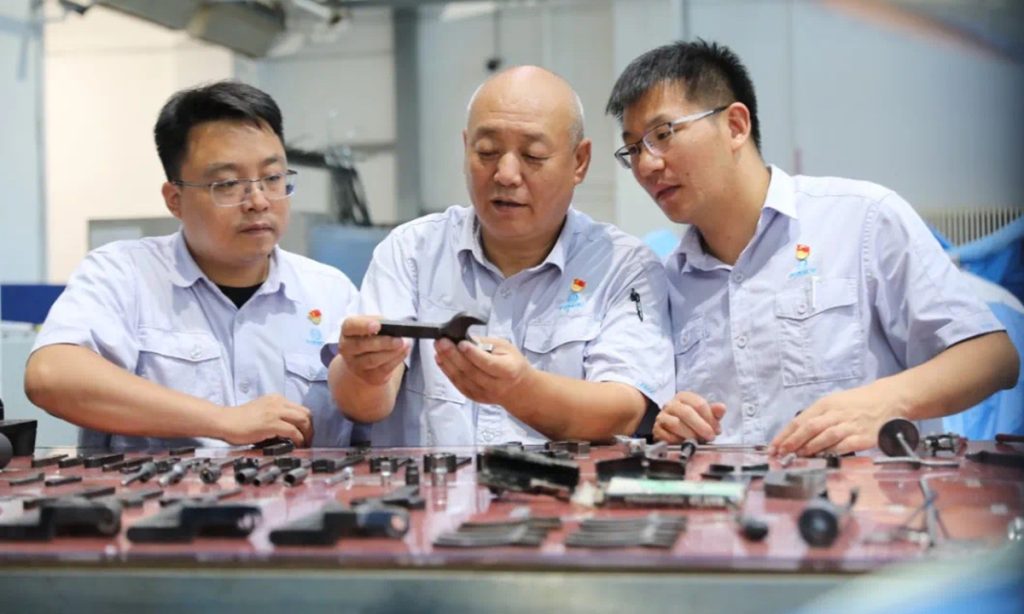
In this installment, Global Times reporters spoke with technicians from the Aero Engine Corporation of China (AECC) Shenyang Liming Aero-Engine Co, Ltd to learn about their stories of devoting themselves to the research and development of China's domestic aero engines and how Xi encouraged them to inherit and carry forward the spirit of a great country's craftspeople, along with a thorough review of how China gradually created its own aero engines.

"A workman must first sharpen his tools if he wants to do his work well," is a Chinese saying that emphasizes not only the importance of tools of a craft, but indicates the vital role of the craftsman who creates the tools.

"Your work is important and honorable," Chinese President Xi Jinping, who is also general secretary of the Communist Party of China (CPC) Central Committee and chairman of the Central Military Commission, told technicians at the Li Zhiqiang Class in Aero Engine Corporation of China (AECC) Shenyang Liming Aero-Engine Co Ltd, while Xi visited the corporation in 2013 to review its work in developing and producing aero engines.

A decade later, in a letter to the class on September 1, Xi spokes highly of the contribution of technicians in the research and development process of China's aero engines.

Xi emphasized that aero engines are a vital national asset and an important reflection of the country's scientific and technological strength and innovation capabilities. "I hope you will remember your mission and responsibilities, firmly uphold the aspiration of serving the aviation industry, promote the spirit of model workers and craftsmen, strive to make more technological breakthroughs, accelerate the pace of independent research and development of aviation engines, and enable Chinese aircraft to have a stronger 'Chinese heart,'" Xi said in the letter.

Until recently, aero engines had been a shortcoming in China's aircraft development, but that impression changed drastically when the Chinese People's Liberation Army (PLA) Air Force's most advanced stealth fighter jet, the J-20, made its first public appearance equipped with a pair of domestically developed engines in 2021, replacing imported engines used in the past.

Aero jeweler
The aero engine is deemed the "crown jewel" of modern industry. An aero engine is composed of tens of thousands of components of different shapes and materials. The circuit of the engine is like blood vessels around the human body, which requires a very high degree of precision to assemble and allows no room for error.

Technicians from the Li Zhiqiang Class, named after national model worker and national technical expert Li Zhiqiang, are exactly the people who are responsible for assembling aero engines and gas turbines.

"At that time, the president said our work 'is important and honorable.' He also said that the turbine vanes and blades are as valuable as diamonds. We always recall such acknowledgement and encouragement and use them as fuel to keep striving forward," said Li Zhiqiang, recalling Xi's visit a decade ago.

In a letter to Xi, Li and seven other technicians reported achievements made in strengthening technological innovation and promoting independent research and development in the aero industry over the last decade, expressing their determination to accelerate the pace of independent research and development of aero engines and build a strong aviation nation.

As the initiator among a total of eight technicians from the class who wrote the letter, Li told the Global Times that Xi's reply letter showed "extreme recognition, was encouraging, and inspirational" to the team. He shared the letter's contents to all 62 members of the team. "We must keep in mind his care, trust, and ardent expectations, firmly follow the new path of independent innovation and development of aero engines, and ensure that China's domestically made aircraft will use a stronger 'Chinese heart' in the future," he said.

One of Li's primary work principles is to "never give up before all problems are solved." In the last decade, Li, together with his colleagues, made use of various methods, including 3D simulation, to elaborately lay out processing plans for different products in accordance with their characteristics, efficiently increasing assembly quality and reducing the production period.

A typical example of the class implementing the principle is the aero engine accessory case. In the past, the case needed to be held together by several people when trying to install it in the belly of the engine, which is difficult and inefficient. This problem greatly bothered Wen Shangzhi, the current leader of the class. To solve it, Wen and his team members made use of their spare time to discuss, search materials, and conduct experiments, finally creating a new method, which obtained certification from experts and effectively improved installation efficiency.

It is in this way that the Li Zhiqiang Class found solutions and overcame obstacles one by one over the last decade, by inventing new methods, new technologies, and new tools. In total, the team solved 52 technical problems in scientific research and assembly, independently developed 312 tools and obtained more than 50 invention patents, the Global Times learned from the corporation.

When two J-20 fighter jets appeared the sky on the hot and humid opening day of the Airshow China 2021, on September 29 in Zhuhai, South China's Guangdong Province, not many spectators fully understood what they had just witnessed.

The two jets started their flight performance with a low tandem flyby above the air show site. Then, one of the aircrafts drastically pulled up and soared into the sky, while the other pulled left and performed a tight spiral maneuver before vanishing into the clouds, in a display of the aircraft's outstanding power and maneuverability.

Immediately after the flight performance, Senior Colonel Li Jikuan, commander of the J-20s' flight performance, announced at a press conference at the air show that it was the J-20's first public performance after being fitted with domestically built engines.

Experts told the Global Times that the domestically built engines provide more powerful thrust that helps the J-20 in super-maneuverability and supersonic cruise, while the engines' serrated nozzles can improve the aircraft's stealth capability.

Another important aspect of converting to use domestically built engines is that it enables mass production of aircrafts, since there are no import restrictions, experts said.

The J-20 is not the only aircraft to use domestically developed engines. Also at the Airshow China 2021, Tang Changhong, chief designer of the Y-20 large transport plane, announced that the Y-20 would be equipped with two types of domestically developed engines. After being equipped with these engines, the Y-20's capabilities have received a boost, Tang said.

Compared with imported engines, the Chinese engines could boost the Y-20's range, endurance, and cargo capacity by providing more powerful thrust and using less fuel, while also allowing the plane to take off and land on shorter runways, analysts said.

Another key member of the "20 aircraft family," the Z-20 utility helicopter, also uses domestically developed engines.

The developers of the Z-20 told the Global Times in October 2019 that the domestically developed engines are powerful enough to enable the helicopter to fly in low-oxygen plateau regions.

Observers noted that the primary battle aircrafts owned by the PLA had converted to domestically developed engines as of this year, but that does not mean China's continued efforts in aero engine development have reached their goal.

Toward stronger future

In the 2022 edition of the Airshow China, AECC showcased five variants of the Taihang series turbofan engines, which are used by different aircraft.

The Taihang engine has received continued improvements and upgrades, and its performance, reliability, safety, stealth capability, power extraction, environmental adaptability, endurance, and thrust vectoring - among other factors - have all received technical boosts.

This is expected to comprehensively enhance the aircraft's survivability and combat capabilities, and has realized the complete independent support of domestically developed engines.

One of the five Taihang engines on display has a 2D thrust vectoring control nozzle, which attracted the attention of visitors.

Li Gang, the pilot of the J-20 stealth fighter jet's first flight, said in a media interview that he would like to see the J-20 eventually be upgraded with engines with 2D thrust vectoring nozzles.

Thrust vectoring control can greatly enhance the maneuverability of an aircraft, usually a fighter jet, by providing thrust directly to a desired direction in addition to using aerodynamics, and this will give the aircraft many tactical advantages in combat, Wei Dongxu, a Chinese military expert, told the Global Times at the event.

An aero engine with a thrust vectoring control nozzle is mechanically and structurally more complex than an engine without one, and this means that thrust vectoring control usually causes a certain level of thrust loss. A 2D nozzle could lose even more thrust than a 3D nozzle. China's development of a turbofan engine with a 2D thrust vectoring control nozzle means the engine has sufficient power to manage the loss of thrust, Wei said.

A 2D nozzle usually has better radar and infrared stealth capability than a 3D nozzle, and that makes the 2D nozzle a generally better option, if the engine itself can provide enough power, Fu Qianshao, a Chinese military aviation expert, told the Global Times.

At Airshow China 2018, a J-10B thrust vector control demonstrator aircraft equipped with an engine with 3D thrust vectoring control nozzle delivered a flight performance. An engine with a 3D thrust vectoring control nozzle was also on display at the Airshow China 2022 as one of the five Taihang variants.

It is widely expected that China will continue to develop more advanced aero engines and use them on its advanced warplanes.

Blinken sounds a rallying cry for a ‘new cold war’ that US cannot win

The growing US' geopolitical competition with Russia and China marks the end of the post-Cold War world order, US Secretary of State Antony Blinken said, speaking at the Johns Hopkins University's School of Advanced International Studies on Wednesday. "What we are experiencing now is more than a test of the post-Cold War order. It's the end of it," he noted. "Decades of relative geopolitical stability have given way to an intensifying competition with authoritarian powers, revisionist powers." This statement appears to be a rallying cry for a "new cold war." 

Since the post-Cold War order is coming to an end, what kind of new world order does the US want? Various signs indicate that the US wants major power competition and camp confrontation in order to maintain its global hegemony, even at the expense of the interests of other countries, including allies, and partner nations. However, the reality is that major power competition goes against the trend of the times and cannot solve the US' own problems and the challenges facing the world. It will only further divide the world, leading the world to slide toward a more dangerous cliff edge.

Regarding Blinken's remarks, there are two main points to consider. Firstly, Blinken was creating a sense of crisis in the world. The underlying message to US allies and other countries is that there are challengers, particularly China and Russia, who want to change the existing order. Secondly, Blinken's remarks also reflect a sense of anxiety in the US. The US is attempting to slow down China's rise through strategic competition, while hoping to sustain its hegemony without jeopardizing its own interests. However, it seems that the US has no clear solution to this dilemma. 

China is one of the beneficiaries of the existing system and does not seek to challenge or subvert this order. However, the US has viewed any legitimate demand made by China, even those that reflect the reasonable demands of the majority of developing countries, as a challenge and ill-intentioned sabotage. 

Xin Qiang, deputy director of the American Studies Center of Fudan University, believes that US irrational crackdown on China will only irritate China and other developing countries. Many developing countries share common demands with China, but the US opposes whatever China proposes and intends to strangle its legitimate right for development. This will ultimately lead to the destruction of the existing international order and be counterproductive to the US' goals.

The US believes that by containing China, it will gain an advantage. However, whatever damage they're doing to China, it also backfires on the US and even the world. 

The US now sees China as a competitor and challenger, opposing and obstructing anything that may benefit China, regardless of its impact on the US. This approach not only fails to maintain US hegemony but also leads it further away from the right direction. 

Today, the US is embroiled in simultaneous confrontations with China and Russia. The US needs to think carefully, as it will be more difficult to engage in a "new cold war" compared to the previous one. In the 1970s, the US GDP accounted for nearly one-third of the global total, but now it is only one-fourth. Its two major opponents are the nuclear power Russia and the economic powerhouse China. In order to defeat Russia, the US must ultimately dismantle its nuclear deterrence, which would be a thrilling adventure. 

As for China, the US is attempting to stifle its development by imposing unlimited technological restrictions, but it is unable to completely decouple from China economically. For the US and its main allies, China is either their largest single trading partner or one of the largest. Today, the US is a reckless strategic aggressor, attempting to unite its relatively weaker strength with its allies to wage a new cold war. It should be noted that the power of US allies has declined significantly, and the unity of the "West" is crippled due to the US transitioning from a "blood donor" to a "vampire".

The current generation of American elites arrogantly seeks to replicate the victory of the Cold War, but they will never succeed. Instead, the US will face a different ending.