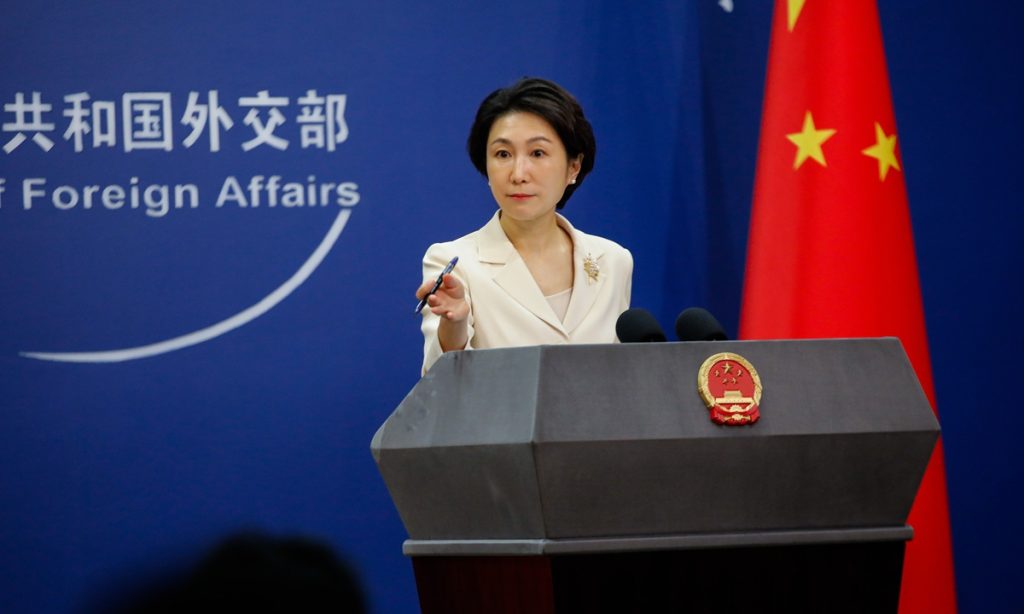
In response to a media inquiry regarding reports that the city of Nagasaki plans to complete updates to exhibition panels at the Nagasaki Atomic Bomb Museum during fiscal year 2026, including replacing the term "Nanjing Massacre" with "Nanjing Incident" on a display panel, Chinese Foreign Ministry spokesperson Mao Ning said on Friday that the Nanjing Massacre was a brutal crime committed by Japanese militarism, with overwhelming and irrefutable evidence, and that history must not be distorted.
She said the Tokyo Trial explicitly determined that the atrocities committed by Japanese forces in Nanjing constituted a "massacre," not an "incident." Mao said the judgment of the International Military Tribunal for the Far East devoted a special section to the atrocities in Nanjing and, based on extensive survivor testimonies, records by third-party foreign witnesses, and Japanese military archives, established through an international judicial ruling the grave crimes committed by the invading Japanese army during the Nanjing Massacre.
Mao said that General Iwane Matsui, held responsible for the Nanjing Massacre, was sentenced to death by hanging as a Class-A war criminal and stressed that history must not be overturned. She added that many Japanese atomic bomb survivors, civic groups in Nagasaki, and other people of insight have called for a correct and complete account of the crimes and history of Japanese militarism as an aggressor.
Japan should deeply reflect on its wartime crimes and responsibilities and make a clean break with militarism, Mao said.
At the invitation of Zhao Leji, chairman of China's National People's Congress Standing Committee, Seah Kian Peng, speaker of the Parliament of Singapore, will lead a delegation to visit China from June 8 to 13.
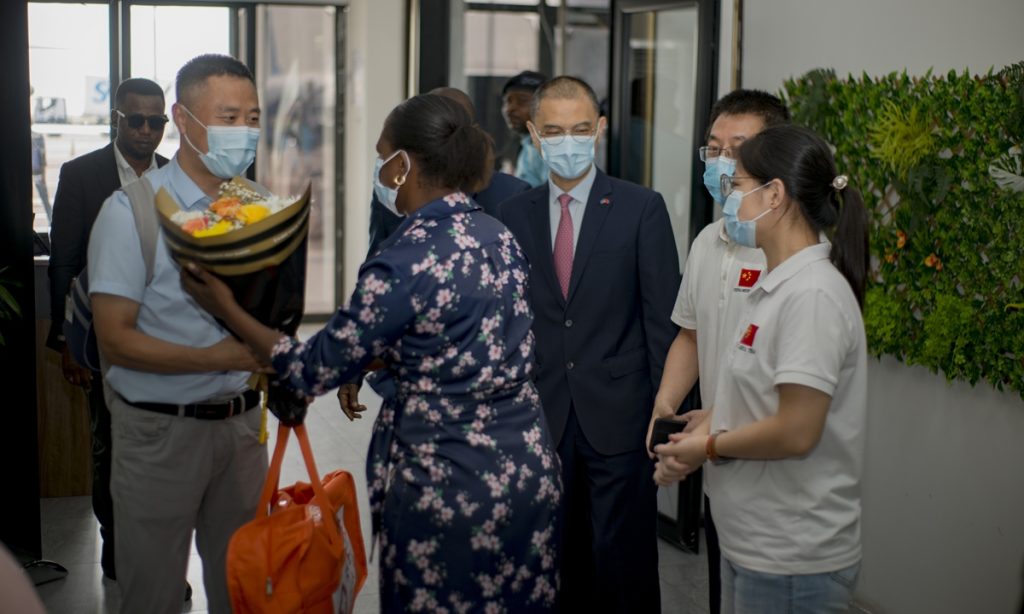
A Chinese anti-epidemic medical expert team arrived in Kinshasa, the capital of the Democratic Republic of the Congo (DRC), on Tuesday for a three-month mission to support the Central African country's response to the Ebola outbreak, Xinhua News Agency reported.
Luku Maleyo Marius, a representative of the DRC Ministry of Health, welcomed the team at the airport, saying that China's dispatch of the medical experts represents timely and strong support for the Congolese government and people, according to Xinhua.
Whenever the DRC faces major public health challenges, China has consistently extended timely assistance, he said, adding that he looks forward to the mission further strengthening the country's epidemic prevention, control and treatment capacities, and helping bring the outbreak under control as soon as possible.
The assistance effort came after the World Health Organization determined on May 17 that the Ebola outbreak in the DRC constituted a "public health emergency of international concern," with a host of nations such as the US, Canada, Thailand and Vietnam ramped up border inspections and introduced restrictive entry requirements to guard against the spread of the virus.
Speaking with the Global Times on Monday evening ahead of their departure, team members noted the assistance mission embodies China's commitment to global anti-epidemic cooperation. The experts will adapt proven epidemic control experience to local realities and help strengthen the DRC's capacity for Ebola prevention and clinical care.
China experience
The latest outbreak is the 17th in the DRC since the virus was first identified in 1976, and laboratory tests identified the Bundibugyo strain of the virus, according to media reports.
WHO told the Global Times in a previous response that case fatality rates in the past two Bundibugyo virus disease (BVD) outbreaks, reported in Uganda and in DRC in 2007 and 2012, have ranged from approximately 30 percent to 50 percent. No specific treatment exists for BVD, but early supportive care improves survival.
Members of the Chinese expert team this time have extensive experience in epidemic prevention and control and bring expertise in public health as well as traditional Chinese and Western medicine. Working alongside the China Medical Teams already in the DRC, they will support local Ebola prevention and control efforts and promote cooperation with local medical and disease control institutions.
Before departing from Beijing Capital International Airport, the leader of the expert team, Lu Ming, Second-level Inspector from Department of International Cooperation of National Health Commission (NHC), told the Global Times that China has dispatched experts in different fields, and the team will fully leverage their professional expertise and, based on firsthand epidemiological information, develop targeted prevention and control measures to support outbreak response and management.
Under the guidance of the Chinese Embassy in the DRC, the team will also work with Chinese institutions, enterprises and local Chinese communities to promote public awareness of epidemic prevention, strengthen frontline preparedness and reduce the risk of imported cases to China, Lu said.
Another member of the expert team, Xu Ke, director of Hepatitis Laboratory from National Institute for Viral Disease Control and Prevention of Chinese Center for Disease Control and Prevention, told the Global Times that his work focuses on laboratory collaboration, including virus testing and analysis, monitoring viral mutations, exploring improved diagnostic methods, and examining genetic sequence changes.
Apart from the virus's deadly risks, the complicated social conditions in epidemic zones constitute one of the biggest obstacles to containment, Xu told the Global Times. "Core affected areas are located in conflict zones with tangled geopolitical situations and restricted population mobility, rendering epidemic prevention much harder than previous efforts."
Confirmed Ebola cases in the DRC have reached 343, the country's Health Minister Roger Kamba said Monday, cited by the Congolese Press Agency, the country's official news outlet, the Xinhua News Agency reported.
BVD is a zoonotic disease, with fruit bats suspected to be the natural reservoir. Human infection occurs through close contact with the blood or secretions of infected wildlife, and subsequently spreads from person to person through direct contact with the blood, secretions, organs, or other bodily fluids of infected individuals or contaminated surfaces or items, WHO introduced.
Regardless of the strain, early and active supportive treatment can significantly reduce the mortality rate, and the key lies in early detection and timely intervention, Jiang Rongmeng, vice president of Beijing Ditan Hospital Capital Medical University and another member of the expert team, told the Global Times.
Experience from previous infectious disease responses in Africa shows that countries prone to Ebola outbreaks often share similar public health and economic conditions, as well as cultural practices that create conditions conducive for virus transmission, said Jiang, who was also a member of the expert team that participated in China's 2014 aid mission to Africa to combat the Zaire strain of the Ebola virus.
Traditional burial practices in the DRC often involve washing, touching or staying close to the body. Therefore, as the Ebola virus can spread through contact with bodily fluids, unsafe burials are a major driver of new transmission chains, according to a report by Xinhua.
Jiang added that prevention and control of an outbreak need to take into account both natural and social factors, as natural factors include exposure risks from the ecological environment such as wild animals and social factors include traditional burial practices, Jiang said.
"Against this backdrop, this brings us back to China's experience in infectious disease prevention and control, characterized by full public mobilization. Infectious disease control is not only the responsibility of experts or the government, but the whole society. This approach enables developing countries to contain diseases at relatively low cost rather than relying on expensive equipment or advanced facilities," Jiang said.
Continued efforts
Chinese medical personnel have long been stationed in the DRC prior to the expert team's arrival. Since the outbreak began, the 24th batch of Chinese medical teams assisting the DRC has promptly activated emergency response measures, established a prevention and control system, conducted training and drills, coordinated epidemic prevention supplies, and improved environmental sanitation at their base, per Xinhua.
These team members have remained on the front line of clinical care, strengthened infection prevention measures, provided guidance on epidemic control for Chinese-funded enterprises, and safeguarded the health of local residents as well as Chinese nationals in the country, according to Xinhua.
Already in 2014, an Ebola outbreak swept across Africa, with more than half of those infected losing their lives. While most countries withdrew their medical workers from Africa amid widespread panic, China's 24th medical team to Guinea headed into the epidemic-hit regions. They helped address critical gaps in local medical services and provided strong support for the local fight against Ebola, according to Health News, the media outlet affiliated with the NHC.
"Diseases know no borders," Lu said. In past responses to infectious diseases, the Chinese government has also received support and assistance from many countries. Following the declaration of the Ebola outbreak, China quickly dispatched a medical expert team and provided relevant material support, demonstrating its sense of duty as a responsible major country, Lu added.
"As a member of the expert team, I feel honored to contribute my expertise to the Ebola response, helping to achieve outbreak control goals and further advancing the vision of building a global community of health for all," Lu told the Global Times.
"China has a long-standing tradition of friendship with African countries. As practitioners, we are also committed to contributing our professional expertise," Xu said.
Chinese Foreign Ministry spokesperson Lin Jian said during a Monday press conference that China and Africa are good brothers sharing weal and woe. "We feel for the DRC over the new outbreak of Ebola."
Supporting African countries' response to Ebola is a shining example of building the all-weather China-Africa community with a shared future for the new era, and also an important part of ten partnership actions of the 2024 FOCAC Beijing summit. "As we speak, Chinese medical teams are on the ground fighting the disease shoulder to shoulder with African people," the spokesperson added.
March 8 marks International Women's Day. This year, the official theme of the United Nations observance of the day is "Invest in women: Accelerate progress."
In China, there is a saying, "Women hold up half the sky," which affirms women's pursuit of dreams and achievements in their careers. In modern terminology, this is called "the power of her."
There have been many outstanding women in Chinese history. In the new era, Chinese women in various industries are continuing to promote self-respect, self-confidence, self-reliance and self-improvement, resonating their personal dreams with national development.
Chinese women are increasingly playing an important part in building a stronger country.
They actively participate in the country's whole-process people's democracy, showing their talents in the great rejuvenation of the Chinese nation. According to the list published on the website of the National People's Congress (NPC) and the National Committee of the Chinese People's Political Consultative Conference (CPPCC), there are 790 female deputies to the 14th NPC, accounting for 26.54 percent of the total, and 487 female members of the National Committee CPPCC.
These female top legislators and political advisors play a major role in speaking up for Chinese women, especially those in remote and undeveloped areas. They also provide a female perspective in many livelihood issues like education, fertility and employment, in order to help Chinese governments solve relevant problems while taking gender equality into account.
Far out in space, the first Chinese female taikonaut Liu Yang arrived there in the Shenzhou-9 spacecraft in 2012. On November 7, 2021, Wang Yaping became China's first female astronaut to walk in space. In the history of human spacewalks, the beautiful figure of a Chinese female astronaut finally appeared for the first time.
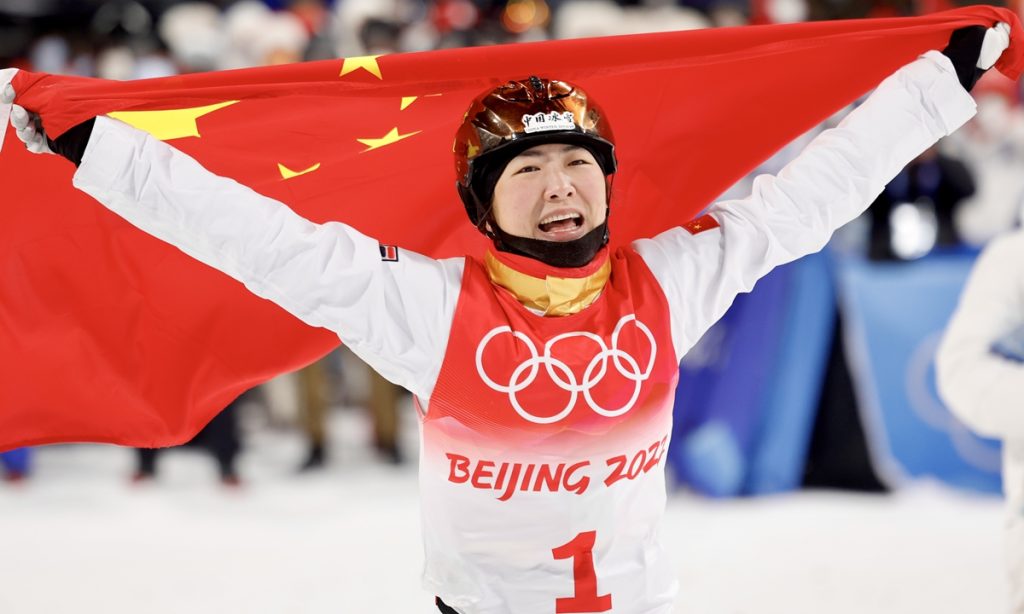
On the field of sports, Chinese skier Xu Mengtao remained determined and stepped onto the Winter Olympics stage for the fourth time in 2022 despite being plagued by injuries. Finally, she scored 108.61 to win gold in the women's freestyle skiing aerials at the Beijing Winter Olympics, interpreting the power of dreams with her resilient will. Zhang Weili became China's as well as Asia's first Ultimate Fighting Championship (UFC) champion in 2019, demonstrating the power of Chinese women to the world with her fists.
Not to mention that the spirit of perseverance, courage and unity of the Chinese women's volleyball team is widely recognized and admired in China, becoming a spiritual symbol and role model.
No matter if they are in the military, or in ordinary posts in factories… the power of women is never absent. They can be seen fighting in every position and every field during China's journey of development.
While applauding their shining moments, China is also providing stronger guarantees for the work and life of women. China has established a comprehensive legal system to protect women's rights, including more than 100 laws and regulations.
It has been listed by the World Health Organization as one of the top 10 countries with high performance in women and children's health, and has basically eliminated the gender gap in compulsory education.
The dividends brought by policies have effectively activated "the power of her" in the development of our society, allowing more women to be active on the stage of the new era.
The average life expectancy of women exceeds 80 years, the gender gap in compulsory education has been basically eliminated, the proportion of female students in various higher education institutions exceeds that of male students, and the proportion of women in the total employed population remains above 40 percent.
"The power of her" will continue to growing in the new era in China, continuing to write new stories about "half the sky."
Brand Finance, the internationally renowned brand valuation agency based in London, recently released the "Global Soft Power Index 2024," which shows that the US and the UK have maintained their positions as the top two most influential countries in global soft power. It is noteworthy that China is the fastest-growing nation brand this year, surpassing Japan and Germany, and for the first time, ranking third in the soft power index, with the country's progress exceeding that of any other country.
Brand Finance has been tracking the performance of global soft power in multiple countries for five consecutive years, and this year's report is based on surveys of over 170,000 respondents from more than 100 countries, ranking all 193 member states of the United Nations for the first time.
What is behind the world's fastest-growing soft power? The Global Times recently interviewed Brand Finance's officials, as well as scholars and observers from various countries, to discuss how China's soft power is steadily improving and bringing benefits to the world.
Two pillars
According to Scott Chen, Managing Director China of Brand Finance, the agency defines soft power as "a nation's ability to influence the preferences and behaviors of various actors in the international arena - states, corporations, communities, public, and etc. - through attraction or persuasion rather than coercion."
Chen told the Global Times that the Global Soft Power Index is a research study, commissioned by Brand Finance, covering 193 countries around the world. With responses from more than 170,000 people in over 100 markets, the survey is also the most comprehensive and extensive field survey of its kind.
To conduct the fieldwork, in more developed markets, Brand Finance's established online research panels were used, Chen noted. "Each respondent was shown a random sub-set of nation brands - drawn from the 193 [countries] included in the Index - and asked about their familiarity. For countries about which the respondent had some knowledge, we obtained a detailed assessment of reputation, influence, and performance on 35 characteristics representing the core 8 Soft Power Pillars," he said.
In the 2024 Brand Finance Global Soft Power Index, China made the most significant advancement among all nations, rising from fifth to third place, and its overall score increased by 6.2 points from 65.0 to 71.2 over the previous year.
Chen explained that this growth is due to China's significant improvement in the two pillars of "Business and Trade," and "Education and Science."
"Our latest research finds that the Business and Trade pillars are crucial indicators of a nation's global influence. This directly reflects a nation's economic strength, innovation, and integration into the global market," Chen said.
Chen pointed out that in terms of soft power, Brand Finance found that a nation's ability to engage in trade effectively, maintain economic stability, and provide attractive investment opportunities is pivotal in shaping global perceptions.
In terms of specific indicators, China's performance is equally impressive. Since the first release of the Global Impact Index report in 2020, China has been ranked first in the world for being "easy to do business with" under the Business and Trade pillar, and has been No.1 for "future growth potential." In the education and science pillar, China ranks second in the world in indicators such as being a "leader in technology and innovation" and "invests in space exploration."
Chen noted that soft power holds immense significance for a nation as it enables it to exert influence, shape perceptions, and achieve goals.
"A nation's soft power, encompassing its culture and heritage, people and values, and international relations, enhances its reputation and fosters goodwill with other nations. By promoting such attributes, a nation can effectively engage with the global community and enhance its interests on the global stage. Soft power ultimately serves as a crucial tool, not just for diplomacy, but also for economic development, by attracting investment, trade, talent, and tourism to a nation," he said.
Multiple drive
Several years ago, back when BlackBerry phones were popular in the US, some of my friends wanted to keep up with the trend, yet couldn't afford them, so they bought Chinese knock-offs instead. During dates with their girlfriends, they were often too embarrassed to bring out their "fake BlackBerries." However, things are completely different now. "Made in China" is no longer synonymous with "inferior" or "counterfeit." Many Indonesians are using Chinese-made smartphones like Oppo, Vivo, or Xiaomi, and TikTok, whose user base has surpassed that of YouTube, Novi Basuki, a prominent Indonesian sinologist, told the Global Times.
The shift in Indonesians' perception of "Made in China" reflects China's enhanced soft power. Observers have pointed out that such enhancement is driven by multiple factors.
For example, in terms of electronics, China currently offers high-quality products at highly competitive prices, which continues to contribute to an enhanced perception of having "products and brands the world loves," for which the nation ranks 6th overall, Chen noted.
At the same time, Chen pointed out that while being ranked third overall in the index, China performs strongly in attributes such as "easy to do business with" and "future growth potential," with a prime example being the Belt and Road Initiative (BRI).
"As key objectives of the initiative, China's focus on promoting economic development, both domestically and among participating nations, especially in areas lacking infrastructure, has been key. Additionally, the BRI has played a role in facilitating international trade," he said.
In terms of the index of Education and Science, Chen noted that Brand Finance's latest research found that China has made significant strides in recent years. Underscored by various breakthroughs in areas like Artificial Intelligence, renewable energy, and space exploration, China has been able to cultivate an international reputation for its innovation capabilities and technological prowess.
The answer to this conclusion can be found in the cooperation between China and many countries in the world.
For example, in Brazil, people's views on China's soft power regarding are undergoing positive changes. Surveys conducted by the Pew Research Center show that about 70 percent of respondents from Latin American countries approve of China's technological development. Chinese cars, especially new energy vehicles (NEVs), are favored by Latin Americans for their excellent performance, cost-effectiveness, and technological advantages.
"In recent years, more and more Chinese companies have invested in Brazil, bringing not only capital but also advanced management techniques, creating a large number of job opportunities for the locals," Letícia, a Brazilian student majoring in international relations, told the Global Times.
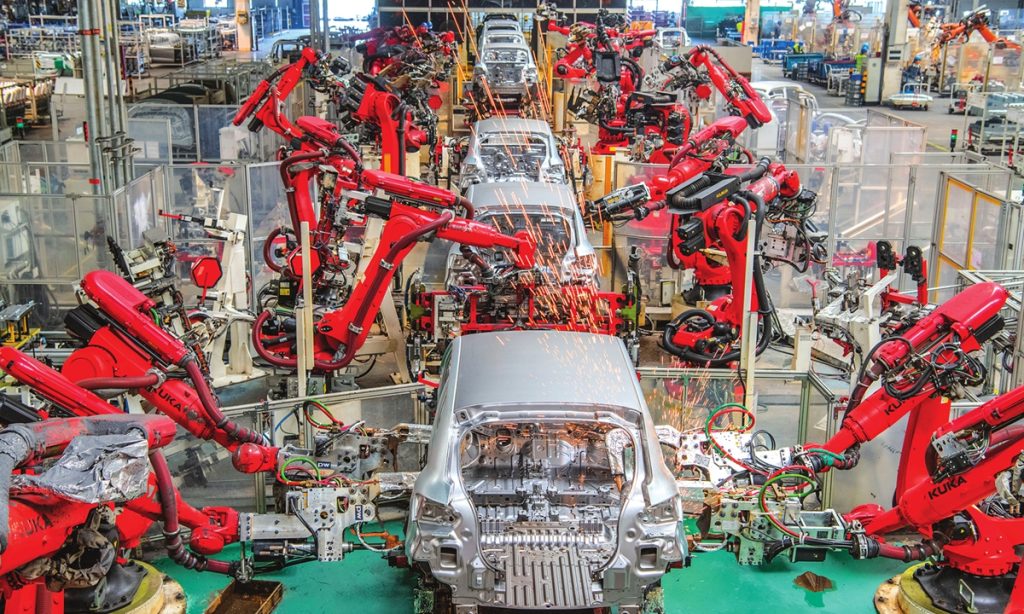
According to statistics released by Chinese Customs, in 2023, China's exports of electromechanical products reached 13.92 trillion yuan ($1.92 trillion) with an increase of 2.9 percent, accounting for 58.6 percent of total exports. Among these products, the combined export of the New Trio, which includes electric vehicles, lithium-ion batteries, and solar cells, increased by 29.9 percent and reached 1.06 trillion yuan, breaking the trillion-yuan mark for the first time.
The Financial Times recently reported that thanks to excellent performance and affordability, the market sales of Chinese NEVs continue to grow, with obvious advantages over their counterparts from other countries. Mathias Miedreich, CEO of Umicore headquartered in Belgium, which is part of the NEV supply chain, stated that Chinese electric vehicles are good enough and provide what the market and consumers truly need. Significant trend
In the 2024 Index, Brand Finance highlights a significant trend: hard power undermines soft power. "Going back to Brand Finance's definition of soft power, in that it revolves around influence through persuasion or attraction, rather than coercion, hard power - which is often associated with military strength - tends to undermine this approach by its very nature of coercion," Chen explained.
In my view, China's rise in the global soft power index reflects the world's appreciation for a country with great civilization and culture. It's also a positive response to the achievements that the country has made in technological innovation and development, Enrique Cornejo, a Peruvian political and economic analyst, told the Global Times.
Li Long, Executive Vice President of the Institute of Public Opinion and Social Governance at the South China Normal University, analyzed the three reasons why China's soft power has left a deep impression on the international community.
First, China embraces openness and inclusiveness. It has implemented a series of new policies and measures to strengthen its connections with the world. Activities such as trade, tourism, and cultural exchanges are becoming more frequent, and China continues to provide internationally shared public goods and services, promoting the construction of an open world economy.
Second, it values technological innovation, a core element of developing new productive forces. The country is enhancing its technology and capacity for independent research and development.
Third, China calls for cooperation and mutual benefit. As a responsible major country, China has always adhered to the principles of peaceful development and mutual benefit, actively promoting peace and development in the international community.
"Peruvians believe that China's soft power manifests a friendly value system, which distinguishes it from other influential countries, whether in North America or Europe," Juan Carlos Capuay Chávez, former Peruvian Ambassador to China, told the Global Times.
Julien Segbo, Director of the Confucius Institute at Benin's University of Abomey-Calavi, said that more and more African students are choosing to study in China. "It's not only because China offers a variety of scholarship programs, but also because the quality of higher education in China is gaining wide recognition. Like many classmates, I came to China for education. I have gained professional knowledge here, broadened my horizons and experienced the charm of different cultures."
According to Al Gomhuria, a state-owned Egyptian Arabic language daily newspaper, China's economic and trade cooperation with Africa has driven the development of local African companies and increased job opportunities.
China's educational aid projects have improved education in Africa, providing the younger generation with broader room for development. The friendly cooperation between China and Africa has not only promoted the economic development of both sides, but also deepened the emotional bond between the two peoples.
Analysts pointed out that although some Western media often report on China-related news from the perspective of Western values and political positions, leading to a higher proportion of critical reports on certain Chinese policies and actions.
However, currently, many countries, especially in developing countries, recognize China's soft power and influence. With the deepening of globalization and the diversification of information channels, more and more people are beginning to understand China through various means, including direct visits to China, participating in cultural exchange activities, and social media. More and more people are looking forward to China's soft power accelerating further.
Five days and six nights, three countries and four cities, over 30 bilateral or multilateral activities… these figures encapsulate Chinese President Xi Jinping's recent visit to Europe, the first of its kind in five years.
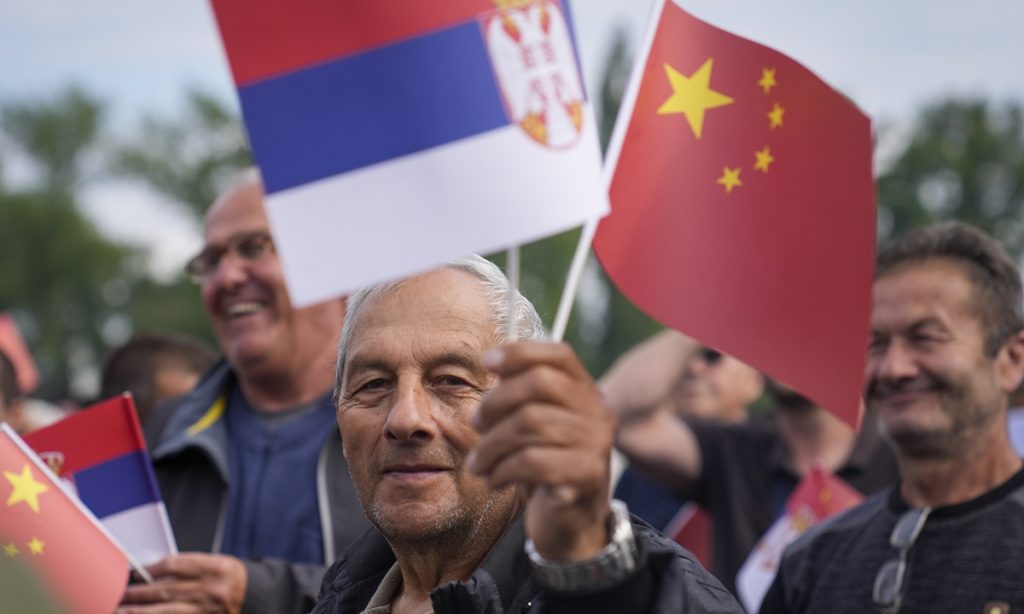
Chinese national flags adorned the cities, with crowds eagerly welcoming President Xi. The Global Times reporters observed these details during the visit, highlighting the anticipation in the continent to strengthen friendship and cooperation between China and the three countries of France, Serbia, and Hungary. People across the continent hoped that the visit would pave the way for stronger ties between China and the three countries, as well as with Europe as a whole.
During a press conference, Chinese Foreign Minister Wang Yi stated that President Xi's recent state visits have solidified China's relations with the three European countries and relaunched China-EU cooperation.
Wang, also a member of the Political Bureau of the Communist Party of China (CPC) Central Committee, described Xi's Europe trip as a journey to carry forward friendship, enhance mutual trust, boost confidence and chart the course for the future. Personal touch
French President Emmanuel Macron invited Xi to meet at the Pyrenees Mountains, a mountainous area in southern France which is close to the home of Macron's maternal grandmother.
It seems that it has become a routine that the two heads of state treat each other with something beyond the courtesy of a normal state visit. In March 2019, in the French city of Nice, Macron received Xi at Villa Kerylos, a century-old house overlooking the Mediterranean. Later that year, President Xi and his wife Peng Liyuan met with Macron and his wife Brigitte Macron in the Yuyuan Garden in Shanghai.
In April 2023 when the Chinese and French top leaders met for informal talks in Guangzhou, the capital of South China's Guangdong Province, they listened to the guqin (Chinese zither) melody "High Mountain and Flowing Water" at Baiyun Hall.
This year, on a cold snowy spring day, the two leaders continued to write the story of "High Mountain and Flowing Water," showing the world that despite China and France being an Eastern power and a Western power respectively, they can still cooperate on bilateral, regional and world affairs.
A local resident from a town near the Pyrenees is no stranger to China. He told the Global Times that his niece used to study in Shanghai and now works at a multinational company that has many businesses in China. A cyclist at the Pyrenees Mountains, who cannot speak English very well, said "friendship" when asked about the meeting between Xi and Macron at the mountain.
Xi's visit coincided with the 60th anniversary of the establishment of diplomatic relations between China and France. Thanks to former French president general Charles de Gaulle's grand vision and his advocacy for French autonomy, he made this bold decision 60 years ago, making France the first Western country to establish official ties with China.
In 2014, when Xi visited France, he went to the Charles de Gaulle Foundation. This time, the Global Times paid a visit there and had director of the foundation to recall Xi's visit 10 years ago and what prompted general de Gaulle to make the decision.
"President Xi laid a wreath in honor of General de Gaulle in the office where he worked from 1947 to 1958. Gifts were exchanged," Antoine Broussy, director of the foundation, told the Global Times, and showed a guest book on which President Xi wrote: "Paying Tribute to the Great Man and Composing a New Chapter in Chinese and French History."
In a showroom on the ground floor of the Charles de Gaulle Foundation, a bronze half-body statue of de Gaulle stands. He looks contemplative, apparently observing the historical trajectory of China-France relations. Steel-clad friends
During his stay in Serbia, a country Xi visited eight years ago, the Chinese president presented a special gift to Serbian President Aleksandar Vucic - steel models in the shape of the Temple of Heaven in Beijing, and the Church of Saint Sava in Belgrade.
The models were made from steel produced by the HBIS Smederevo steel plant, or Hesteel Serbia, a century-old factory which was invigorated through close cooperation between China and Serbia.
Xi visited the plant in June 2016, months after China's Hesteel Group purchased this venture on the verge of closure and the future of its more than 5,000 employees was unsettled.
Xi interacted with the workers and encouraged them to work hard to bring benefits to local residents. Factory workers presented a round plate with the silhouette of the steel plant to Xi as a gift.
The visit significantly boosted the morale of all the workers, and encouraged the Chinese executive team to optimize production and management. Smiles returned to the faces of Serbian workers as they felt secure and began to "plan for the future."
Hesteel Serbia now has become a major exporter in the Balkan country and a crucial taxpayer. Its success is an embodiment of the "ironclad" friendship between China and Serbia.
Before his state visit this time, Xi replied to a letter written by Serbian steelworkers who shared the progress the steel plant had achieved and expressed their appreciation for Xi's care and support.
When presenting the steel models to Vucic on Wednesday, Xi said we are now "steel-clad friends with even stronger ties than iron-clad friends."
In a signed article by Xi published on Serbian local media outlet Politika before his arrival, he wrote "the China-Serbia friendship, forged with the blood of our compatriots," citing NATO's flagrant bombing of the Chinese Embassy in Yugoslavia on May 7, 1999.
In his first public event during the 2016 visit, Xi and Serbian leaders paid homage to three Chinese martyrs in the bombing at a memorial erected on the site where the embassy once stood.
Now standing on the site is the China Cultural Center, for which Xi laid the foundation stone in 2016. This site has now gained a new life while retaining the sentiment of friendship.
Carefully decorated with Chinese elements, the center offers courses on Chinese, calligraphy, Tai Chi, and guzheng, a traditional musical instrument. The center also holds a library which has a collection ranging from language learning materials and dictionaries, to popular novels and classics.
Various cultural events are held here, and the center issues commemorative stamps with Serbian Post biannually, the Global Times learned from the center.
Many locals also come to the center for classes out of interest, gain better knowledge of China and Chinese culture.
Milica Milovic, the first Serbian employee at the center, told the Global Times that working at the center is really a pride as she is now part of the strong China-Serbia friendship.
This ironclad friendship has become deeper and deeper through efforts of every ordinary Chinese and Serbian who are contributing to bilateral exchanges and friendliness.
A East-West model
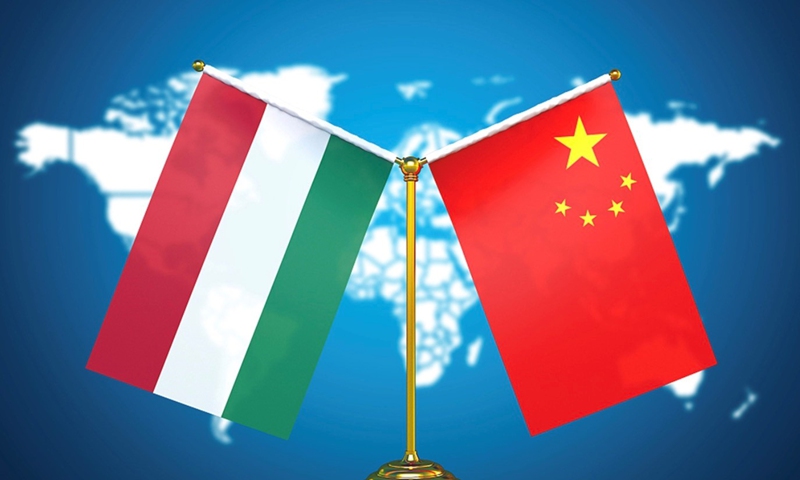
Upon President Xi's arrival in Budapest, the final stop on his five-day European visit, Chinese national flags were placed next to Hungarian flags on the Elisabeth Bridge in this beautiful capital.
Xi previously visited Hungary in 2009. Some things have changed, while some have not. The Danube River still flows silently and gently, witnessing the development of relations between China and Hungary. During Xi's visit this time, the two countries elevated bilateral relations to an all-weather comprehensive strategic partnership for the new era.
What deeply impressed President Xi during his state visit to Hungary, he said, was a Hungarian girl who presented flowers to him when he landed in Budapest. She was the same girl who presented flowers to Xi 15 years ago. The president recollected that encounter: "You've grown up. You were only this tall back then," he said, making a gesture with his hand.
The girl can speak fluent Chinese. So can many young Hungarians, who have cultivated a strong interest in China and the Chinese language as exchanges between China and Hungary have flourished over the last couple of years. In Buda Castle, the historical castle and palace complex of the Hungarian Kings, nearly half of the tourists come from China, and they have a tourist guide who can speak Chinese very well.
Many Hungarians who speak fluent Chinese learned the language at the Hungarian-Chinese bilingual school in Budapest. Established in 2004, the Hungarian-Chinese bilingual school is a 12-year all-through public school that teaches in both Chinese and Hungarian.
In October 2009, Xi, then Chinese vice president, visited the school during his visit to Hungary. Today, a group photo of Xi and the school's students and teachers, as well as Xi's reply letter to the students in early 2023, hangs on the wall in the school's hallway.
Xin Hua, director and chair professor of the Center for European Union Studies, Shanghai International Studies University, told the Global Times that an important reason that China and Hungary can develop friendly ties is that the two countries have similar historical and cultural traditions.
"Welcome home!" Hungarian Prime Minister Viktor Orban greeted Xi at the airport. The next day, Xi was received with a military ceremony in the Lion Courtyard of Buda Castle.
In an interview with Chinese media, Hungarian Prime Minister Orban explained what "home" means.
"We are settled here in the West, but the origin is very important. So, we know that relatives are somewhere, they are far away. So, when somebody from the East is coming to Hungary, especially with the high civilization for several thousands of years as China, it always has a special emotional element of that meeting," Orban said.
More than 181,000 visitors from the Chinese mainland entered Hong Kong on Wednesday, the first day of the five-day May Day holidays, surpassing numbers for the same period in 2023, data from the Immigration Department of the Hong Kong Special Administrative Region government revealed.
About 468,000 people entered the city on Wednesday. Among them, visitors from the Chinese mainland numbered over 181,000, it said.
Departures from Hong Kong totaled around 340,000 people, with nearly 60 percent being residents of the city. Despite the single-day holiday, many residents in Hong Kong opted to travel out of the city for leisure.
The Immigration Department previously estimated that passenger arrivals and departures will total 5.9 million from Tuesday to Sunday, among which more than 800,000 trips will be made by tourists from the Chinese mainland.
Timothy Chui, executive director of the Hong Kong Tourism Association, said that the number of visitors from the Chines mainland on Wednesday was satisfactory, similar to last year's figures, with hotel occupancy rates being at strong levels, reported the Chinese News Service.
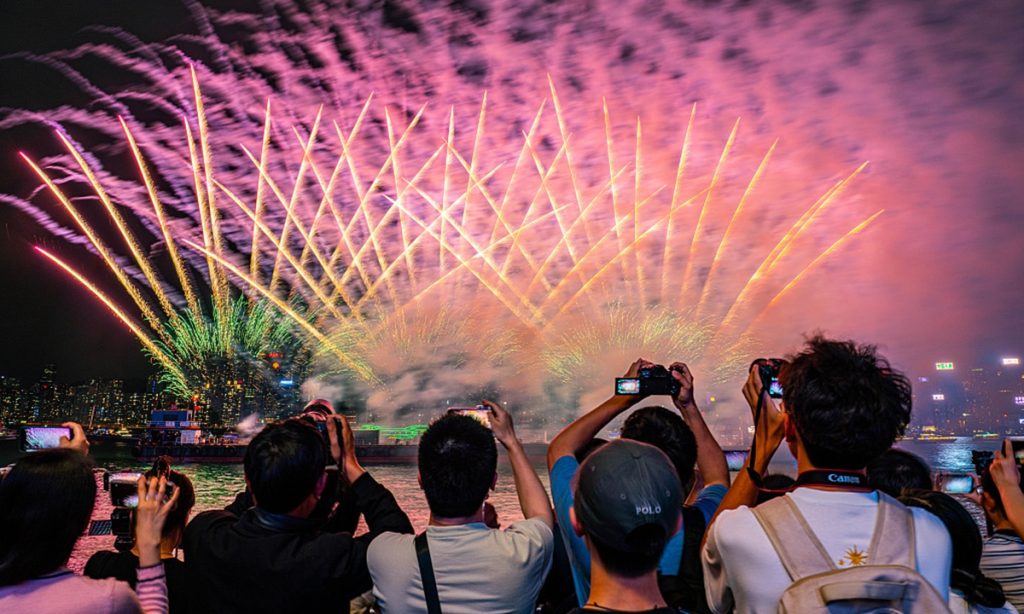
He said that the numbers could have been higher if not for weather conditions. Chu noted that he learned some visitors came to Hong Kong to witness fireworks displays, which he believed was influenced by the promotional efforts of the government on social media platforms.
Starting at 8 pm on Wednesday, the 10-minute display blended in with the night view of the Victoria Harbor and is accompanied by a light and music show. The gold-toned fireworks were set off from a boat 130 meters offshore.
Many tourists and Hong Kong residents had arrived three hours early for the show to find the perfect viewing spot despite the drizzles throughout the day, according to the Xinhua News Agency.
"I anticipate the fireworks the most for my four-day Hong Kong tour this Labor Day holiday,"said a tourist surnamed Lu from South China's Guangdong Province.
In addition, in preparation for the May Day holidays, which last from Wednesday to Sunday in the Chinese mainland this year, the Hong Kong Tourism Board announced that 16,000 travel vouchers would be distributed free of charge to individual travelers from Xi'an and Qingdao, which could be used at more than 100 premium Hong Kong brands and 2,000 shopping outlets.
Citizens in Xi'an and Qingdao have been eligible to visit the Hong Kong and Macao special administrative regions on an individual basis starting from March 6.
The Tourism Industry Council of Hong Kong estimated a 50% increase in visitors from these two cities following the opening of individual travel arrangements, the China News Service reported.
On April 23, Hong Kong Chief Executive John Lee Ka-chiu stated that Hong Kong government had made comprehensive preparations for the May Day holidays, estimating that there would be at least 800,000 mainland visitors and around 5.9 million people passing through various immigration control points.
Lee noted that many operators in the service industry have developed promotional plans and experiential activities, aiming to provide a positive experience for travelers in dining, shopping and other aspects, with the hope of promoting Hong Kong even after their return home, media outlet ifeng reported .
According to CCTV, citing words from the Ministry of Transport, it's expected that there will be a total inter-regional population movement of 280 million people, a 15.9 percent increase compared with the same period in 2019 on Wednesday.
Railway passenger volume is expected to reach 20.4 million, while inter-regional road traffic is projected to hit 257 million. Waterway passenger traffic is estimated at 900,000, with civil aviation passenger volume forecasted at 2.11 million.
As in previous years, during this year's May Day holidays, small passenger cars with seven seats or fewer will continue to enjoy toll-free passage on highways.
Additionally, many tourist attractions in various cities will implement policies of free or reduced admission during the May Day period. Viral videos online showed that across China, people are packed in railways stations, tourist attractions and even less-popular traveling cities.
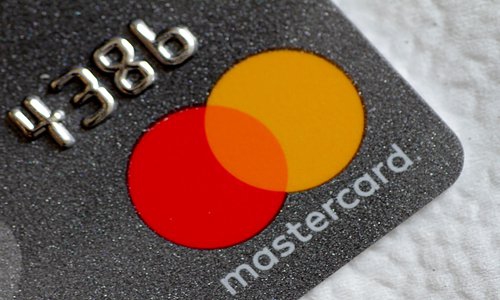
US payment company Mastercard's Chinese joint venture (JV) opened for business on Thursday, after the People's Bank of China approved the arrangement for the bank card clearing operations in November 2023.
The opening marks Mastercard as the second overseas bank card clearing institution to enter the Chinese market, after American Express in 2020, which industry analysts said demonstrates the country's determination to open wider to the outside world in the financial sector.
The move is conducive to promoting a more open and internationalized development of China's payment and clearing services, providing diversified and differentiated services for all parties in finance, as well as deepening the supply-side structural reform of the payment industry, analysts noted.
In2023, China's central bank and the National Financial Regulatory Administration approved an application by Mastercard NetsUnion Information Technology (Beijing) Co, a JV between Mastercard and NetsUnion Clearing Corp, to conduct bank card clearing operations in the country.
According to the official Mastercard website, its Chinese JV has begun processing payments made in China with Mastercard cards issued by the country's banks. In addition, the JV confirmed that Mastercard-branded cards will now be accepted for both domestic and international purchases.
"This is another significant milestone for Mastercard... Our goal is to simplify the payments experience for China's Mastercard cardholders both at home and overseas," Michael Miebach, CEO of Mastercard, was quoted in a statement sent to the Global Times on Thursday.
"To offer more choices and deliver greater value for Chinese consumers and businesses of all sizes, we will expand the availability of Mastercard-branded products, facilitate the addition of millions of new acceptance locations across the country, and deliver seamless and safe payments experiences every day," said Ling Hai, chairman of the board of Mastercard NetsUnion and president of Asia Pacific, Europe, Middle East & Africa for Mastercard.
The JV reinforced its commitment to continue providing comprehensive support for Mastercard NetsUnion's operations, under the guidance and support of Chinese regulators.
To facilitate seamless, secure payments for Chinese cardholders at home and overseas, Mastercard NetsUnion will collaborate with local acquirers to expand its acceptance network in China, bolstering its extensive network of more than 130 million acceptance locations worldwide, according to the statement.
Clearing agencies want to operate in China because of the huge demand for cross-border payments with the externally oriented character of its economy. High-quality opening-up is creating the conditions for these clearing agencies to conduct business in the country, economist Pan Helin told the Global Times on Thursday.
"The establishment of JV clearing agencies is a notable sign of the opening-up of the financial market. It has not only allowed the entry of foreign capital, but also facilitated exchanges of technology and knowledge, all of which are direct results of the opening-up policy," said Wang Peng, an associate research fellow at the Beijing Academy of Social Sciences.
In addition to providing consumers and businesses with a wider choice of financial services and products, Wang told the Global Times that the move is also an important step in the internationalization of China's financial market, as cooperation with internationally recognized financial institutions helps the country's banking industry introduce advanced technology and management practices.
"China's banking industry needs to cooperate with foreign clearing organizations to develop overseas business, in order to expand its incremental banking business," Pan noted.
Mastercard's move to boost its presence in the Chinese market has debunked Western claims of foreign capital leaving China, analysts said.
"The active participation of foreign organizations in China demonstrates their long-term optimism in the world's second-largest economy's development. This confidence stems from the huge potential of the Chinese market, including a large consumer base and growing economic strength," Wang said.
Guo Tingting, a vice commerce minister, said that the number of newly established foreign-invested enterprises in the first quarter of this year came at 12,000, an increase of 20.7 percent year-on-year, maintaining the rapid growth trend of last year.
In terms of investment scale, the actual use of foreign capital reached 301.67 billion yuan ($41.67 billion), a record high, the vice minister said.
With its continued financial market opening-up, China, which has the world's largest banking system and the second-largest insurance, stock and bond markets, is creating broad opportunities for global financial institutions, Wang noted.
China has implemented more than 50 financial opening-up measures in recent years, including eliminating foreign ownership limitations in the banking and insurance sectors and lowering access criteria for foreign investors.
Chinese President Xi Jinping arrived in Budapest on Wednesday for a state visit to Hungary. In an exclusive interview with the Global Times, Levente Horvath, director of the Eurasia Center at John von Neumann University, said that this visit is an important opportunity as the two countries celebrate the 75th anniversary of establishing diplomatic relations. He noted that Hungary is expected to play a positive role in China-EU relations during its upcoming EU presidency.
Horvath highlighted that in the past 14 years, since the Hungarian government announced the "Open to the East" policy, trade and economic cooperation between Hungary and China have developed at an accelerating pace. He noted that the two countries now enjoy strong and positive economic cooperation.
The Hungarian scholar pointed out that in the emerging multipolar world order, not only Western countries, but also nations like China, Russia, and India will be significant players. Hungary aims to diversify its international relations and seeks greater economic cooperation. He summarized Hungary-China relations with five points, particularly in terms of connectivity under the Belt and Road Initiative (BRI).
"First of all, there is political connectivity," Horvath said, noting that political cooperation between the two countries has grown stronger in recent years, marked by frequent high-level interactions. "Almost every month, there is a ministerial-level meeting between the two sides," he added.
The second aspect is trade. In the past 14 years, especially since the "Open to the East" policy began, Hungary's exports to China have doubled, while imports from China have tripled, Horvath stated.
Additionally, Hungary is an important partner in the BRI, and the Budapest-Belgrade railway has become a major infrastructure project. "We hope that during these meetings, there will be other announcements about cooperation in infrastructure, like railway stations or railroads," Horvath said.
Financial and people-to-people connectivity have also strengthened. "We already have five Confucius Institutes in Hungary, and this year, China plans to open the China Cultural Center," he said.
Elaborating on the emerging world order, Horvath, Hungary's former Consul General in Shanghai, told the Global Times that previously world order was dominated by Western countries, but these nations are losing their leading positions and are therefore demonizing China and Asian countries. "In the EU, they also frequently criticize China," he said. "But if we look at EU members, we can see very strong economic cooperation," he said, citing examples like German Chancellor Olaf Scholz's visit to China with numerous CEOs, and French President Emmanuel Macron welcoming Xi in France in recent days.
Leaders from other countries, including Spain, the Netherlands, and Belgium, also visited China to discuss economic cooperation, and "the president and prime minister of Italy are planning to go to China," he said.
"We can see that despite their criticism of China, EU members are seeking stronger economic cooperation with the country," Horvath said, emphasizing that Hungary has a different way of thinking by not interfering with the internal policies of China and other countries.
As Hungary is set to take over the rotating EU presidency in July, Horvath believes the country could change the bloc's mindset about "de-risking" with China. History shows that "de-risking" or "decoupling" is never the best approach for the future.
"Cooperation is the best way, according to history," he said, emphasizing the importance of learning from the past.
"About 40 or 50 years ago, when Japan became the second-largest economic and technological power, some Western countries were afraid of Japan. Now some are afraid of China, which is rooted in ideological and political intentions," Horvath said. "Eventually, they agreed on cooperation, and now we see that Japanese and South Korean cars don't destroy our markets. So, we don't need to be afraid of Chinese cars."
Top executives at BMW and Volkswagen warned against EU imposing import duties on Chinese electric vehicles (EVs), saying it could jeopardize the bloc's Green Deal plan and harm automakers importing cars from China, Reuters reported on Wednesday.
The Hungarian scholar argued that EVs represent the future and that Chinese automakers have strong cooperation with German car companies. Some EU politicians and experts demonize Chinese companies out of fear of losing their advantageous position. However, when Chinese EVs enter the EU and Hungarian markets, they will bring many benefits, Horvath said.
"As I travel frequently to China, almost every month, I see many high-quality Chinese EVs with advanced technology and innovations," he said, noting that investments by Chinese companies in Hungary will lead to healthy competition.
Horvath also emphasized that China and Europe share a common interest in cooperation. The Hungarian government has a similar perspective on international relations, akin to China's.
"We also share the Eurasia connectivity concept, so Europe and Asia should connect. We also promote mutual respect and peace, and oppose war. In the EU, many support the conflict between Ukraine and Russia, but we oppose the war," he said.
"We hope Russia and Ukraine can sit down and discuss their issues peacefully. China also seeks mutual respect, peace, and opposes war," Horvath said.
During its EU presidency, Hungary hopes to influence the bloc's thinking about China, as the country aims to ensure that the EU remains an essential pillar of the multipolar world, the Hungarian scholar concluded.
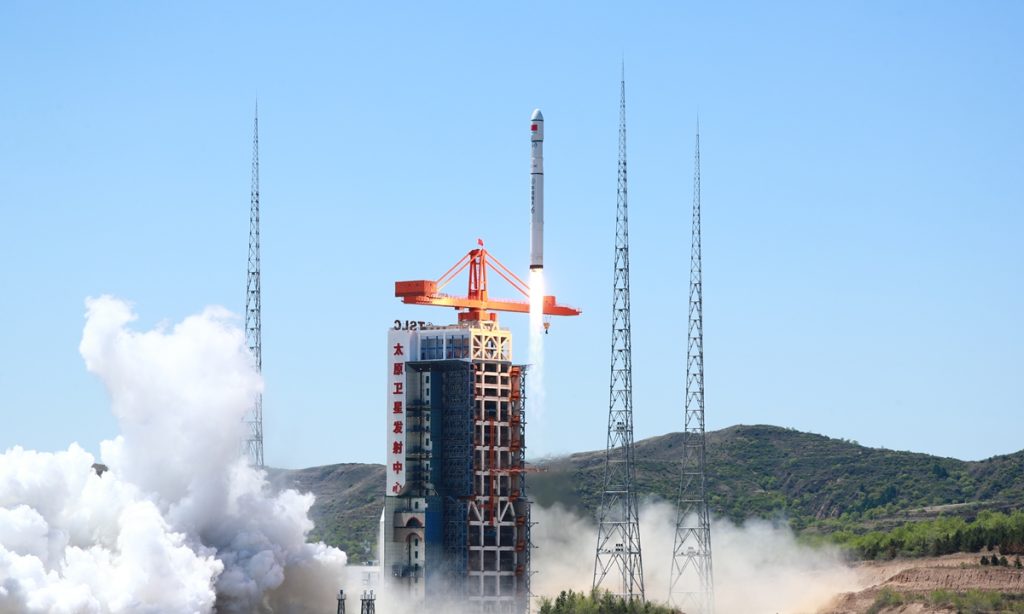
China successfully launched the first Long March-6C carrier rocket at the Taiyuan Satellite Launch Center in North China's Shanxi Province on Tuesday, carrying four satellites into planned orbit.
The rocket sent the Neptune-01 and Smart-1C, as well as a wide-band optical satellite and a high-resolution video satellite into space, according to China Aerospace Science and Technology Corporation (CASC). The mission marks the addition of new members to the Long March rocket family, further improving China's new generation of Long March series of launch vehicles, and promoting the accelerated modernization of China's active launch vehicles.
The rocket is a new generation of liquid launch vehicle developed by the CASC for the future commercial launch market, and it has a single-core and two-stage design, powered by liquid oxygen and kerosene engines.
The total length of the rocket is about 43 meters and its lift-off mass is about 215 tons. The rocket can be adapted with multi-specification satellite payload fairings according to different tasks.
The control system of this rocket adopts technology of Adaptive Augmentation Control (AAC), which is the first application of the technology on a domestic launch vehicle. The AAC can be simply understood as intelligent driving, which automatically adjusts the steering wheel and throttle by judging the road status, Hu Cunming, a rocket expert from the eighth Academy of CASC, told the Xinhua News Agency.
The technology can further enhance the adaptability and intelligence of the rocket's flight by adjusting the rocket's flight control strategy in real time online.
The development team developed a new lightweight storage box to realize the reduction of the rocket's weight by reducing the excess space between two boxes under the condition of carrying as much fuel as possible, which can further improve the structural efficiency of the rocket, Xinhua reported.
The team also used a method of "de-tasking" to maximize the unification of the product, by firstly creating a standard rocket that can adapt to multi-task requirements and can be put into production in rolling batches, and revising the standard rocket in accordance with the satellite supporting requirements, according to Xinhua.
The launch of the four satellites was a "carpool" mission carried out through commercialized bidding, and it was the first time that the launch services of the Long March series were put up for public bidding.
It was the 520th flight mission of the Long March series rockets.