The coast guard of east China's Fujian Province on Monday conducted routine law enforcement patrols in accordance with the law in the waters near Kinmen, said a spokesperson for a regional branch of China Coast Guard (CCG).
Since the beginning of June, the Fujian coast guard has dispatched task groups to strengthen control and management over relevant waters, said Zhu Anqing, spokesperson of the CCG Donghai Branch.
Zhu added that this is an effective step to protect the legitimate rights and interests, as well as the lives and property of fishermen on both sides of the Taiwan Strait, and to ensure orderly navigation and activities in the waters between Xiamen and Kinmen.
After spending one month aboard China's Tiangong space station, the Shenzhou-23 crew has continued a range of space science experiments, including collecting ultrasound data from different parts of their bodies, while also enjoying freshly baked pumpkin in orbit, according to the China Manned Space Agency (CMSA).
A video published by the CMSA on Sunday shows that taikonauts placed sweet pumpkin chunks into the space oven, bringing a touch of home-cooked warmth to life aboard the orbital outpost. Over the past week, the three crew members have maintained a busy and productive schedule.
In the field of space medicine, the crew used an ultrasound diagnostic device to perform ultrasound scans on one another's necks, wrists and abdomens. The data collected will support research on pan-vascular blood flow spectroscopy, spatiotemporal blood flow mapping, and the remodeling of muscle groups that are particularly sensitive to microgravity.
The Shenzhou-23 crew also interacted with the space robot Xiaohang, conducting touch-based interaction tests to collect data that will help optimize motion planning for robots operating in orbit. Having served aboard the Tiangong space station for more than a year, Xiaohang has now worked alongside four taikonaut crews.
Research into in-orbit electroencephalogram (EEG) testing has also progressed smoothly. The three taikonauts used EEG acquisition equipment to carry out a series of experiments, including tests on visual-motor processing and behavioral responses to different lighting conditions. Scientists on the ground will use the data transmitted from the space station for further research, according to CMSA.
In the field of microgravity physical science, the crew completed the installation of multiple experimental modules and units. They also carried out routine maintenance, including replacing samples in the containerless experiment chamber, servicing electrodes in the levitation system and cleaning observation window lenses.
As part of their health management program, the taikonauts used a traditional Chinese medicine diagnostic device to collect physiological data, providing researchers with information to support long-term health monitoring during extended space missions. They also used specialized equipment to help counter bone loss and maintained a regular exercise regimen in orbit. In addition, the crew carried out routine tasks such as organizing supplies aboard the space station.
China launched the Shenzhou-23 crewed spaceship on May 24. The mission is notable for including a one-year in-orbit stay experiment, which will provide crucial data for future long-duration space exploration, per Xinhua News Agency.
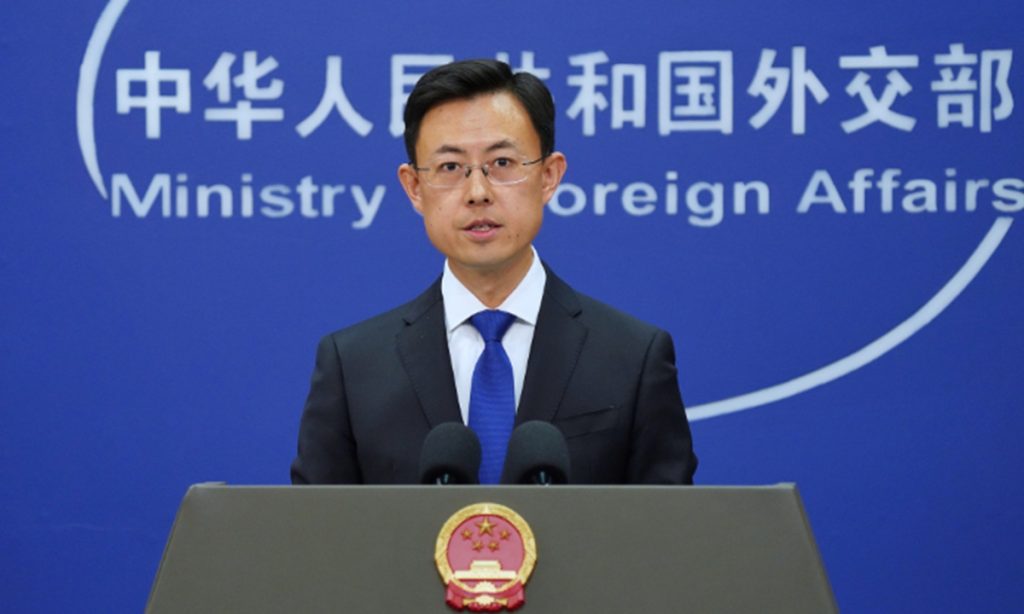
China supports the mediation efforts made by Pakistan, Qatar and other parties, and hopes that both Iran and the US will sustain the momentum of negotiations, continue to work towards each other, and strive for positive progress in the talks, Chinese Foreign Ministry spokesperson Guo Jiakun said on Monday, in response to an inquiry that mediated by Pakistan and Qatar, Iran and the US reached a consensus on Monday to establish communication line to safeguard shipping through Hormuz Strait and de-escalating the conflict in Lebanon.
Against the backdrop of cooled bilateral ties, travel insiders in China confirmed to the Global Times on Tuesday a further decline in both bookings and inquiries for trips to Japan, with Japanese media reports also citing government data showing six consecutive months of declining Chinese tourist arrivals.
The downward trend also comes as the government decided to raise visa fees for foreign nationals fivefold starting from July, according to media reports. Chinese experts stated that resurgent militarism in Japan has strained bilateral exchanges, while higher entry barriers risk further eroding its share of the regional tourism market, ultimately undermining Tokyo's own interests.
Japanese government data showed that the number of tourists from China fell for six consecutive months, plunging 60.4 percent over the year to 313,000, according to a previous report by Mainichi Shimbun in June. The report also noted that the number of foreign visitors to Japan in May fell 3.6 percent from a year earlier to 3.56 million due to a drop in travelers from China.
Since Japanese Prime Minister Sanae Takaichi made erroneous remarks on Taiwan, the number of Chinese mainland tourists traveling to Japan has continued to decline, putting pressure on Japan's retail, accommodation and catering sectors, the Xinhua News Agency reported.
A staff member from CYTS told the Global Times on Tuesday that the gradual drop began since late last year. Although its agency service for Japanese tourist visas remains in normal operation, inquiries in May were half the figure recorded in the same period last year.
Another industry insider, Xu Fengwei, a staff member from the marketing department of Tongcheng Travel, also told the Global Times on Tuesday that both bookings and inquiries for group tours to Japan have dropped markedly year-on-year, with weak demand for Japanese travel becoming a dominant trend among Chinese consumers.
Among tourists who previously enquired about trips to Japan, destinations including Thailand, Spain and Brazil have emerged as alternatives, Xu added. Flight bookings to Thailand surged over 30 percent year-on-year for the same period in May. Demand also saw substantial growth for long-haul hotspots including Central Asia, Brazil, Spain and Portugal.
The continued decline in Chinese tourist arrivals to Japan is primarily attributed to the current state of China-Japan relations, with strained bilateral ties sharply reducing travel demand from China. Domestic social instability in Japan has also weighed on visitor numbers, further undermining its appeal as a travel destination, Lü Chao, an expert at the Liaoning Academy of Social Sciences, told the Global Times.
In recent months, the Chinese Embassy in Japan has issued a series of safety advisories reminding Chinese nationals to safeguard personal security, citing multiple incidents where Chinese visitors suffered harassment or physical assaults.
The Chinese Embassy in Japan issued a statement on its official WeChat account in April, citing a series of recent incidents involving Chinese nationals. These include a case in which an active-duty member of Japan's Self-Defense Forces scaled a wall and broke into the Chinese embassy while carrying a knife, as well as reports of right-wing individuals harassing Chinese spectators at a marathon event. In addition, Chinese students were targeted in "bumping assault" on the streets in Tokyo, while a Hong Kong tourist was assaulted at a restaurant in Hokkaido.
The embassy noted that these cases reflect a growing presence of rampant right-wing activities in Japan, a noticeable increase in discriminatory incidents targeting Chinese nationals, and a continuously rising safety risk for Chinese citizens in Japan, Xinhua reported.
More broadly, resurgent militarism in Japan, along with provocative actions toward China, has contributed to a deterioration in bilateral people-to-people and economic exchanges, and the moves resulted in significant losses for Japan itself, Lü said.
The decline also coincided with a government decision to raise the fees for visas for foreign nationals by revising a related Cabinet order, according to the Japan Times on Saturday. The decision, made at a Cabinet meeting, marks the first revision of the visa fees in 48 years, since 1978.
The fee will be increased from the current 3,000 yen ($18.5) to 15,000 yen for a single-entry visa and from 6,000 yen to 30,000 yen for a multiple-entry visa. The new fees will apply to applications submitted on or after July 1, per the report.
Japanese Foreign Minister Motegi Toshimitsu told reporters that the current visa fees were reviewed in response to rising prices and changes in foreign exchange rates, according to the report by NHK.
Higher visa fees are likely to deter price-sensitive and short-stay visitors, with smaller regional cities and rural areas—those most reliant on inbound tourism—expected to be the first to feel the impact. These destinations risk losing a key source of visitors as a result of a short-sighted approach, Sun Shengnan, associate professor at Shanghai University of Political Science and Law, told the Global Times.
At the same time, in an increasingly competitive global tourism market, neighboring countries such as South Korea and Thailand are well positioned to absorb diverted demand, Sun said, adding that by raising barriers to entry, Japan risks ceding a significant share of the regional tourism market.
Sun added that this policy move by Japan's government may provide a short-term boost to government revenues, yet sacrifices the country's open international reputation and dynamism of regional industries in the process.
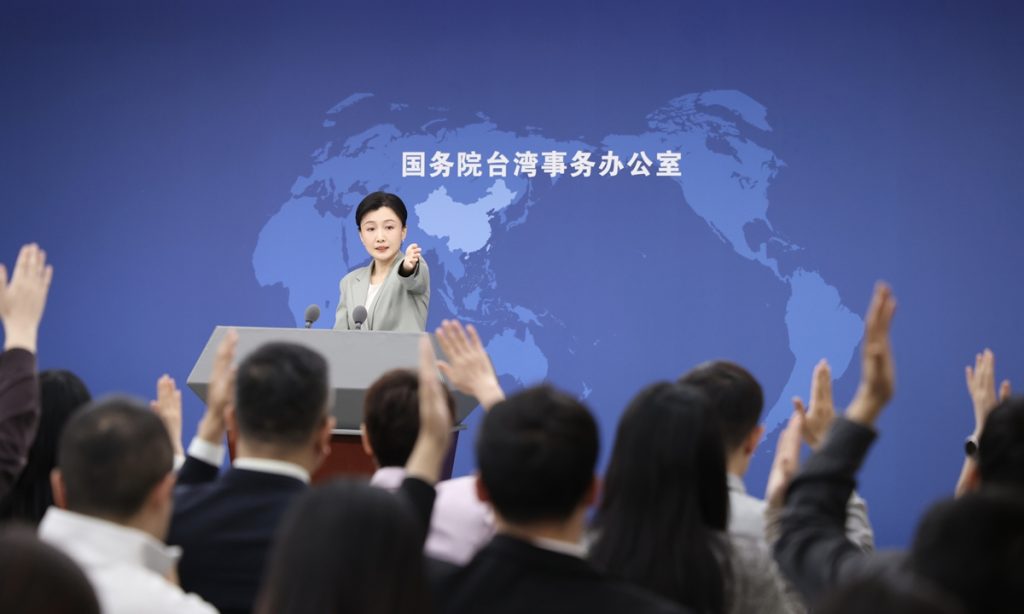
When asked to comment on reports that Taiwan region's military is carrying out the so-called "Immediate Combat Readiness Exercises" and claiming that the drills aim to verify the emergency response capacity and joint combat capabilities of all operational zones in the event that Chinese mainland takes action, Zhang Han, a spokesperson for the Taiwan Affairs Office of the State Council, said on Wednesday that these so-called drills lay bare the Democratic Progressive Party (DPP) authorities' sinister attempt to seek independence through military buildup. This also fully exposes them as the fundamental source stoking cross-Straits confrontation and triggering tensions and turbulence across the Straits, Zhang added.
Faced with the powerful Chinese People's Liberation Army, the DPP authorities' hollow saber-rattling is completely futile, Zhang said, adding that their reckless moves will only bring disaster and ruin to Taiwan and lead to their own self-destruction.
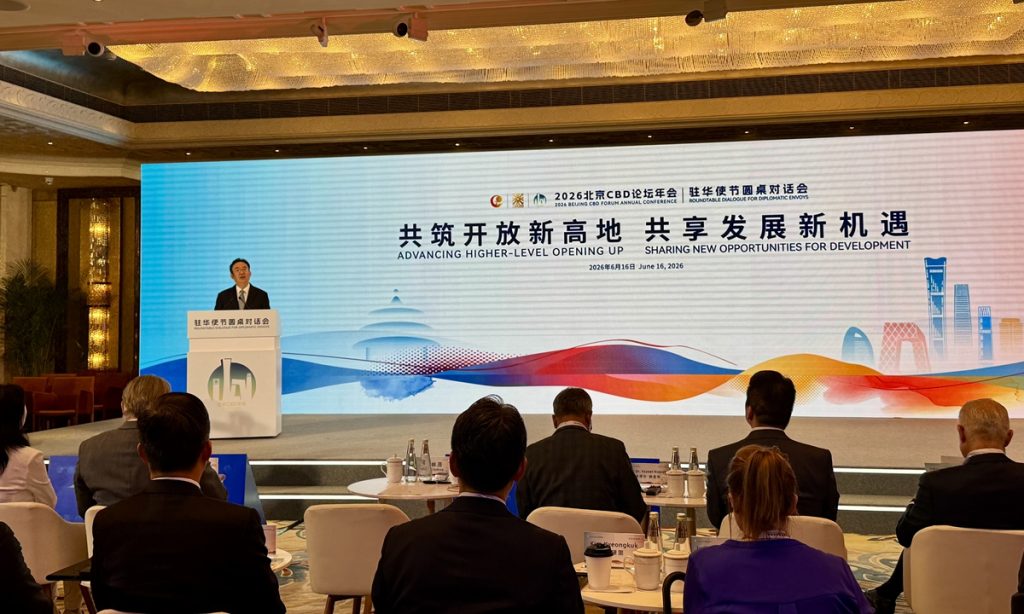
2026 Beijing CBD Forum Annual Conference is held in Beijing on Tuesday to implement the strategic deployment of high-level opening-up and deepen practical cooperation between China and other countries. In one of the four flagship events, for the first time, the forum also hosted a roundtable dialogue for diplomatic envoys. Under the theme of "advancing high-level opening-up, sharing new opportunities for development," ambassadors and diplomats highlighted their views on the new opportunities unleashed thanks to China's continuing opening-up.
In his keynote speech, Xia Linmao, member of the Standing Committee of the Communist Party of China (CPC) Beijing Municipal Committee and executive vice mayor of Beijing, said that 2026 marks the start of China's 15th Five-Year Plan period (2026-30). The Chinese government has formulated the outline for this plan, injecting strong momentum into efforts to deepen international exchange and collaboration across various fields.
In the session of country promotion, North Macedonia's Ambassador to China Sashko Nasev shared that China and North Macedonia enjoy a very close cooperative relationship, and China is the country's fourth-largest international trading partner. Carlos Vasquez, Peruvian ambassador to China, introduced that in 2025, 34 percent of Peru's exports went to China. China is also Peru's largest trading partner.
2026 marks the 55th anniversary of the establishment of diplomatic relations between China and Peru. On this occasion, the ambassador also shared civilization exhibitions staged in both Beijing and Shanghai in the celebration of the event.
Ambassador Vasquez told the Global Times that China's 15th Five-Year Plan (2026-30), which was adopted three months ago, prioritizes boosting domestic consumption and advancing consumption-driven growth. This means Chinese consumers will have greater disposable capacity to spend, which is excellent news for Latin American and Caribbean (LAC) countries such as Peru that aim to expand agricultural exports to China.
He said that beyond boosting consumption, China's 15th Five-Year Plan (2026-30) also places heavy emphasis on green development.
"Peru must gradually transform its energy mix, as our current power supply still relies heavily on fossil fuels and non-renewable resources. We need to restructure our energy system step by step, and China can partner with Peru to help us achieve this goal," Ambassador Vasquez elaborated. Vusal Gurbanov, second secretary of the Embassy of the Republic of Azerbaijan in China, told the Global Times that as an important blueprint for China's development, China's 15th Five-Year Plan (2026-30) will also create new opportunities for Global South countries. He noted that the plan offers broad prospects for cooperation with Asian countries, including Azerbaijan, in connectivity, green energy, the digital economy, logistics, industrial modernization and innovation. China's commitment to high-standard opening-up, technological innovation and green development will further expand bilateral cooperation and promote regional connectivity and shared prosperity across Eurasia.
Moreover, 2026 marks the fifth anniversary of the Global Development Initiative (GDI).
Gurbanov also highlighted it as an important platform for sustainable and inclusive development. Azerbaijan strongly supports the initiative, which provides opportunities in economic diversification, green development, digital transformation, infrastructure connectivity and innovation-driven growth. He stressed that deeper cooperation between China and other countries can advance mutual development and regional prosperity.
By strengthening practical cooperation and regional connectivity, Asian countries and China can advance mutually beneficial development and contribute to a more prosperous and resilient region, he affirmed.
Ambassador Vasquez noted that for the Global South, the GDI is meaningful because: Development requires innovation, and infrastructure is critical for real development - not just growth. Growth does not equal development. Development means balanced, inclusive progress.
The GDI helps the Global South rethink how to pursue sustainable development. It provides a valuable framework for dialogue and cooperation among developing countries, Vasquez said.
Oscar Felipe Rueda, commercial counselor of the Embassy of the Republic of Colombia in China, told the Global Times that thanks to China's high-level opening-up, "We see that China has successfully strengthened its integration into the global economy, fostering sustainable and inclusive growth and becoming one of the key engines of global economic growth."
Felipe added that China is a reliable economic partner and a key driver of global growth. He highlighted growing opportunities for cooperation, especially in the EV sector, and expressed hope that Chinese automakers will invest and manufacture in Colombia to support local industrial development.
Xi Jinping, general secretary of the Communist Party of China (CPC) Central Committee, has called on Party members in the new era to carry forward revolutionary traditions and strive for new accomplishments on the new journey.
Xi, also Chinese president and chairman of the Central Military Commission, made the remarks in a reply letter to Zhang Liansheng, a 102-year-old Party member with Xinhua News Agency, ahead of the 105th founding anniversary of the CPC.
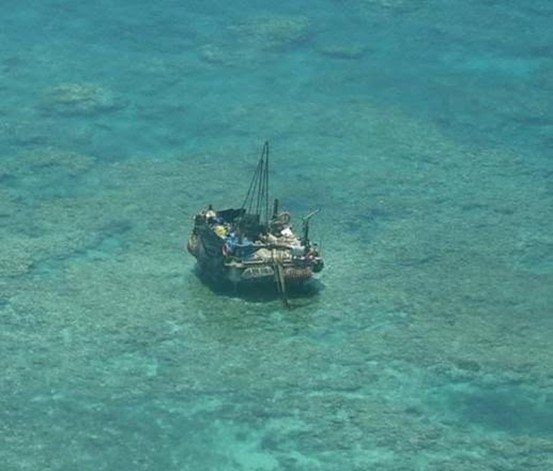
Recently, the Philippine side has repeatedly hyped up an alleged "new structure" that was observed inside the lagoon of China's Huangyan Dao. On Wednesday local time, the Philippine authorities held a briefing, releasing what it called "details" of the so-called floating structure found at China's Huangyan Dao, along with related aerial images, while making irresponsible remarks about China's normal activities at Huangyan Dao.
The Global Times reporter has learned that the so-called "new structure" at Huangyan Dao recently hyped by the Philippine side is in fact temporary scientific research facilities set up there by the South China Sea Institute of Oceanology under the Chinese Academy of Sciences. The facilities are floating in-situ sampling and experimental platforms that can be used to enhance ecological understanding and forecasting of Huangyan Dao.
Regarding the Philippine side's hype over the so-called "new structure" at Huangyan Dao, Chinese Foreign Ministry spokespersons responded twice at regular press conferences respectively on June 5 and June 9. The spokespersons said China has indisputable sovereignty over Huangyan Dao and its adjacent waters. Any activities carried out by China at Huangyan Dao, including scientific research, are the legitimate rights of a sovereign country.
China has long made public the scientific research nature of the new facilities at Huangyan Dao. However, the Philippine side has chosen to ignore China's efforts to protect the ecology of islands and reefs in the South China Sea and has continued its smear campaign. According to Philippine media outlets including ABS-CBN, Philippine Coast Guard spokesperson Jay Tarriela displayed photos of the so-called "new structure" recently taken by the Philippine Coast Guard at a briefing on June 10 local time.
Tarriela described the so-called "new structure" as a movable floating platform with a deck area of more than 30 square meters and fitted with metal poles. The chief of staff of the Armed Forces of the Philippines, Gen. Romeo Brawner claimed in an official statement that the structure appeared to be equipped with antennas and that personnel were seen on it. As for the scientific research activities that China had made public, Tarriela gave a vague response, claiming he did not know its specific purpose. Some Philippine officials also claimed that China's activities could be a precursor to more permanent facilities.
After a series of strenuous "performances" by Philippine officials, the South China Sea Institute of Oceanology under the Chinese Academy of Sciences, which carried out the scientific research activity, released information on June 10 about the research operation and the results achieved. The South China Sea Institute of Oceanology under the Chinese Academy of Sciences said that since May 20, 2026, it has led a comprehensive scientific expedition on the development, evolution and ecological resilience of Huangyan Dao. The expedition aims to deepen understanding of the patterns and trends in the development and evolution of Huangyan Dao's islands and reefs, the mechanisms sustaining coral reef biodiversity, and their ecological connectivity with islands and reefs in the Xisha and Nansha areas. So far, the research team has conducted a comprehensive survey covering the entire Huangyan Dao atoll.
The so-called "new structure" hyped by the Philippine side is in fact a floating in-situ sampling and experimental platform set up by the research team in the waters of Huangyan Dao. The platform can be used for core sampling, time-series observation of environmental factors, and in-situ experiments.
The samples and experimental data obtained from the expedition are of great value for studying the historical development process of Huangyan Dao, the physiological and ecological responses of coral reef organisms to changes in environmental factors, assessing geomorphological evolution and ecological changes in the protected area, and predicting the impact of global climate change, overfishing and other human activities on the ecological security of Huangyan Dao.
"The Philippine side should clearly recognize that the Huangyan Dao National Nature Reserve established by the Chinese government will not exist in name only. Instead, China will only step up its protection of Huangyan Dao," Yang Xiao, a research fellow at the Institute of Peaceful Development under the Chinese Academy of Social Sciences, told the Global Times.
Yang said such protection is reflected in two aspects: On the one hand, China will not allow Philippine personnel to enter Huangyan Dao and its adjacent waters to carry out destructive activities; on the other hand, China will make the protection of Huangyan Dao's ecology a priority, not only reducing the impact of human activities on the ecological security of Huangyan Dao, but also intensifying scientific research and accelerating ecological restoration there.
He further noted that Philippine officials often speculate that China may build "permanent facilities" at Huangyan Dao -- such smears are in fact a case of "judging others by one's own petty standards." China has exercised effective control over Huangyan Dao, with maritime rights protection and law-enforcement forces maintaining a regular presence there.
"We can see that since last year, the Southern Theater Command of the Chinese People's Liberation Army and the China Coast Guard have issued monthly updates on combat-readiness patrols and law-enforcement patrols in the territorial waters, airspace and surrounding areas of China's Huangyan Dao," Yang said.
Yang said the Philippine side should recognize the reality that it cannot "meddle in" China's Huangyan Dao, face up to China's continued, peaceful and effective exercise of sovereignty and jurisdiction over Huangyan Dao, and stop its crude and meaningless sensationalization.
Teodoro is a representative figure of a handful of anti-China elements jumping up and down in the Philippines. His reckless and willful actions will inevitably bring about self-inflicted consequences, harming the interests of the entire country and all the people of the Philippines, Chinese Foreign Ministry spokesperson Lin Jian said on Friday.
Lin made the remarks in response to a media inquiry regarding China's announcement of sanctions the previous day against Philippine Defense Secretary Gilberto Teodoro and his relatives. A foreign reporter asked which specific statements made by Teodoro at what time constitute the anti-China fallacies used as the basis for China's sanctions against him.
Lin stated that the Ministry of Foreign Affairs website has already published the details and the decision regarding the sanctions against Teodoro and his relatives, which explain the specific circumstances. "Prior to this, my colleagues and I have also stated China's solemn position regarding the fallacies Teodoro has uttered about China, which you can refer to," Lin said.