Renowned brand survey reveals China's soft power ranks in world’s top 3 for first time
Editor's Note:

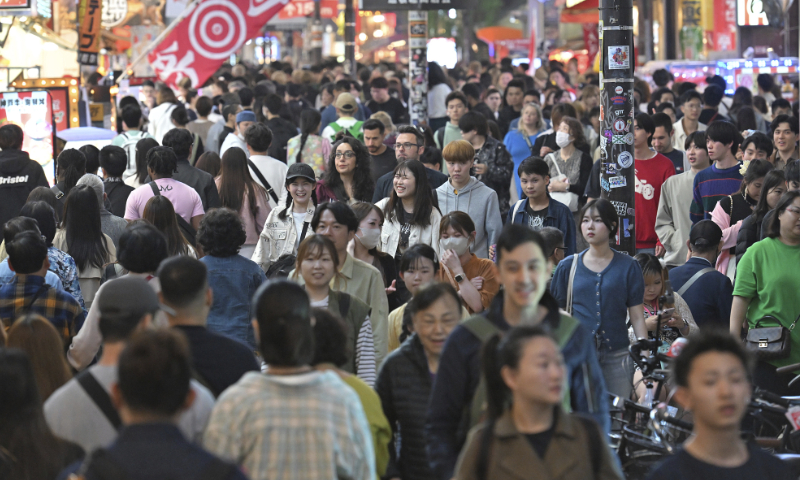
Brand Finance, the internationally renowned brand valuation agency based in London, recently released the "Global Soft Power Index 2024," which shows that the US and the UK have maintained their positions as the top two most influential countries in global soft power. It is noteworthy that China is the fastest-growing nation brand this year, surpassing Japan and Germany, and for the first time, ranking third in the soft power index, with the country's progress exceeding that of any other country.

Brand Finance has been tracking the performance of global soft power in multiple countries for five consecutive years, and this year's report is based on surveys of over 170,000 respondents from more than 100 countries, ranking all 193 member states of the United Nations for the first time.

What is behind the world's fastest-growing soft power? The Global Times recently interviewed Brand Finance's officials, as well as scholars and observers from various countries, to discuss how China's soft power is steadily improving and bringing benefits to the world.

Two pillars

According to Scott Chen, Managing Director China of Brand Finance, the agency defines soft power as "a nation's ability to influence the preferences and behaviors of various actors in the international arena - states, corporations, communities, public, and etc. - through attraction or persuasion rather than coercion."

Chen told the Global Times that the Global Soft Power Index is a research study, commissioned by Brand Finance, covering 193 countries around the world. With responses from more than 170,000 people in over 100 markets, the survey is also the most comprehensive and extensive field survey of its kind.

To conduct the fieldwork, in more developed markets, Brand Finance's established online research panels were used, Chen noted. "Each respondent was shown a random sub-set of nation brands - drawn from the 193 [countries] included in the Index - and asked about their familiarity. For countries about which the respondent had some knowledge, we obtained a detailed assessment of reputation, influence, and performance on 35 characteristics representing the core 8 Soft Power Pillars," he said.

In the 2024 Brand Finance Global Soft Power Index, China made the most significant advancement among all nations, rising from fifth to third place, and its overall score increased by 6.2 points from 65.0 to 71.2 over the previous year.

Chen explained that this growth is due to China's significant improvement in the two pillars of "Business and Trade," and "Education and Science."

"Our latest research finds that the Business and Trade pillars are crucial indicators of a nation's global influence. This directly reflects a nation's economic strength, innovation, and integration into the global market," Chen said.

Chen pointed out that in terms of soft power, Brand Finance found that a nation's ability to engage in trade effectively, maintain economic stability, and provide attractive investment opportunities is pivotal in shaping global perceptions.

In terms of specific indicators, China's performance is equally impressive. Since the first release of the Global Impact Index report in 2020, China has been ranked first in the world for being "easy to do business with" under the Business and Trade pillar, and has been No.1 for "future growth potential." In the education and science pillar, China ranks second in the world in indicators such as being a "leader in technology and innovation" and "invests in space exploration."

Chen noted that soft power holds immense significance for a nation as it enables it to exert influence, shape perceptions, and achieve goals.

"A nation's soft power, encompassing its culture and heritage, people and values, and international relations, enhances its reputation and fosters goodwill with other nations. By promoting such attributes, a nation can effectively engage with the global community and enhance its interests on the global stage. Soft power ultimately serves as a crucial tool, not just for diplomacy, but also for economic development, by attracting investment, trade, talent, and tourism to a nation," he said.

Multiple drive

Several years ago, back when BlackBerry phones were popular in the US, some of my friends wanted to keep up with the trend, yet couldn't afford them, so they bought Chinese knock-offs instead. During dates with their girlfriends, they were often too embarrassed to bring out their "fake BlackBerries." However, things are completely different now. "Made in China" is no longer synonymous with "inferior" or "counterfeit." Many Indonesians are using Chinese-made smartphones like Oppo, Vivo, or Xiaomi, and TikTok, whose user base has surpassed that of YouTube, Novi Basuki, a prominent Indonesian sinologist, told the Global Times.

The shift in Indonesians' perception of "Made in China" reflects China's enhanced soft power. Observers have pointed out that such enhancement is driven by multiple factors.

For example, in terms of electronics, China currently offers high-quality products at highly competitive prices, which continues to contribute to an enhanced perception of having "products and brands the world loves," for which the nation ranks 6th overall, Chen noted.

At the same time, Chen pointed out that while being ranked third overall in the index, China performs strongly in attributes such as "easy to do business with" and "future growth potential," with a prime example being the Belt and Road Initiative (BRI).

"As key objectives of the initiative, China's focus on promoting economic development, both domestically and among participating nations, especially in areas lacking infrastructure, has been key. Additionally, the BRI has played a role in facilitating international trade," he said.

In terms of the index of Education and Science, Chen noted that Brand Finance's latest research found that China has made significant strides in recent years. Underscored by various breakthroughs in areas like Artificial Intelligence, renewable energy, and space exploration, China has been able to cultivate an international reputation for its innovation capabilities and technological prowess.

The answer to this conclusion can be found in the cooperation between China and many countries in the world.

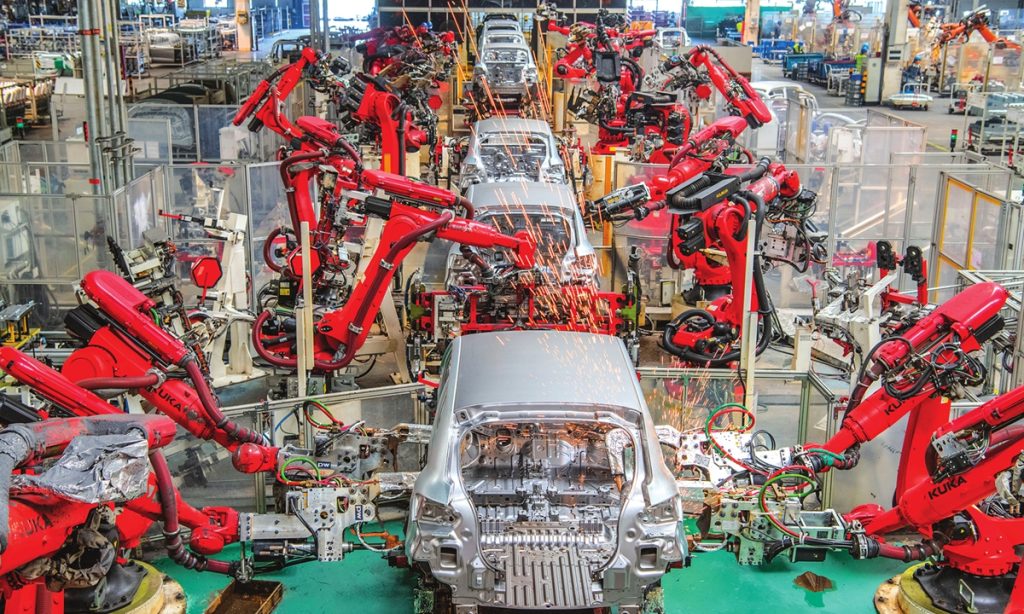
For example, in Brazil, people's views on China's soft power regarding are undergoing positive changes. Surveys conducted by the Pew Research Center show that about 70 percent of respondents from Latin American countries approve of China's technological development. Chinese cars, especially new energy vehicles (NEVs), are favored by Latin Americans for their excellent performance, cost-effectiveness, and technological advantages.

"In recent years, more and more Chinese companies have invested in Brazil, bringing not only capital but also advanced management techniques, creating a large number of job opportunities for the locals," Letícia, a Brazilian student majoring in international relations, told the Global Times.

According to statistics released by Chinese Customs, in 2023, China's exports of electromechanical products reached 13.92 trillion yuan ($1.92 trillion) with an increase of 2.9 percent, accounting for 58.6 percent of total exports. Among these products, the combined export of the New Trio, which includes electric vehicles, lithium-ion batteries, and solar cells, increased by 29.9 percent and reached 1.06 trillion yuan, breaking the trillion-yuan mark for the first time.

The Financial Times recently reported that thanks to excellent performance and affordability, the market sales of Chinese NEVs continue to grow, with obvious advantages over their counterparts from other countries. Mathias Miedreich, CEO of Umicore headquartered in Belgium, which is part of the NEV supply chain, stated that Chinese electric vehicles are good enough and provide what the market and consumers truly need.
Significant trend

In the 2024 Index, Brand Finance highlights a significant trend: hard power undermines soft power. "Going back to Brand Finance's definition of soft power, in that it revolves around influence through persuasion or attraction, rather than coercion, hard power - which is often associated with military strength - tends to undermine this approach by its very nature of coercion," Chen explained.

In my view, China's rise in the global soft power index reflects the world's appreciation for a country with great civilization and culture. It's also a positive response to the achievements that the country has made in technological innovation and development, Enrique Cornejo, a Peruvian political and economic analyst, told the Global Times.

Li Long, Executive Vice President of the Institute of Public Opinion and Social Governance at the South China Normal University, analyzed the three reasons why China's soft power has left a deep impression on the international community.

First, China embraces openness and inclusiveness. It has implemented a series of new policies and measures to strengthen its connections with the world. Activities such as trade, tourism, and cultural exchanges are becoming more frequent, and China continues to provide internationally shared public goods and services, promoting the construction of an open world economy.

Second, it values technological innovation, a core element of developing new productive forces. The country is enhancing its technology and capacity for independent research and development.

Third, China calls for cooperation and mutual benefit. As a responsible major country, China has always adhered to the principles of peaceful development and mutual benefit, actively promoting peace and development in the international community.

"Peruvians believe that China's soft power manifests a friendly value system, which distinguishes it from other influential countries, whether in North America or Europe," Juan Carlos Capuay Chávez, former Peruvian Ambassador to China, told the Global Times.

Julien Segbo, Director of the Confucius Institute at Benin's University of Abomey-Calavi, said that more and more African students are choosing to study in China. "It's not only because China offers a variety of scholarship programs, but also because the quality of higher education in China is gaining wide recognition. Like many classmates, I came to China for education. I have gained professional knowledge here, broadened my horizons and experienced the charm of different cultures."

According to Al Gomhuria, a state-owned Egyptian Arabic language daily newspaper, China's economic and trade cooperation with Africa has driven the development of local African companies and increased job opportunities.

China's educational aid projects have improved education in Africa, providing the younger generation with broader room for development. The friendly cooperation between China and Africa has not only promoted the economic development of both sides, but also deepened the emotional bond between the two peoples.

Analysts pointed out that although some Western media often report on China-related news from the perspective of Western values and political positions, leading to a higher proportion of critical reports on certain Chinese policies and actions.

However, currently, many countries, especially in developing countries, recognize China's soft power and influence. With the deepening of globalization and the diversification of information channels, more and more people are beginning to understand China through various means, including direct visits to China, participating in cultural exchange activities, and social media. More and more people are looking forward to China's soft power accelerating further.
Chinese agricultural experts see great potential for soybean imports from Russia, a win-win cooperation

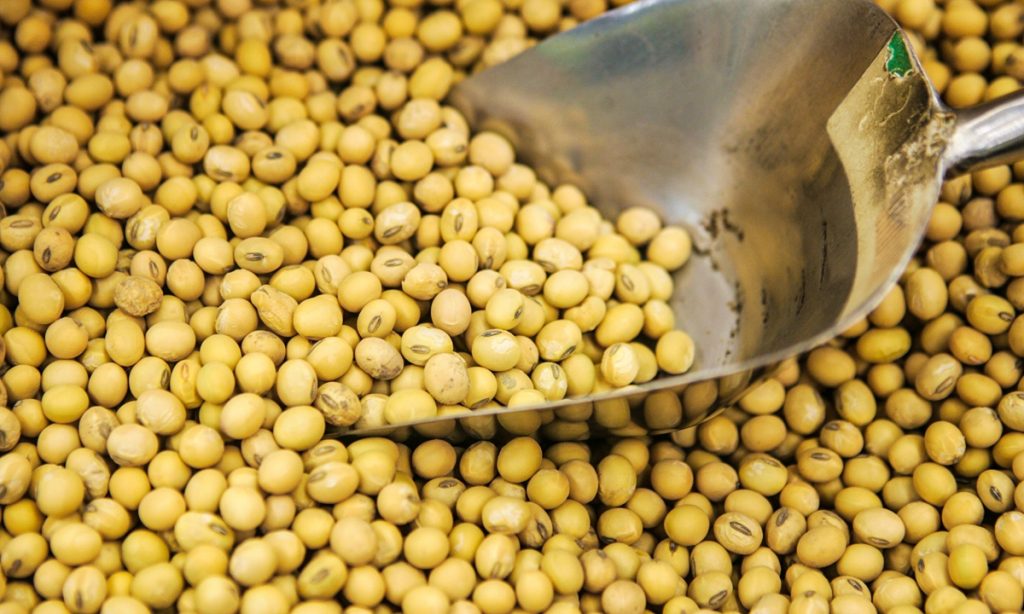
China is promoting high-quality imports of soybeans alongside its growing domestic production. Chinese agricultural experts and industry insiders noted that the cooperation between China and Russia in the soybean industry serves as win-win cooperation which not only meets China's growing import demand, but also provides Russia with a huge export market and development opportunities.

Agricultural experts from China and Russia have conducted in-depth discussions on bilateral cooperation, food security, food processing, providing suggestions and support for the development of agriculture in both countries, chinanews.com reported.

The meeting was held amid the ongoing eighth China-Russia Expo from May 16 to 21 in Harbin, Northeast China's Heilongjiang Province, which borders Russia's Far East region. Analysts said that Russia has huge potential in soybean cultivation and exports, which is also an important focus of cooperation between the two sides.

The cooperation between China and Russia in various fields such as energy, agriculture, finance, infrastructure is accelerating. Meanwhile, business representatives from the two countries remain enthusiastic about the future of bilateral trade ties.

Driven by the market need for diversifying sources of supplies for food security reasons while reducing reliance on singular suppliers, it is believed that China's soybean imports from Russia will increase in the near future, experts said.

Russia is also likely to become a major supplier of carbohydrate foods such as wheat, rice, and corn to China, reducing the country's reliance on protein (mainly referring to soybeans) imports from the US. This shift in trade dynamics will strengthen the cooperation between China and Russia in the agricultural sector, an industry insider told the Global Times on Thursday.

"Russia's extensive landmass and suitable climate in the east, which resembles that of China's key soybean producing regions including Heilongjiang, have led it to becoming an emerging soybean supplier for China," Xin Dawei, a professor at the Northeast Agricultural University told the Global Times on Thursday.

In fact, Russia has become one of the important importers of non-genetically modified soybeans for China. As Russia has started to develop its Far Eastern region, soybean trade between the two countries will see new impetus, Xin said.

China's soybean supply remains stable on the market as domestic output is steadily increasing, coupled with sufficient imports. China's soybean production reached 41.68 billion jin (20.84 million tons), an increase of 2.8 percent year-on-year, data from the National Bureau of Statistics showed.

China is one of the largest markets for agricultural commodities and also the world's largest importer of soybeans. As the supply and demand of grains in China have long been in a tight balance, moderate imports are important to ensure China's food security, effectively compensating for the structural shortage of grain production, Chen Yijuan, a soybean analyst from Shanghai told the Global Times.

In 2023, China imported 99.4 million tons of soybeans in total, an increase of 11.4 percent year-on-year, with an import value of 419.9 billion yuan ($58.1 billion), according to statistics from the General Administration of Customs of China.

Currently, the US and Brazil both serve as primary sources of China's soybean imports, with the proportion of China's agricultural imports from Brazil steadily increasing. Among them, Brazil's share rose to 70 percent, while the US share decreased to 24 percent, according to public data.

Industry insiders said that the reason China now seeks to import substitutes from Brazil, Argentina and Russia is because their lower prices are still cheaper compared with domestically produced soybeans. They predicted that there will be more cooperation and development opportunities in the field of agriculture between China and Russia.

Chinese companies seek to stay ahead in AI competition

Chinese tech companies such as Tencent, Alibaba and ByteDance are working hard to upgrade powerful large language models (LLMs) that power chatbots, in an effort to stay ahead of the growing competition in the artificial intelligence (AI) arms race.

Tencent said it has fully upgraded and open-sourced its self-developed MixNet model, amid a battle by tech companies to develop ever-more advanced AI tools, according to Jiemian News on Tuesday.

The model will reportedly become the first Chinese native-language open-source model with so-called diffusion transformer architecture, a novel approach to generative modeling.

The release of Tencent's LLM coincides with OpenAI's new flagship model GPT-4o on Tuesday. GPT-4o is an LLM tool that can reason across audio, vision and text in real time.

According to the company's statement, this new application has significant improvement in text in non-English languages, and it's also much faster and 50 percent cheaper.

The new release comes one day ahead of Google's annual I/O developer conference, where it's expected to announce updates to its Gemini AI model, according to CNN. 

The roll-out of the latest version of the ChatGPT AI chatbot indicates that OpenAI is under great pressure to commercialize its models, and it is working hard to prove its commercial value, Tian Feng, dean of the SenseTime Intelligence Industry Research Institute, told the Global Times on Tuesday.

As Chinese companies have been racing to launch AI large models to narrow the gap with OpenAI, it will deliver a wave of "AIGA innovation," AI generates audio and sound perception, to China's domestic LLMs and Agents ecosystem, Tian noted.

Technological advances are the most powerful weapons in the journey toward AI, and they are key to keeping one step ahead of the growing competition in the AI arms race, experts said.

Leading Chinese AI models are mainly developed by tech giants - 360 Group, Baidu, Tencent and Alibaba, experts said.

Baidu, SenseTime and AI start-ups such as Baichuan Intelligent Technology and Zhipu AI have released AI chatbots to the public. Chinese unicorns such as Moonshot AI and Minimax have developed their own chatbots, and this has provoked discussions about the commercialization prospects of China's LLMs.

As of the end of 2023, there were more than 200 LLMs in China, more than 20 of which had been approved to provide services to the public, China Media Group reported.

More Chinese technology giants are fully embracing LLMs and training their own models. But aAdmitting that there is still a significant gap between domestic LLMs and those of their Western counterparts, Chinese experts said it's important for Chinese start-ups to follow the latest global developments in order for China's own GPTs to catch up.

Industry insiders said that Chinese companies need to make more technology breakthroughs and use the results of research and development, and apply all of these inputs to real-world scenarios.

The integration of AI into more widely used consumer products such as such as mobile assistants, car assistants, robots and Augmented Reality goggles, may make those companies' technologies more widely and easily accessible.

China-Russia Expo offers dynamic platform for boosting trade, economic cooperation: MOFCOM

The China-Russia Expo, the highest-level and most extensive exhibition hosted by the two countries, has become a major platform for fostering industrial partnerships, and a pivotal avenue for local collaborative initiatives, said an official from the Ministry of Commerce (MOFCOM) during a press conference on Monday, while also pledging to facilitate and intensify bilateral trade ties and regional cooperation in the future.

The remarks were made in anticipation of the upcoming 8th China-Russia Expo. As part of the 75th-anniversary celebrations of China-Russia diplomatic relations, the six-day event will be held in Harbin, the capital of northeast China's Heilongjiang Province from May 16 to 21, coinciding with the 33rd China Harbin International Economic and Trade Fair. 

With a theme of "cooperation, trust, and opportunities," the expo will focus on various sectors such as cultural tourism, high-tech equipment, traditional and alternative energy, finance, and education among others, aiming to foster comprehensive, multi-faceted, and profound exchanges and collaborations between the two countries, said a local official from Heilongjiang.

This year's expo is expected to achieve records in both scale and influence. Russian exhibitors will comprise 137 companies, occupying a record-breaking 3,267 square meters of exhibition space. Additionally, 1,246 companies from 21 provinces, regions, and municipalities across China will participate, showcasing the tangible implementation of the China-Russia comprehensive strategic partnership of coordination for a new era, according to local media reports.

Since it was inaugurated in 2014, the expo has attracted over 7,200 Chinese-Russian companies and 10.05 million attendees, resulting in deals worth 446.8 billion yuan ($61.99 billion) across various sectors. Over the past decade, the expo's features have gradually shifted from traditional sectors such as energy, minerals, and mechanical electronics to emerging sectors including medical devices, the digital economy and new energy, said Liu Xuesong, director of the Department of Eurasia Affairs at MOFCOM.

Under the new paradigm of China-Russia relations, economic and trade cooperation between the two sides has made significant strides in recent years. In the first quarter of 2024, the bilateral trade volume was $56.68 billion, up by 5.2 percent year-on-year, maintaining an upward trajectory. Moreover, the trade structure continues to improve, with increasing ties in emerging areas such as services trade and cross-border e-commerce, according to official data.

Looking ahead, Liu pledged at the press conference to further enhance China-Russia trade and investment cooperation, bolster the resilience of industrial supply chains, and elevate the facilitation and liberalization of bilateral and regional ties, in a bid to foster a favorable policy environment for expanding bilateral trade.

The China-Russia Expo is jointly hosted by China's MOFCOM, the Heilongjiang provincial government, Russia's Ministry of Economic Development, and its Ministry of Industry and Trade. The 7th expo was held from July 10 to 13 last year in Yekaterinburg, Russia. 

HK tourism board welcomes more mainland visitors, calling it ‘gift’ to boost local economy

The Chinese central government announced on Saturday a new policy that allows travelers from eight more cities in the Chinese mainland to visit the Hong Kong Special Administrative Region (HKSAR) as individuals. 

The move was strongly welcomed by both officials in the HKSAR and visitors from the mainland cities.

Pang Yiu-Kai, chairman of the Hong Kong Tourism Board (HKTB), welcomed the move, saying that the latest expansion is a "gift" for the sector, and Beijing's decision to update the program twice in three months reflected its "full support and confidence" in Hong Kong's development, according to the South China Morning Post.

The HKTB will roll out some "large-scale events" and step up promotions in the mainland cities and invite tourism representatives to come to Hong Kong, Pang said. 

With the addition of the eight cities, the number of applicable mainland cities under the "Individual Travel" plan will increase from 51 to 59. The added cities are Taiyuan, Hohhot, Harbin, Lanzhou, Yinchuan, Lhasa and Xining.

Experts said that with more and more mainland cities opening up for individual travel, Hong Kong will attract more tourists from the broader mainland market. Closer exchanges between Hong Kong and the mainland will inject new vitality into the local tourism industry.

HKSAR Chief Executive John Lee expressed his gratitude with regard to the central government's care for Hong Kong and its support for Hong Kong's advance from stability to prosperity, according to the website of the HKSAR government.

Lee noted that various measures have been rolled out this year to support and benefit Hong Kong. The latest move will boost tourism and the economic development of Hong Kong, and facilitate people-to-people bonds between the mainland and Hong Kong.

Hong Kong's Mass Transit Railway welcomed the addition of the new cities and said it was dedicated to providing high-quality, convenient cross-boundary services.

This new arrangement will attract more mainland tourists to Hong Kong, and Hong Kong's overall economic development will benefit from the tourism boom, Yang Yong, deputy director of the College of Economics and Management at East China Normal University, told the Global Times on Sunday.

The surge in Hong Kong's inbound tourism was a key factor driving the city's economic growth, Yang noted.

About 766,000 visitors from the mainland visited the city during the just-concluded May Day holidays, which ran from May 1 to 5. 

The city recorded an increase of 22 percent in passenger trips compared with the same period last year, a spokesperson for the HKSAR said on May 6.

Exclusive: Hungary poised to play a positive role in China-EU relations under its upcoming EU presidency

Chinese President Xi Jinping arrived in Budapest on Wednesday for a state visit to Hungary. In an exclusive interview with the Global Times, Levente Horvath, director of the Eurasia Center at John von Neumann University, said that this visit is an important opportunity as the two countries celebrate the 75th anniversary of establishing diplomatic relations. He noted that Hungary is expected to play a positive role in China-EU relations during its upcoming EU presidency.

Horvath highlighted that in the past 14 years, since the Hungarian government announced the "Open to the East" policy, trade and economic cooperation between Hungary and China have developed at an accelerating pace. He noted that the two countries now enjoy strong and positive economic cooperation.

The Hungarian scholar pointed out that in the emerging multipolar world order, not only Western countries, but also nations like China, Russia, and India will be significant players. Hungary aims to diversify its international relations and seeks greater economic cooperation. He summarized Hungary-China relations with five points, particularly in terms of connectivity under the Belt and Road Initiative (BRI).

"First of all, there is political connectivity," Horvath said, noting that political cooperation between the two countries has grown stronger in recent years, marked by frequent high-level interactions. "Almost every month, there is a ministerial-level meeting between the two sides," he added.

The second aspect is trade. In the past 14 years, especially since the "Open to the East" policy began, Hungary's exports to China have doubled, while imports from China have tripled, Horvath stated.

Additionally, Hungary is an important partner in the BRI, and the Budapest-Belgrade railway has become a major infrastructure project. "We hope that during these meetings, there will be other announcements about cooperation in infrastructure, like railway stations or railroads," Horvath said.

Financial and people-to-people connectivity have also strengthened. "We already have five Confucius Institutes in Hungary, and this year, China plans to open the China Cultural Center," he said.

Elaborating on the emerging world order, Horvath, Hungary's former Consul General in Shanghai, told the Global Times that previously world order was dominated by Western countries, but these nations are losing their leading positions and are therefore demonizing China and Asian countries. "In the EU, they also frequently criticize China," he said.
"But if we look at EU members, we can see very strong economic cooperation," he said, citing examples like German Chancellor Olaf Scholz's visit to China with numerous CEOs, and French President Emmanuel Macron welcoming Xi in France in recent days.

Leaders from other countries, including Spain, the Netherlands, and Belgium, also visited China to discuss economic cooperation, and "the president and prime minister of Italy are planning to go to China," he said.

"We can see that despite their criticism of China, EU members are seeking stronger economic cooperation with the country," Horvath said, emphasizing that Hungary has a different way of thinking by not interfering with the internal policies of China and other countries.

As Hungary is set to take over the rotating EU presidency in July, Horvath believes the country could change the bloc's mindset about "de-risking" with China. History shows that "de-risking" or "decoupling" is never the best approach for the future.

"Cooperation is the best way, according to history," he said, emphasizing the importance of learning from the past.

"About 40 or 50 years ago, when Japan became the second-largest economic and technological power, some Western countries were afraid of Japan. Now some are afraid of China, which is rooted in ideological and political intentions," Horvath said. "Eventually, they agreed on cooperation, and now we see that Japanese and South Korean cars don't destroy our markets. So, we don't need to be afraid of Chinese cars."

Top executives at BMW and Volkswagen warned against EU imposing import duties on Chinese electric vehicles (EVs), saying it could jeopardize the bloc's Green Deal plan and harm automakers importing cars from China, Reuters reported on Wednesday.

The Hungarian scholar argued that EVs represent the future and that Chinese automakers have strong cooperation with German car companies. Some EU politicians and experts demonize Chinese companies out of fear of losing their advantageous position. However, when Chinese EVs enter the EU and Hungarian markets, they will bring many benefits, Horvath said.

"As I travel frequently to China, almost every month, I see many high-quality Chinese EVs with advanced technology and innovations," he said, noting that investments by Chinese companies in Hungary will lead to healthy competition.

Horvath also emphasized that China and Europe share a common interest in cooperation. The Hungarian government has a similar perspective on international relations, akin to China's.

"We also share the Eurasia connectivity concept, so Europe and Asia should connect. We also promote mutual respect and peace, and oppose war. In the EU, many support the conflict between Ukraine and Russia, but we oppose the war," he said.

"We hope Russia and Ukraine can sit down and discuss their issues peacefully. China also seeks mutual respect, peace, and opposes war," Horvath said.

During its EU presidency, Hungary hopes to influence the bloc's thinking about China, as the country aims to ensure that the EU remains an essential pillar of the multipolar world, the Hungarian scholar concluded.

100 plus Chinese universities celebrate May 4th with self-made AI songs

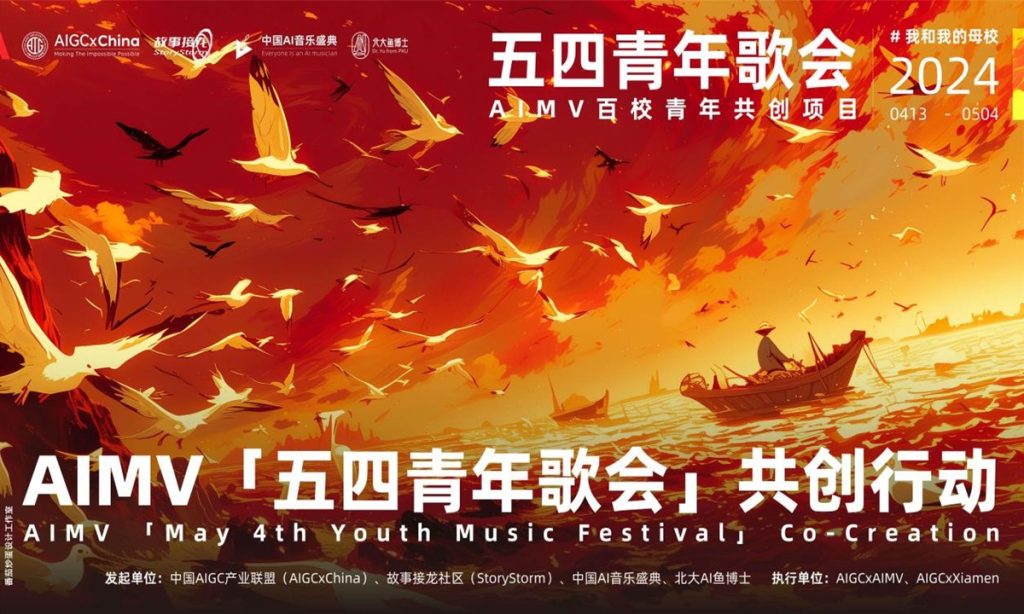
Students and alumni of more than 100 Chinese universities celebrated this year’s May 4th, known as Youth Day in China, by composing original songs using AI (artificial intelligence) technology.

Titled “The 1st China AIMV ‘May 4th Youth Music Festival’ Co-creation,” a non-profit music event was held online on Saturday night. The two-hour event mainly consisted of edited versions of some 120 songs about campus life and the spirit of youth.

Notably, the songs broadcast at the event were all made with AIGC (AI-generated content) tools such as the text-to-song generator Suno and the text-to-video model Sora, according to the event’s co-organizer China AIGC Industry Alliance (AIGCxChina), a nationwide civil group of industry insiders.

The youth-themed AI music co-creation event collected songs from universities across the country from April 14 to 30, said Chen Duo, a AIGCxChina member who initiated and directed the event.

The song collection period was short as it only takes a little time to make a song and a corresponding MV (music video) for the song with the help of AI technology, Chen said.

“Therefore, the event enabled young students to get closer to today’s AI tech, and provided them with a good opportunity to learn and make something themselves using AIGC tools - in a very short period of time,” Chen told the Global Times on Sunday.

Chen added that more than 60 percent of the participants were new to AIGC technology. To help them get started quickly, the event organizers shared a package of AIGC tools that every one could download for free, and Chen personally did six free online lectures in late April to teach people to use the tools.

Producing a song with AI tech is much easier than most people think, Chen said. He recalled that at the beginning of the song collection period, many participants experienced some anxiety and uncertainty.

“They thought of AIGC as a complex cutting-edge technology and assumed it would be difficult to learn, so they participated in the event out of pure curiosity,” Chen said. “They were not sure whether they could handle the tools and complete a song by themselves in just a few days.”

Echoing Chen’s words, Yang Ruxu, a Xiamen University (XMU) student majoring in piano performance, said that she had always cosidered AIGC tools to be very “high-end” and removed from ordinary people. During this music event however, she quickly got familiar with the tools and eventually contributed to three of the 10 songs that her university submitted.

“This event made me get closer to AI,” Yang told the Global Times.

Over 100 universities from the Chinese mainland, Hong Kong, Macao and Taiwan, Including XMU, submitted some 200 songs to the event organizers. The Saturday event broadcast 120 of them, attracting an audience of nearly 200,000 from home and abroad.

“I feel like the quality is high enough that it’s not distracting by the fact that it’s AI,so high that the audience is not at all distracted by the fact it’s AI-generated” commented Valentine, a Russian AI industry insider who lives in the US. “All the videos that we’ve seen really show the amount of work that went into them, and I think we can really congratulate all the students for their hard work, playing the game without holding anything back,” praised French music enthusiast Etienne.

Chen hopes the event will inspire more young Chinese to explore AIGC creation. “The original intention that we initiated this event is to promote the popularity of AIGC applications in China,” he told the Global Times. “I hope that young people, when faced with new concepts and technologies, will have the courage to face handle them.”

Althogh it is a novelty at present, AIGC tools are spreading rapidly and may become as common as Word and Excel in the near future, Chen predicted.

Plummeting Japanese yen turns country into 'shopping paradise,' drawing Chinese tourists

The Japanese yen hit a 34-year low against the dollar on Monday, but the weak currency has turned Japan into a shopping paradise, with a large number of international tourists flocking to the country to take advantage.

Among the tourists, wealthy Chinese shoppers have been splashing out on luxury items in Japan.

According to the Xinhua News Agency, the Japanese yen briefly dropped to a new 34-year low of 160 yen to the US dollar on foreign exchange markets on Monday morning. This marked the first time since April 1990 that the US dollar has topped the 160-yen line.

With the continuous depreciation of the yen, the prices of some high-end products in Japan have become much lower than in China, attracting a large number of tourists looking to score some great deals.

Data that Chinese travel platform Qunar sent to the Global Times on Monday shows that as of Sunday, Tokyo and Osaka ranked second and third respectively in terms of searches on the platform, following Bangkok. The search index for Tokyo increased by 207 percent year-on-year, while for Osaka it increased by 172 percent. Hotel bookings in Japan for the upcoming May Day holidays have increased by 3.5 times compared to 2023 on the platform.

A Chinese tourist surnamed Chen who just came back from Japan on Sunday told the Global Times that the major shopping malls were filled with Chinese people.

"If you didn't know any better, you would think you were in a mall in China. Especially at the LV counter, there were long lines outside," Chen said.

For example, an Onthego small handbag from LV costs 25,600 yuan ($3,533.8) in China, but only 47,520 yen in Japan, which is about 21,753 yuan. Therefore, Chinese customers can save nearly 4,000 yuan.

The depreciation of the yen has also led to a surge in demand for the surrogate shopping business, known as daigou, with some shopping agents estimating they can earn up to 10,000 yuan on a trip to Japan.

daigou shopper surnamed Sun said this has been her busiest time in many years. Sun said she had received 50 orders during the last few weeks. "They asked me to buy them products including luxury handbags, game consoles, cameras, and cosmetics," Sun added.

According to Sun, buying items in Japan is very cost-effective given the high markups in China for goods such as handbags and cameras. She charges a 10 percent shopping fee, so a 20,000-yuan bag can earn her 2,000 yuan.

Although there are risks involved with daigou, such as people only being able to bring back one bag per person and having to remove the tags to avoid customs taxes, the business is still popular.

According to multiple posts on Chinese social media platform Xiaohongshu, which compares prices between luxury handbags in Japan and China, Louis Vuitton's Carryall takes the top spot for the biggest price differential.

The South China Morning Post reported on Monday about the first-quarter results for LVMH, the world's largest luxury group. Overall revenue in Asia, which is dominated by the Chinese market, has declined by 6 percent, but in Japan sales have surged 32 percent.

The report said that global sales of fashion and leather goods - LVMH's biggest business - to Chinese customers in their home market and abroad rose 10 percent, indicating that spending by Chinese tourists overseas helped offset weak sales at home. A large portion of their spending abroad was in Japan.

The Global Times found on Xiaohongshu that there have been many posts searching for or offering personal daigou services in Japan during the upcoming May Day holidays.

The plunge in the yen has also increased the appeal of Japanese commercial property.

The Global Times learnt that many Chinese investors are eyeing residential properties, including those in the Tokyo Olympic Village.

However, the depreciation of the yen also creates some problems. It may exacerbate the deflation issue in Japan, and excessive dependence on overseas tourists' consumption may expose the Japanese economy to external risks, according to insiders.

China refutes US' false narrative on overcapacity, clarifies its stance on South China Sea during talks with Blinken

The Chinese Foreign Ministry said on Friday that talks with US Secretary of State Antony Blinken during his visit to China were "candid, substantive and constructive."

During a courtesy meeting with Blinken on Friday afternoon, Chinese President Xi Jinping elaborated on China's authoritative position on China-US relations and proposed guidance, said Yang Tao, director-general of the Department of North American and Oceanian Affairs of the China's Foreign Ministry, while briefing the media on Blinken's visit on Friday evening.

Yang said the Chinese side refuted the so-called "overcapacity" in China narrative claimed by the US, calling it another example of US' protectionism and suppression of China's development. It also pointed out that the recent escalation of the situation in the South China Sea is inseparable from the intervention of the US.

Xi pointed out that China and the US should be partners rather than rivals; help each other succeed rather than hurt each other; seek common ground and reserve differences rather than engage in vicious competition; and honor words with actions rather than say one thing but do another, Yang said.

Xi also stressed that China is not afraid of competition, but competition should be about progressing together instead of playing a zero-sum game. China is committed to non-alliance, and the US should not create small blocs, Yang said.

During the talks with Chinese Foreign Minister Wang Yi, which lasted for five and a half hours, the Chinese and US officials exchanged in-depth views on China-US relations and international and regional affairs. Wang clarified China's position on major issues involving China's core concerns such as strategic perception, the Taiwan question, economic and technological issues, the South China Sea, and the US' 'Indo-Pacific Strategy', Yang told a group of reporters.

On Friday, Chinese State Councilor and Minister of Public Security Wang Xiaohong also met with Blinken, exchanging views on anti-drug law enforcement cooperation between China and US. Chen Jining, secretary of the Shanghai Municipal Committee of the Communist Party of China, met with Blinken on Thursday in Shanghai.

Strategic perception, namely whether China and the US are partners or adversaries, is the fundamental issue of China-US relations and is also a topic discussed by both sides on every occasion, including this one, Yang said.

The logic of great power rivalry and the zero-sum thinking of the Cold War are not in China's DNA, nor are they China's way of behavior. China welcomes a confident, open, and prosperous US and hopes that the US side can also view China's development positively.

And the Taiwan question is the "first red line" that must not be crossed in China-US relations, Yang said. China firmly opposes the series of wrong words and deeds by the US on the question.

China emphasizes that if the US truly hopes for peace and stability across the Taiwan Straits, it should faithfully abide by the one-China principle and the three China-US joint communiques, refrain from sending wrong signals to the "Taiwan independence" secessionist forces in any way, stop arming Taiwan, and support China's peaceful reunification.

On economic and trade issue, China clearly demands that the US stop hyping up the so-called "overcapacity" in China false narrative, revoke illegal sanctions against Chinese companies, and stop imposing 301 tariffs that violate WTO rules.

On the South China Sea issue, Yang said China has sovereignty over the Nansha Islands, including Ren'ai Jiao (Ren'ai Reef), with full historical and legal basis. China has always abided by international law, including the UN Convention on the Law of the Sea, and no country can attempt to challenge China's legitimate rights and interests through illegal arbitration.

The reasons for the current situation in Ren'ai Jiao are clear. The Philippines first violated its commitments by refusing to tow away the illegally grounded warship for 25 years, and then repeatedly violated the "gentleman's agreement" and internal understanding reached with China, willfully infringed and provoked, and attempted to conduct large-scale repairs and reinforcement to achieve permanent occupation of Ren'ai Jiao.

The Philippines' actions seriously violate Article 5 of the Declaration on the Conduct of Parties in the South China Sea reached between China and ASEAN countries, Yang said.

And the recent escalation of the situation in the South China Sea is inseparable from US' intervention. The US frequently threatens with the "US-Philippines Mutual Defense Treaty," which seriously violates the purposes and principles of the UN Charter and seriously undermines regional peace and stability. If the US wants to maintain peace and stability in the South China Sea, it should stop fanning flames and inciting confrontation, the Chinese diplomat said.

Regarding the so-called "overcapacity" in China, Yang said China's advantages in areas such as new-energy vehicles, lithium batteries, and photovoltaic products are not the result of subsidies from the Chinese government, but the result of global market demand, technological innovation, and full competition.

The so-called "overcapacity" claimed by the US is not a conclusion under market definitions but a false narrative created artificially, which is another example of US' protectionism and suppression of China's development.

Perhaps what is "excessive" is not China's production capacity but the anxiety of the US, Yang said.

If we talk about non-market behaviors and unfair competition, the CHIPS and Science Act and the Inflation Reduction Act enacted by the US in the past two years not only clearly state subsidies but also contain exclusive and discriminatory provisions. Is this market behavior? Yang asked.

"The US has also imposed illegal sanctions on more than 1,500 Chinese entities and individuals under various pretexts. Is this fair competition?" Yang said.

On the Ukraine crisis, Yang said the Chinese side has made it clear that China is neither the creator of the Ukraine crisis nor a party to it and has not done anything to fan the flames or take advantage of the situation.

The US should stop smearing and pressuring China and stop imposing unilateral sanctions on Chinese companies, he noted.

Xi stresses building world-class military medical universities

Chinese President Xi Jinping has called for building world-class military medical universities, stressing that they should serve the battlefield and troops, and embrace the future.

Xi, also general secretary of the Communist Party of China Central Committee and chairman of the Central Military Commission, made the remarks during an inspection at the Army Medical University on Tuesday.