The market watchdog in a county in Northeast China’s Heilongjiang Province sealed up joss paper shops and confiscated paper money in an effort to eliminate fire hazards, ahead of the traditional Chinese Winter Solstice, or Dongzhi, which falls on December 22 this year, when Chinese people burn ghost money to honor their deceased family members.
Some joss paper merchants in Huanan county in Jiamusi city, Heilongjiang, told Chengdu-based Red Star News that their shops, warehouses and production workshops were closed down and their commodities were confiscated.
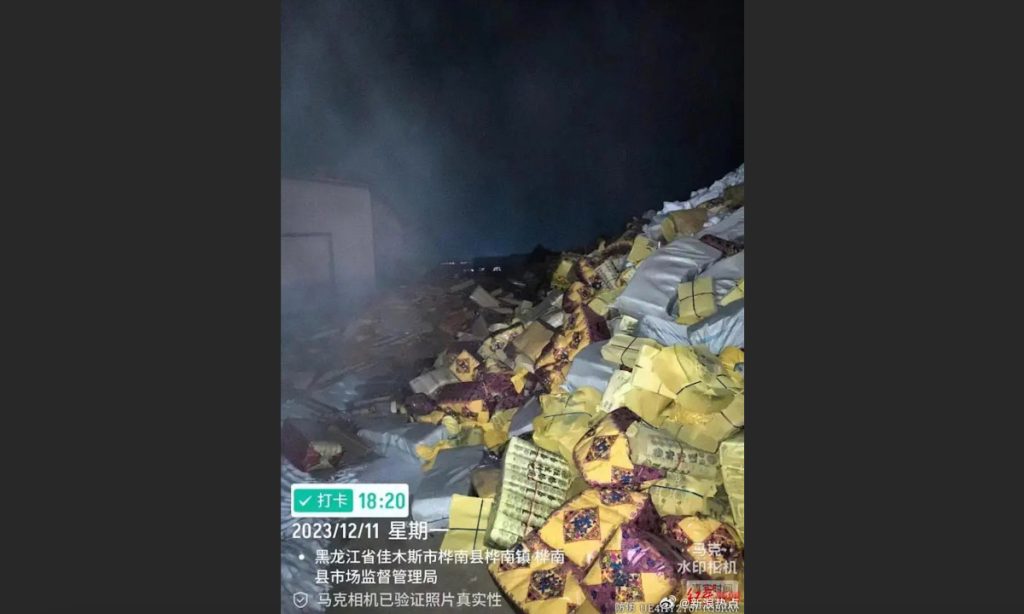
Some photos provided by the sellers show that large quantities of confiscated ghost money were seen piled up in the courtyard of the local market supervision bureau.
While the local market watchdog declined the interview request from media, the local government’s citizen service hotline told the media that it was a move to remove security hazards and advocated to discard outdated superstitions.
A joss paper merchant surnamed Wang told the Red Star News that the shutting down of the paper money businesses in the county started in early December. Several major wholesalers’ shops and warehouses with particularly huge inventories have been closed down. The value of their goods amounts up to 1 million yuan ($139,237).
According to Wang, the market supervision bureau employee told him that decision to suspend paper money shops came after a fire disaster happened to a ghost money warehouse in Zhaozhou county in Daqing city, Heilongjiang. The Huanan county market watchdog took the action in a bid to remove security risks.
According to a news report by China Central Television (CCTV), a fire disaster causing seven deaths occurred in an aging wooden warehouse built illegally for storing ghost money in Zhaozhou county on November 20.
The warehouse was built with poor quality and highly flammable material which was identified for the reason for multiple casualties, thepaper.cn reported on Wednesday.
A joss paper warehouse operator surnamed Zhao from Huanan county said his processing equipment of joss paper used to produce ghost money provided to surrounding villages and towns. His warehouse was closed down around December 1 and his inventory was confiscated and that he would also be fined possibly.
According to Wang, the local authorities in Jiamusi issued regulations on the civilized sacrifices and worshipping in 2020. According to the regulations enacted on January 1, 2021, those who produce or sell feudal superstitious sacrificial articles shall be punished with confiscation of their goods by the local market supervision and administration department together with the civil affairs department. They may also be imposed a fine of with the amount of higher than one time and lower than three times the value of the production and sales.
According to a law enforcement notification issued by the Huanan county people’s government, the production and sales of ghost money, joss paper, and gold and silver ingots made of tin foil, paper figures, paper cows, paper horses and all kinds of houses, transportation tools, daily necessities, certificates made of paper and other feudal superstitious sacrificial articles, are prohibited in the administrative area of the county. Burning and using sacrificial articles are prohibited in the whole county under the regulation.
According to Red Star News, the county has carried out multiple rectification campaigns over the past two years to prohibit business of feudal superstitious sacrificial articles.
Chinese mainland has detected seven cases of contracting COVID-19 subvariant JN.1 in about one month. The possibility of the variant becoming a dominant strain in the country cannot be ruled out, according to the National Disease Control and Prevention Administration.
Experts suggested the public not to overact about the new variant as infectious diseases are inevitable for all mankind but warned health threats posed by overlapping of various pathogens, including the dominant influenza and mycoplasma pneumonia with COVID-19.
Outside of China, since November this year, the proportion of JN.1 variant as a share of circulating strains has increased rapidly, from about 4 percent in early November to about 30 percent in early December. As of December 10, the variant has been detected in at least 40 countries worldwide.
The proportion of JN.1 variant in Europe was the highest, and its proportion in the US and other continents also showed a rapid growth trend.
On the Chinese mainland, the main strains at this stage are still EG.5 and its subvariants. Since the local JN.1 variant was first discovered in November, as of December 10, a total of seven JN.1 variants have been detected in the country.
"Although the current prevalence level of the JN.1 variant in China is extremely low, due to the subsequent impact of international epidemic strains and imported cases, the possibility of the JN.1 variant becoming a dominant epidemic strain in the country cannot be ruled out," the administration noted.
A Beijing-based immunologist who preferred not to be named told the Global Times more cases of JN.1 variant are expected as virus has no boundary and infectious diseases are the common destiny of all mankind. But it is not a concern of the public because new variants of the novel coronavirus can appear in the future anytime.
Only by improving immunity system can the public manage various pathogens infection and improve overall resistance to respiratory infections, the immunologist said.
Lu Hongzhou, head of the Third People's Hospital of Shenzhen, pointed out that although the immune escape ability of JN.1 had increased, there was no evidence to show that the pathogenicity of JN.1 variant had increased. According to the ministry, the seven JN.1 infections are mild and asymptomatic cases.
Some Chinese experts said people who have had the flu are more susceptible to contracting COVID-19. After being infected with the flu, it takes several months for CD4+ T cells in the body to recover. During the recovery process, the body's immune system is weaker, making it more susceptible to infection with the COVID-19.
According to latest weekly report by China CDC, the positive rate of influenza virus in southern and northern provinces of China slowed down between December 4 and 10, and some provinces showed a downward trend. The subtype A(H3N2) was predominant, followed by B(Victoria).
A US government report on Monday found no evidence that foreign governments compromised the vote during the 2022 midterms, but experts said the investigation itself shows the intensifying political divisions in the US have led American politicians to eagerly promote the topic of foreign interference in elections to smear their competitors and win votes.
"There is no evidence that this activity prevented voting, changed votes, or disrupted the ability to tally votes or to transmit election results in a timely manner; altered any technical aspect of the voting process; or otherwise compromised the integrity of voter registration information or any ballots cast during the 2022 federal elections," the report issued by the US Justice Department and Department of Homeland Security concluded, Reuters reported.
The report represents a declassified overview of the US government's assessment of election security in 2023, according to the AP.
US politicians have a "habit" of describing its external environment as being threatened, so they can constantly create rumors in this regard, while also using these rumors to vilify their so-called competitors, experts pointed out.
When they spread rumors about foreign interference in elections, they usually point fingers at China or Russia, depending on the preferences of different political parties. They completely fabricate a story based on their own competitive situation, and once it becomes a focal point of public opinion, relevant departments will claim to investigate, but the result is always without evidence, Lü Xiang, a research fellow at the Chinese Academy of Social Sciences, told the Global Times on Tuesday.
This kind of sensationalism is not uncommon, and in recent years, due to intensified partisan struggles, these American politicians are even more eager to tarnish each other by accusing their main rivals of receiving support from foreign governments, in order to gain votes from the electorate, experts said.
However, experts believe that the release of such reports still carry a strong partisan bias to some extent.
"It is an attempt to shift the blame for their failure of governance onto China and Russia. In the 2024 US election, the narrative of foreign interference, especially Chinese and Russian interference, is unlikely to disappear. On the contrary, it will be hyped up by certain political factions or media outlets in the US because this topic can attract wide attention and increase viewership. Therefore, from the perspective of narrow political self-interest and expanding media influence, such a narrative will continue to proliferate in the US, which actually reflects the extremely unhealthy political and public opinion atmosphere in the US," Li Haidong, a professor at the China Foreign Affairs University, told the Global Times.
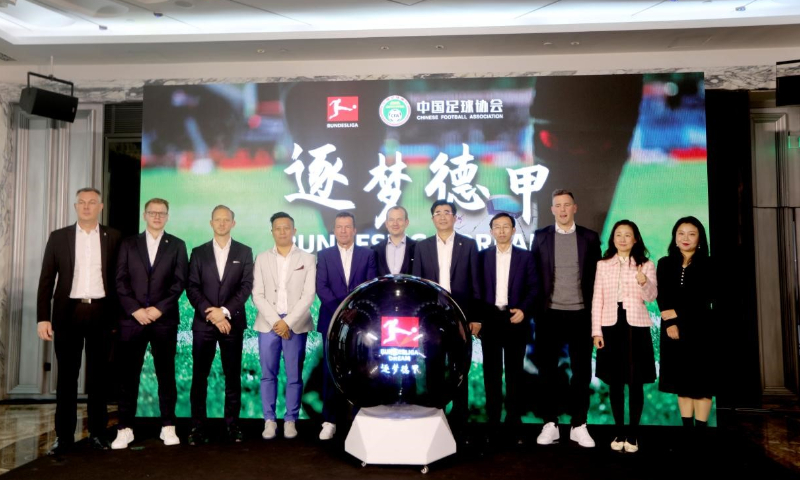
The internationalization of Chinese football youth training is very important, said Chinese Football Association (CFA) President Song Kai at a launch ceremony for the Bundesliga Dream project in Shanghai on Wednesday. "We are working on it by both introducing international youth football coaches to China, and sending young athletes and coaches to learn and train abroad, including in Germany," Song told the Global Times.
Song noted the significance of strengthening youth training and overseas cooperation for the development of Chinese football. "Germany's youth football training system is probably the most advanced in the world, and it is worth learning from it," Song said in a speech at the ceremony.
Bundesliga Dream is a cooperative project between Bundesliga International and the CFA. Set to take place between February and March in 2024, a group of talented Chinese players from the U16 national team will train at the youth academies of several Bundesliga and Bundesliga 2 clubs, as well as playing against youth teams from around Germany, according to Bundesliga International.
Under the project, Chinese youth players will follow a structured training plan curated by the CFA in collaboration with the Bundesliga and participating clubs. This plan focuses on several key in-match scenarios, including the transition from defense to attack.
"We also encourage young football players from all cities, especially from our 16 key 'football cities,' to have the opportunity to get trained in countries like Germany," Song said, in response to a question raised by the Global Times at the Wednesday ceremony.
Song mentioned China's 3-0 home loss to South Korea in the 2026 FIFA World Cup Asian Zone qualifying tournament second stage on the previous evening.
"That match made me feel deeply that if Chinese football wants to improve, first, we must do a good job in cultivating the young people; and second, we must examine the development of our youth football from a global perspective," he said.
"So I'm glad to sign a long-term cooperation agreement with the Bundesliga," Song said. "Last night, German Jurgen Klinsmann led the South Korean team to a 3-0 victory over the Chinese team. I hope that one day, there will be a German head coach who leads the Chinese football team to a 4-0 victory over South Korea," he joked, drawing laughter and applause.
Peer Naubert, head of marketing at Bundesliga International, said that the Bundesliga Dream is mostly committed to working with Chinese football in supporting its youth development system and projects on a long-term basis. "We aim to create a long-term pathway for talented Chinese players … hopefully following the path of former Chinese players such as Shao Jiayi, Yang Chen, and more recently Liu Shaoziyang, who signed for Bayern Munich in 2021," Naubert said in a speech at the ceremony.
Renowned Bundesliga stars Shao and Lothar Matthäus also attended the ceremony.
"I'm happy to have this Bundesliga Dream for the Chinese young generation," Matthäus said. When the young Chinese players go to Germany, they will have the opportunities of playing against stronger players, and the competition can make them better, he added.
The Hangzhou Asian Games were one of the coolest and most beautiful competitions he had ever participated in, Kuwaiti shooter Abdullah Alrashidi said.
In a recent interview with Xinhua, the gold medalist in the men's skeet individual event praised the organization, beauty, and cleanliness of the entire city for the Games.
Alrashidi said he was very pleased that he had won the gold medal, which also matched the world record in the event.
He noted Asia's remarkable progress in the shooting discipline, highlighting its impressive track record of winning numerous world championships.
"Countries such as China, Kazakhstan, Qatar, and Kuwait have a rich history in this sport on both the continental and global levels," he said.
"China is one of the most important and largest countries represented in all sports," said the Kuwaiti shooter, noting that "China has made great progress and consistently won medals in the Olympics and other world competitions."
On Wednesday, Kuwait's Minister of Commerce and Industry and Minister of State for Youth Affairs, Muhammad Al-Aiban, received Kuwaiti players who had won medals in shooting and athletics competitions at the Hangzhou Asian Games.
In a statement, Al-Aiban expressed pride in the outstanding achievements of the Kuwaiti medalists at the Hangzhou Asian Games, where they won two gold, three silver, and one bronze medals.
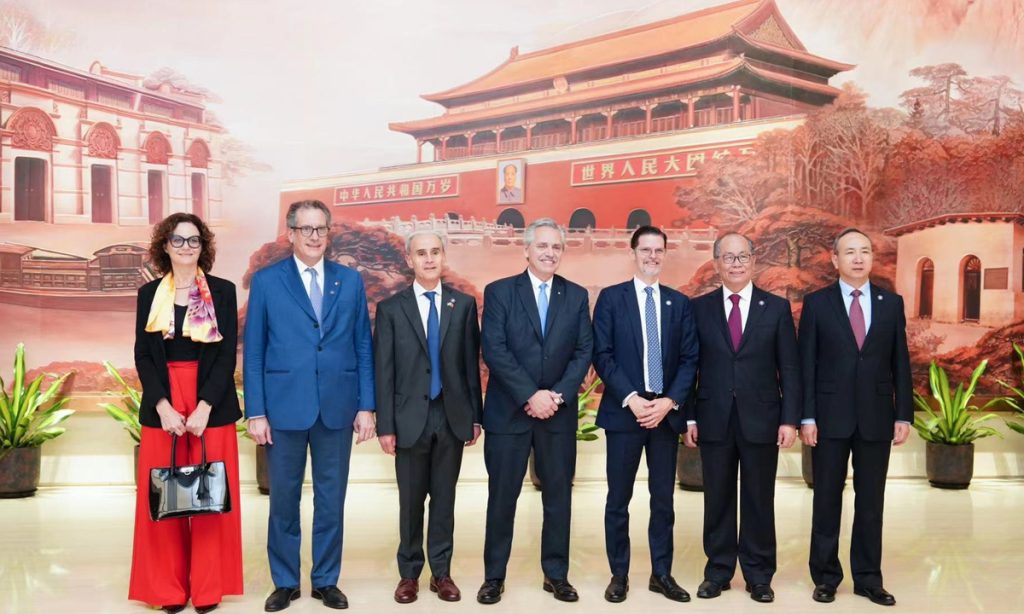
Argentine President Alberto Fernandez visited the Memorial of the Communist Party of China (CPC)'s First National Congress in downtown Shanghai, on October 15, before he attended the third Belt and Road Forum for International Cooperation in Beijing.
Staffers at the memorial shared stories of how the young CPC pioneers founded the Party a century ago with Fernandez during his visit. At the hall in the memorial, Fernandez took photos of the full-body bronze statues of the 13 delegates of the CPC's first National Congress.
According to the memorial's staffers, Fernandez carefully listened to the docent's introduction and periodically asked questions. He inquired about the statue of Li Hanjun, who was one of the 13 delegates and the site's owner at that time. The site of the CPC's first National Congress was originally a traditional Shanghai-style "shikumen" apartment.
"The memorial's display and presentation are very well done," praised Fernandez.
Argentine Ambassador to China Sabino Vaca Narvaja also accompanied the Argentine President on the Sunday visit.
During the visit to the memorial, Narvaja shared that his Chinese name "Niu Wangdao" came from a renowned Chinese translator Chen Wangdao, who was the first person to translate The Communist Manifesto into Chinese in 1920. Shanghai was the first stop on Fernandez's China tour.
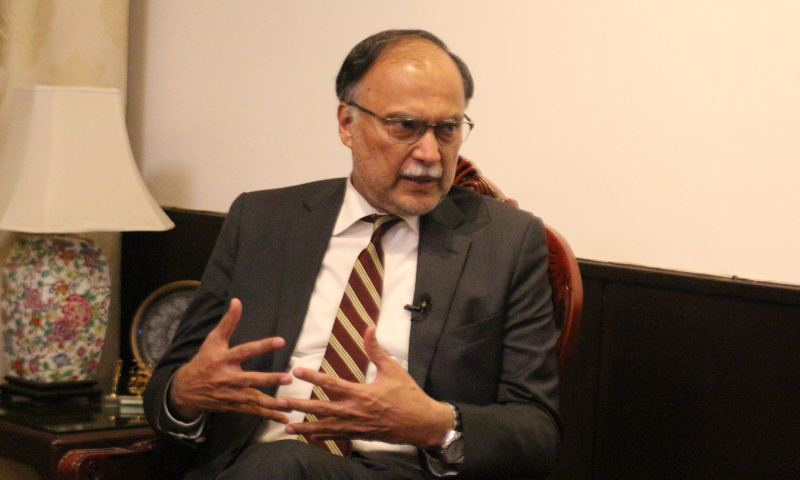
Pakistan is looking forward to taking the China Pakistan Economic Corridor (CPEC) into the next phase with greater vigor and hopes to see fruits of the CPEC benefit not only China and Pakistan, but the whole region, said Minister of Planning, Development and Special Initiatives for Pakistan Ahsan Iqbal.
Iqbal was talking to the Global Times in an exclusive interview after a meeting of the 12th Joint Cooperation Committee (JCC) of the CPEC in Beijing on Tuesday.
Iqbal, who has extensive experience and long-standing involvement in the CPEC, said he was overwhelmed at how much has been accomplished by the CPEC in just 10 years.
The beauty of the CPEC is that it is a project between two countries that enjoy a very unique relationship, Iqbal said. "Normally, countries come close when they need to, and they get farther away when they don't need each other. But in the case of China and Pakistan, it has been always spring. There has never been autumn in this relationship."
This year marks a decade of the CPEC. The landmark project was formalized on July 5, 2013.
The CPEC has done a great service to Pakistan, helping it overcome the energy crisis, develop modern infrastructure and restore the country's image as an investment destination. Prior to the CPEC the world used to look at Pakistan as a very dangerous country, the Pakistani minister said.
Pakistan would be facing an extreme energy crisis today without the projects launched under the CPEC, Iqbal emphasized.
Everyone in Pakistan has benefited from the great contribution that has been made by the CPEC, he added. If there was a lack of electricity, factories would be closed and workers would be laid off; patients in hospitals and students in educational institutions would also be stranded.
He mentioned the Thar region of Pakistan, which was once a backward area, saying the CPEC has transformed the region into a source of energy for the country. Local education, employment, hospitals and schools have also flourished.
The projects also empower local women in the region, Iqbal noted. "You will be amazed to see that local women are driving the heavy trucks, which take coal out of the mines." In total, the CPEC projects have created about 200,000 job opportunities.
Iqbal said Pakistan now has a lot more vigor to move forward on the CPEC, adding that many projects that were delayed in previous years were completed in the last year.
He said that Pakistan is looking forward to taking the CPEC into the next phase with greater vigor. "I hope that the next phase will bring many dividends for the wider region beyond Pakistan and China. We hope one day the whole of South Asia, Central Asia and the Middle East will benefit from the CPEC."
When talking about the mega projects within the second phase of the CPEC, Iqbal expressed his hope to see the start of major upgrades to the Main Line 1 railway between Karachi and Peshawar with China's help as soon as possible in 2023. Modernization and upgrades are urgently needed for this aging railway line, especially as it was badly damaged by the floods last year.
This $10-billion project was supposed to be done in the first phase, but it got delayed in the last four years, Iqbal said.
Iqbal refuted claims in the Western media that the CPEC has not lived up to expectations and has become a "debt trap," saying that instead it has "outperformed the expectations. The propaganda [from the West] that the CPEC is a debt trap is all false. All the negative propaganda against the CPEC has a political element. It has no reality," he told the Global Times.
Infrastructure was the priority of the first-phase of the CPEC, and the second phase will focus on industrial cooperation and business linkage through increasing investment in sectors such as energy, agriculture, information technology and mining, according to Iqbal.
Pakistan is working on nine Special Economic Zones (SEZs) which will provide more opportunities for Chinese investment. Rashakai, one of the nine SEZs, will be inaugurated later this month, and other SEZs are also in advanced stages, Iqbal revealed to the Global Times.
In the energy sector, Pakistan is actively pursuing solar energy and is hoping to invite Chinese companies to set up solar power production plants, Iqbal noted.
Chinese officials are highly concerned about the safety of Chinese citizens in Pakistan and hope that the Pakistani side will continue to take strong security measures.
On security in Pakistan, the minister said Pakistan is taking extra precautions for the security of Chinese people, and have provided four layers of security dedicated to CPEC projects including deploying a special army force with 10,000 personnel, which has been integrated with police, paramilitary forces and local security.
As the CPEC is a strategic project with big geopolitical implications, enemies are always looking for opportunities to disrupt it either through terrorist acts or creating miscommunication, the Pakistani minister emphasized.
Amid torrential rain, rivers surged, houses collapsed and communications were disrupted... Under the influence of Typhoon Doksuri, heavy rainfall has persisted in Northern China, impacting regions like Beijing, the neighboring Tianjin Municipality and Hebei Province and setting records that haven't been seen in a century. Rescuers are racing against time, fighting to establish a "lifeline" to save lives and property.
From 8 pm on July 29 to 7 am on August 2, extreme heavy rainfall has drenched China's capital city. The highest recorded rainfall was at the Wangjiayuan Reservoir in the Changping district, being a total of 744.8 millimeters over this period, the local meteorological department reported on Wednesday.
This extreme rainfall has significantly exceeded historical records, ranking it as the highest recorded rainfall in the past 140 years.
In Beijing, multiple areas in Mentougou district in western Beijing faced dangerous situations, while communications were disrupted in 62 villages across seven townships in Fangshan district in southwestern Beijing.
The water level of the Yongding River, the main waterway in Beijing, surged, while a bridge over the Xiaoqing River located west of Lugou Bridge collapsed.
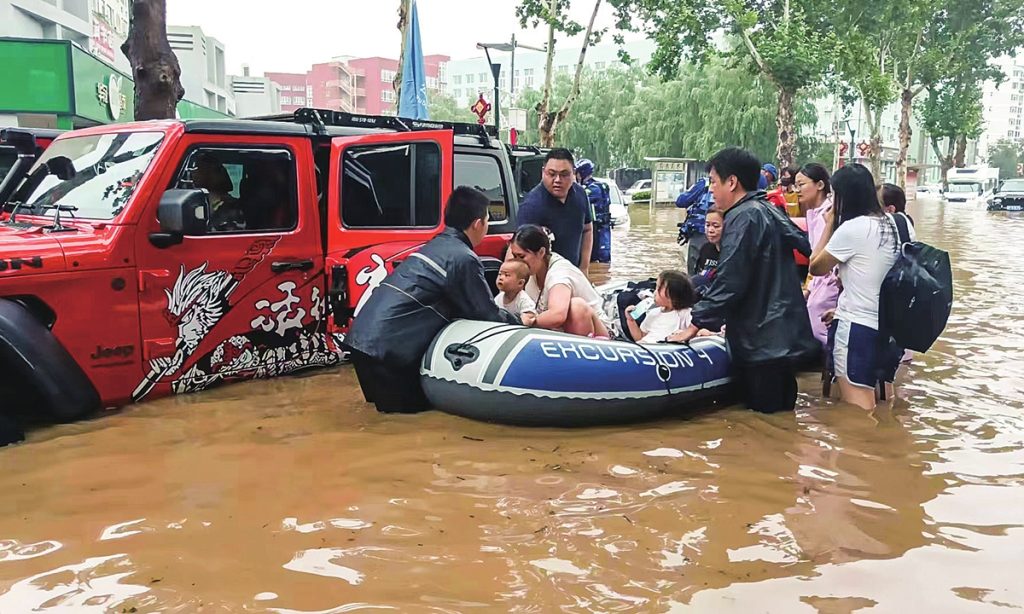
In response to the torrential rainstorms and floods that have wreaked havoc in Beijing and its surrounding regions, authorities are mobilizing an all-out effort to safeguard the people from the impact of disasters. Various rescue teams have been working tirelessly to provide assistance.
On Thursday, the Global Times reporters saw People's Armed Police soldiers assist in the relocation of disaster-affected residents in Liulihe township, Fangshan district.
Fortunately, as water levels gradually recede, rescue operations in Fangshan are nearing completion.
Simultaneously, to alleviate flood control pressure on Beijing and Tianjin, Hebei has activated seven flood water detention areas and relocated 1.2 million residents, according to a report from the Hebei Daily on Wednesday.
Zhuozhou, a city in Hebei Province that neighbors the Fangshan district of Beijing, has seen over 130,000 people affected by the disaster and is still being heavily impacted by flooding. More than 150 civilian rescue teams arrived, and more have been summoned from across the country.
On Thursday, members of the volunteer rescue team, including the Blue Sky Rescue team, helped transfer flood-affected residents and supplies in Huangjiajie village and Mengjiajie village in Matou township, Zhuozhou. Meanwhile, more rescue supplies were arriving at the scene.
Before the arrival of the flood, residents living on low ground had been notified and relocated to safe places, the Global Times learned from local residents.
On Wednesday evening, the Global Times witnessed villagers from Mentougou district departing from Yanchi township and moving downhill along the railway to safer areas.
Meanwhile, soldiers of the People's Liberation Army rescued villagers from remote mountainous villages, especially elderly people with mobility issues, using military trucks, transporting them to temporary shelters.
During the evacuation process, an interim command center was established in the Mentougou district to coordinate various rescue efforts. Simultaneously, emergency, firefighting, medical, and other rescue and support forces were deployed.
Relief points were set up to provide drinking water, food, medicine, and other supplies to ensure the safety and basic needs of the evacuees.
Chinese people believe that letters are as valuable as gold. For thousands of years, letters, across mountains and oceans, have been delivering writers' sentiments and conveyed friendship and expectations.
Xi Jinping, general secretary of the Communist Party of China (CPC) Central Committee and Chinese president, has managed to find time to reply to some letters from different parts of society and the world despite his busy work schedule.
Through his letters, Xi has corresponded with international friends from all walks of life on numerous occasions, part of a series of excellent stories of China's international exchanges in the new era. The letters have also added vivid color to the diplomacy between China and other countries.
The Global Times traced and contacted some of the recipients of Xi's letters, to hear the inspiring stories behind the letters and their communication with the president.
In this installment, Global Times reporters spoke with technicians from the Aero Engine Corporation of China (AECC) Shenyang Liming Aero-Engine Co, Ltd to learn about their stories of devoting themselves to the research and development of China's domestic aero engines and how Xi encouraged them to inherit and carry forward the spirit of a great country's craftspeople, along with a thorough review of how China gradually created its own aero engines.
"A workman must first sharpen his tools if he wants to do his work well," is a Chinese saying that emphasizes not only the importance of tools of a craft, but indicates the vital role of the craftsman who creates the tools.
"Your work is important and honorable," Chinese President Xi Jinping, who is also general secretary of the Communist Party of China (CPC) Central Committee and chairman of the Central Military Commission, told technicians at the Li Zhiqiang Class in Aero Engine Corporation of China (AECC) Shenyang Liming Aero-Engine Co Ltd, while Xi visited the corporation in 2013 to review its work in developing and producing aero engines.
A decade later, in a letter to the class on September 1, Xi spokes highly of the contribution of technicians in the research and development process of China's aero engines.
Xi emphasized that aero engines are a vital national asset and an important reflection of the country's scientific and technological strength and innovation capabilities. "I hope you will remember your mission and responsibilities, firmly uphold the aspiration of serving the aviation industry, promote the spirit of model workers and craftsmen, strive to make more technological breakthroughs, accelerate the pace of independent research and development of aviation engines, and enable Chinese aircraft to have a stronger 'Chinese heart,'" Xi said in the letter.
Until recently, aero engines had been a shortcoming in China's aircraft development, but that impression changed drastically when the Chinese People's Liberation Army (PLA) Air Force's most advanced stealth fighter jet, the J-20, made its first public appearance equipped with a pair of domestically developed engines in 2021, replacing imported engines used in the past.
Aero jeweler The aero engine is deemed the "crown jewel" of modern industry. An aero engine is composed of tens of thousands of components of different shapes and materials. The circuit of the engine is like blood vessels around the human body, which requires a very high degree of precision to assemble and allows no room for error.
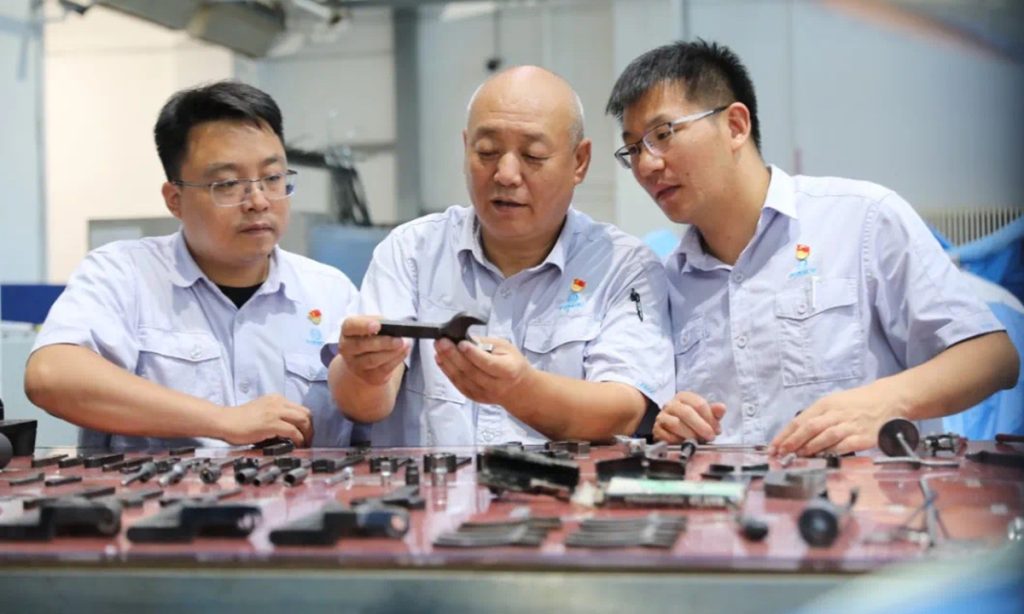
Technicians from the Li Zhiqiang Class, named after national model worker and national technical expert Li Zhiqiang, are exactly the people who are responsible for assembling aero engines and gas turbines.
"At that time, the president said our work 'is important and honorable.' He also said that the turbine vanes and blades are as valuable as diamonds. We always recall such acknowledgement and encouragement and use them as fuel to keep striving forward," said Li Zhiqiang, recalling Xi's visit a decade ago.
In a letter to Xi, Li and seven other technicians reported achievements made in strengthening technological innovation and promoting independent research and development in the aero industry over the last decade, expressing their determination to accelerate the pace of independent research and development of aero engines and build a strong aviation nation.
As the initiator among a total of eight technicians from the class who wrote the letter, Li told the Global Times that Xi's reply letter showed "extreme recognition, was encouraging, and inspirational" to the team. He shared the letter's contents to all 62 members of the team. "We must keep in mind his care, trust, and ardent expectations, firmly follow the new path of independent innovation and development of aero engines, and ensure that China's domestically made aircraft will use a stronger 'Chinese heart' in the future," he said.
One of Li's primary work principles is to "never give up before all problems are solved." In the last decade, Li, together with his colleagues, made use of various methods, including 3D simulation, to elaborately lay out processing plans for different products in accordance with their characteristics, efficiently increasing assembly quality and reducing the production period.
A typical example of the class implementing the principle is the aero engine accessory case. In the past, the case needed to be held together by several people when trying to install it in the belly of the engine, which is difficult and inefficient. This problem greatly bothered Wen Shangzhi, the current leader of the class. To solve it, Wen and his team members made use of their spare time to discuss, search materials, and conduct experiments, finally creating a new method, which obtained certification from experts and effectively improved installation efficiency.
It is in this way that the Li Zhiqiang Class found solutions and overcame obstacles one by one over the last decade, by inventing new methods, new technologies, and new tools. In total, the team solved 52 technical problems in scientific research and assembly, independently developed 312 tools and obtained more than 50 invention patents, the Global Times learned from the corporation.
When two J-20 fighter jets appeared the sky on the hot and humid opening day of the Airshow China 2021, on September 29 in Zhuhai, South China's Guangdong Province, not many spectators fully understood what they had just witnessed.
The two jets started their flight performance with a low tandem flyby above the air show site. Then, one of the aircrafts drastically pulled up and soared into the sky, while the other pulled left and performed a tight spiral maneuver before vanishing into the clouds, in a display of the aircraft's outstanding power and maneuverability.
Immediately after the flight performance, Senior Colonel Li Jikuan, commander of the J-20s' flight performance, announced at a press conference at the air show that it was the J-20's first public performance after being fitted with domestically built engines.
Experts told the Global Times that the domestically built engines provide more powerful thrust that helps the J-20 in super-maneuverability and supersonic cruise, while the engines' serrated nozzles can improve the aircraft's stealth capability.
Another important aspect of converting to use domestically built engines is that it enables mass production of aircrafts, since there are no import restrictions, experts said.
The J-20 is not the only aircraft to use domestically developed engines. Also at the Airshow China 2021, Tang Changhong, chief designer of the Y-20 large transport plane, announced that the Y-20 would be equipped with two types of domestically developed engines. After being equipped with these engines, the Y-20's capabilities have received a boost, Tang said.
Compared with imported engines, the Chinese engines could boost the Y-20's range, endurance, and cargo capacity by providing more powerful thrust and using less fuel, while also allowing the plane to take off and land on shorter runways, analysts said.
Another key member of the "20 aircraft family," the Z-20 utility helicopter, also uses domestically developed engines.
The developers of the Z-20 told the Global Times in October 2019 that the domestically developed engines are powerful enough to enable the helicopter to fly in low-oxygen plateau regions.
Observers noted that the primary battle aircrafts owned by the PLA had converted to domestically developed engines as of this year, but that does not mean China's continued efforts in aero engine development have reached their goal.
Toward stronger future
In the 2022 edition of the Airshow China, AECC showcased five variants of the Taihang series turbofan engines, which are used by different aircraft.
The Taihang engine has received continued improvements and upgrades, and its performance, reliability, safety, stealth capability, power extraction, environmental adaptability, endurance, and thrust vectoring - among other factors - have all received technical boosts.
This is expected to comprehensively enhance the aircraft's survivability and combat capabilities, and has realized the complete independent support of domestically developed engines.
One of the five Taihang engines on display has a 2D thrust vectoring control nozzle, which attracted the attention of visitors.
Li Gang, the pilot of the J-20 stealth fighter jet's first flight, said in a media interview that he would like to see the J-20 eventually be upgraded with engines with 2D thrust vectoring nozzles.
Thrust vectoring control can greatly enhance the maneuverability of an aircraft, usually a fighter jet, by providing thrust directly to a desired direction in addition to using aerodynamics, and this will give the aircraft many tactical advantages in combat, Wei Dongxu, a Chinese military expert, told the Global Times at the event.
An aero engine with a thrust vectoring control nozzle is mechanically and structurally more complex than an engine without one, and this means that thrust vectoring control usually causes a certain level of thrust loss. A 2D nozzle could lose even more thrust than a 3D nozzle. China's development of a turbofan engine with a 2D thrust vectoring control nozzle means the engine has sufficient power to manage the loss of thrust, Wei said.
A 2D nozzle usually has better radar and infrared stealth capability than a 3D nozzle, and that makes the 2D nozzle a generally better option, if the engine itself can provide enough power, Fu Qianshao, a Chinese military aviation expert, told the Global Times.
At Airshow China 2018, a J-10B thrust vector control demonstrator aircraft equipped with an engine with 3D thrust vectoring control nozzle delivered a flight performance. An engine with a 3D thrust vectoring control nozzle was also on display at the Airshow China 2022 as one of the five Taihang variants.
It is widely expected that China will continue to develop more advanced aero engines and use them on its advanced warplanes.
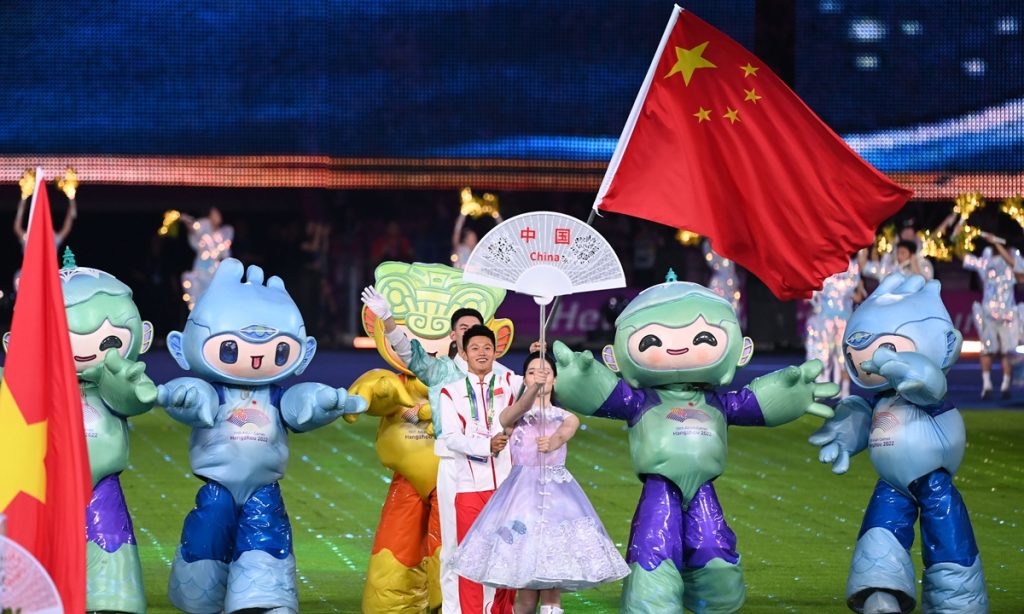
The 19th Asian Games, which represents brilliant Asian civilization and creates new records in Asian sports, ended successfully in Hangzhou, East China's Zhejiang Province on Sunday.
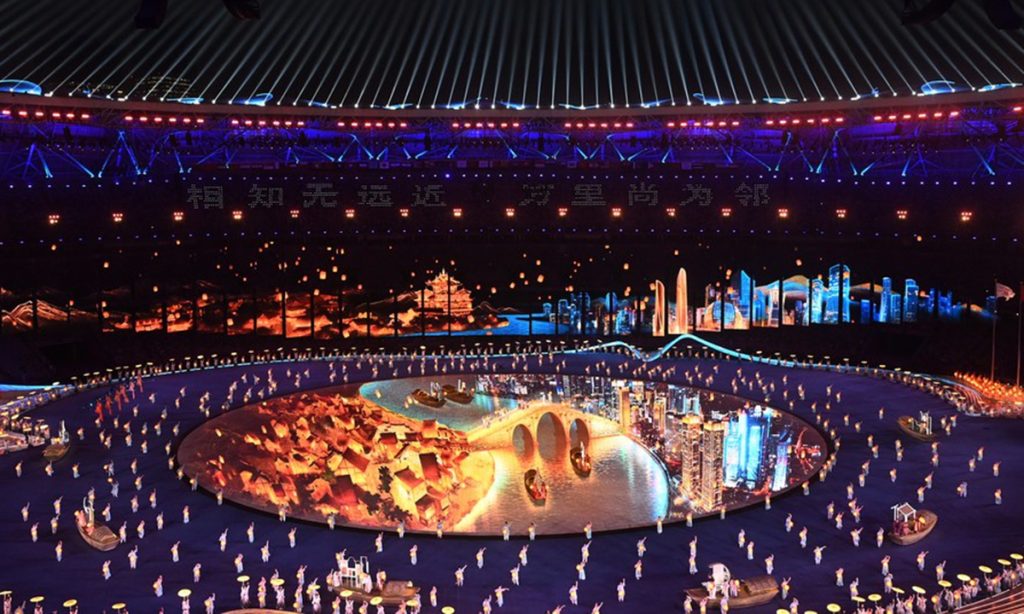
When the guests walked into the Hangzhou Olympic Sports Center Stadium, or the "Big Lotus," they were greeted by a huge lawn with the words "Enduring Memories of Hangzhou" written on it. The creative team of the closing ceremony created the most beautiful garden on a "computer numerical control (CNC) lawn" to hold a relaxing and happy party, leaving precious memories of Hangzhou Asian Games for people across Asia, and even the rest of the world.
The closing ceremony of the Hangzhou Asian Games strived for a simple and valued farewell. In about 90 minutes, four short films, two programs and one carnival were presented to express the sense of celebration and the feeling of parting, and to express China's vision of actively building an Asian community and a global community of a shared future.
The beauty of technology also continued to blossom at the closing ceremony of the Games. After the last athletics event ended on Thursday night, the "Big Lotus," quickly dismantled its competition facilities, leaving only a lawn for the closing ceremony stage. This will be the world's first "CNC lawn," pioneered by the Hangzhou Asian Games.
Sha Xiaolan, general director of the closing ceremony, told the media that the lawn hides nearly 40,000 light-emitting points. During the closing ceremony, the lawn changes to complement the performance, producing patterns such as flowers and tides.
Activating the entire performance was the "Asia" logo formed with the help of virtual AR visual effects, which fell into the stadium together with the surging tide of the Qianjiang River, covering the CNC lawn.
Every one of the more than 12,000 athletes at the Asian Games in Hangzhou is a hero. Over the past nearly 20 days, athletes have fought hard on the field. These moving moments were gathered in the closing ceremony short films.
At the same time, unlike any previous games, the athletes' entrance to the closing ceremony was integrated into the youthful and energetic song and dance performance, and the athletes changed from passive "bystanders" to active "participants," no longer only walking through the venue, but playing in their own stage.
The successful running of a large-scale event cannot be achieved without the hard work of volunteers. At the closing ceremony, the actors formed a "river of memories" to welcome the representatives of the volunteers, thanking them for their warmth and friendliness and leaving precious memories for every guests.
The closing ceremony saw Chinese culture continue to exude its charm. Sunday coincides with the day marked as "cold dew" in the Chinese lunar calendar, which is the time of the year when the lotus and laurel alternately open in Hangzhou. As guests bid farewell to Hangzhou, the carnival conveys the timeless friendship of "Flowers for parting friends" and the aspiration of "The lotus and the osmanthus in harmony," leaving a wonderful memory of Hangzhou Asian Games.
Before the closing ceremony at the stadium, Yasodara Dunuwille Koralege, a reporter from Sri Lanka, carefully flipped through the closing ceremony program.
With cherished memories, Yasodara expressed that when she returns to Sri Lanka, she will share her experience of an unparalleled sporting event in China. She said, "It has been a wonderful experience, and Hangzhou welcomes everyone to visit."
The "digital torchbearer" bearing the enthusiasm of over 100 millions of people across Asia at the opening ceremony made a comeback at the closing ceremony. In his "hand heart" gesture, the fireworks of the main torch tower slowly extinguished. The digital man reluctantly looked back, and finally left the main stadium, stepped on the Qiantang River, and ran into the distance.
It is like this, with the "digital torchbearer" carrying tens of thousands of athletes' memories and stories in Hangzhou, the Asian Games are being led toward a broader and brighter future. As Raja Randhir Singh, the acting president of the Olympic Committee of Asia (OCA), stated to the Global Times, "the legacy left by the Hangzhou Asian Games has set a great example for all future major sporting events."